
Flood protection systems for your home are becoming essential as climate change increases the frequency of extreme weather events. When heavy rain or rivers overflow, the right systems can make the difference between minor damage and a major loss. In this article, you will learn everything you need to know about the various flood protection system solutions that can help you effectively protect your home from the devastating effects of flooding.
The same climate-driven patterns that make flood protection systems for your home so important are visible in real events. Our Ahr Valley flood 2021 analysis and the Washington flood case study show how quickly extreme rainfall can overwhelm buildings without modern door, window and drainage protection.
Flood protection systems for your home: Key Takeaways
- Flood protection systems for doors and windows are crucial for preventing water from entering buildings; flexible solutions such as aluminum dam beam systems and watertight windows are particularly effective.
- Mobile flood protection systems offer homeowners flexible, quick, and easy solutions for temporary protection, including water-filled hose barriers and freestanding mobile barriers. Their weight and geometry contribute to stability and help prevent water from penetrating or knocking them over.
- Long-term structural measures, robust drainage and comprehensive insurance coverage are essential to minimize the financial consequences of flood damage and ensure sustainable protection.
Table of Contents
Types of flooding and flood risks
Heavy rainfall and coastal storms are becoming more intense in many regions. Our articles on heavy rainfall and flooding in U.S. industrial facilities and automatic flood barriers for the Hong Kong typhoon season explain how different types of flooding behave in the real world and why tailored flood protection systems for your home are so important.
River flooding
River flooding occurs when a river overflows its banks due to heavy rainfall or snowmelt. This can lead to flooding in areas located near the river. River flooding can be slow and predictable or sudden and unexpected. Houses built near rivers are particularly at risk and often need higher, more permanent systems such as dam beams, flood gates or flood walls.
Storm surges
Storm surges occur when strong winds push water from the sea onto the coast. Severe storms often cause this type of flooding, which can inundate coastal areas very quickly. Coastal houses and buildings face particularly high risks and should use robust, professionally designed flood protection systems that can cope with wave action and debris.
Flash floods and surface water flooding
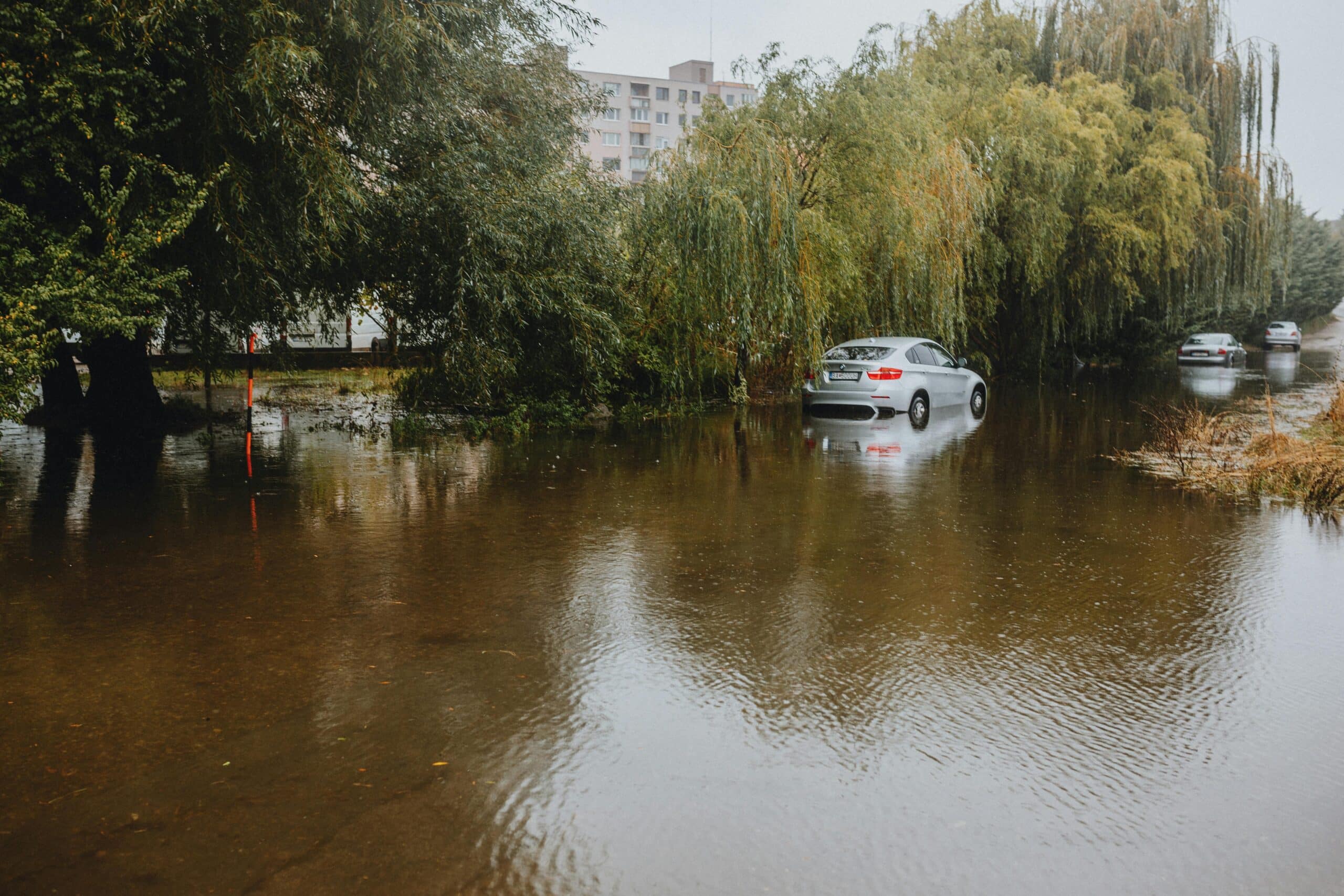
Flash floods occur when very heavy rainfall hits a relatively small area and the water cannot drain away quickly enough. In urban areas with lots of hard surfaces, surface water flooding can build up rapidly in streets, driveways and gardens. Here, fast-deploy mobile systems such as freestanding barriers and water-filled hoses are particularly useful to provide short-term protection in front of doors, garages and low windows.
If you want to go deeper into flood types and safety, the US National Weather Service provides an overview in its flood safety resources, and several homeowner resilience guides explain how different flood mechanisms affect buildings.
Flood protection systems for doors
Dam beam system
Protection level: High
Best for: Main doors, garage doors
Permanently mounted aluminum profiles with removable beams for variable protection heights. Visually adaptable to the building and suitable for frequent use.
Foldable barriers
Protection level: Medium–high
Best for: Garage ramps, commercial entrances
Quick to deploy, fixed to the structure but stored flat when not in use. Ideal where you want strong protection with minimal visual impact in everyday use.
Inflatable barriers
Protection level: Medium
Best for: Temporary protection in driveways and gardens
Easy to transport and set up. Effective against temporary flooding on larger areas, but less stable under very high water pressure or strong currents.
Doors are often the first weak points through which water can enter a building. It is therefore crucial to equip them with suitable flood protection systems. Mobile or semi-permanent protection systems made of materials such as aluminum, steel or reinforced plastic can be installed quickly and offer flexible protection.
A particularly effective solution is the dam beam system. This involves permanently installing slim aluminum profiles on both sides of the opening, while removable dam beams can be inserted as needed. The protection height can be adjusted by stacking beams, allowing flexible adaptation to different flood events. Another advantage is that these aluminum profiles can often be painted in any RAL color to blend harmoniously with the building’s design.
Foldable or inflatable barriers offer very quick deployment, but are not always the most effective long-term. term solution. Homeowners should therefore carefully consider which system best suits their home and specific risk profile. In a critical moment, such as during heavy rain or sudden flooding, these systems can be installed quickly and offer immediate protection.
If you want to dive deeper into choosing the right barriers, our guide to flood barriers for doors and garages and the overview of flood protection for doors and windows walk through real-world examples and show how different systems can be combined into effective flood protection systems for your home.
Protect windows against flooding
Window flood protection options
Windows are also vulnerable areas through which water can penetrate. Flood protection windows are generally divided into two categories: watertight and water-resistant. While watertight windows are designed not to allow water to pass through up to a certified level, water-resistant windows offer a certain degree of protection against wind-driven rain and shallow standing water. Reliable flood protection windows are indispensable, especially in critical areas such as basements and sunken courtyards.
Entrance thresholds and sealed basement windows can also help keep water out. Acrylic barriers mounted in front of the window and aluminum structures for self-assembly can further improve protection, but must be checked and emptied regularly to prevent water permeability or pooling.
An inconspicuous yet effective solution is the magnetic barrier, which is attached to the window from the inside and can be deployed quickly when heavy rain is forecast. Basement windows in particular need to be completely sealed, as floodwater often enters basements first.
For homeowners, it often helps to see complete concepts rather than single products. Our article on flood protection for your home and garden shows how window protection, garden design and paths can work together as part of broader flood protection systems for your home.
Flood protection for garages and light wells
| System | Protection level | Installation | Flexibility | Relative cost |
|---|---|---|---|---|
| Aluminum dam beam system | High | Permanently mounted side profiles | Modular height (stackable beams) | Medium–high |
| Folding barrier system (recommended) | Very high | Permanently mounted, folds away when not in use | Very flexible and quick to deploy | High |
| Glass blocks for light wells | Medium | Permanently integrated into opening | Static (no adjustment) | Medium |
| Walling of light wells | High | Structural building measure | Static | High |
| Wide floor thresholds | Medium | Permanently integrated | Static | Low–medium |
Why the folding barrier system is often recommended
The folding barrier system offers a very high level of flood protection because it is permanently mounted yet folds away when not in use. It can be deployed quickly when needed and provides a tight barrier against incoming water. Thanks to its easy handling and the ability to keep the opening clear most of the time, it is particularly user-friendly. friendly and effective for garage entrances and ramps.
If you are unsure how high and how wide to build protection at these openings, the dedicated guide to flood barriers for doors and garages includes dimensioning tips, photos and checklists you can apply directly when planning flood protection systems for your home.
Light wells should be made waterproof with special covers or glass blocks so that rising water cannot enter directly at basement level. To further reduce the risk of flooding, basement light wells can also be partially or completely walled in, or protected with dam beams. Wide thresholds on garage ramps offer additional protection by slowing and diverting water before it reaches the door.
Flood protection systems for your home: Secure sewerage and drainage systems
Backwater protection
Backwater protection prevents water from backing up from the sewer into the building during heavy rain. It is especially important for basements and low-lying rooms connected to public sewers.
- Can operate automatically or manually.
- Reduces the risk of sewage entering through floor drains and toilets.
- Requires regular inspection and maintenance.
Cisterns and retention tanks
Cisterns and retention tanks collect rainwater and relieve the sewer system during heavy rain. They can form part of a sustainable water management system around your home.
- Useful for garden irrigation or flushing toilets.
- Reduce peak flows entering public sewers.
- Can be installed above or below ground.
Overflow barriers and sump pumps
Overflow barriers protect lower-level entrances and basements from water coming back out of drains, while sump pumps remove water that has already entered.
- Easy-to-fit barrier boards can block low external doors.
- Sump pumps help keep basements dry during prolonged rainfall.
- Both should be included in maintenance and emergency plans.
An often underestimated area of flood protection concerns sewerage and drainage systems. Structural measures such as the installation of backflow preventers are crucial to prevent water from entering buildings from the sewer during heavy rainfall. Regular maintenance of these devices is necessary to ensure their effective functioning when it matters.
The municipal sewer system can become overloaded during heavy rainfall, leading to backflow and flooding. This can result in the flooding of low-lying building entrances and basements, causing significant damage. Additional water storage facilities such as cisterns can help mitigate the effects of heavy rainfall and are often recommended in flood resilience guides for homeowners.
Backflow valve
A backflow valve is a system that prevents water from flowing back into a building from the sewer system. This can occur during heavy rainfall or flooding and can lead to flooding of buildings if not controlled. A correctly installed and maintained backflow valve can significantly reduce this risk, especially in low-lying parts of buildings such as basements and ground-floor bathrooms.
For more guidance on flood-resilient drainage and building measures, you can refer to homeowner flood resilience guides published by local authorities and flood partnerships.
Mobile flood protection systems for your home
Mobile flood protection systems offer a flexible solution for homeowners who want to protect their homes from flooding but may not need permanent systems on every opening. They are ideal for responding to flash floods and short-notice warnings. Mobile and semi-mobile systems can be quickly assembled and dismantled as needed and are particularly useful when short-term protective measures are required or when you rent rather than own the property.
Mobile flood protection with aluminum dam beams
Aluminum dam beams are an effective and versatile solution for mobile flood protection. These lightweight, sturdy aluminum profiles can be cut to size and fixed in brackets to form a tight barrier. They are particularly suitable for protecting:
- Windows
- Doors
- Garage doors
- Property boundaries
Their key advantage is quick installation, which can often be carried out by one or two people. This makes them ideal for temporary protection during heavy rain or snowmelt, especially when combined with warning systems or local flood alerts.
Freestanding mobile barriers
Freestanding mobile barriers consist of modular elements that can be set up without tools. These lightweight, stackable units stabilize themselves with the accumulated water and can also cover curves or corners.
Quick installation by two people and space-saving storage make these barriers a flexible and effective solution for urban environments such as streets, lawns, or driveways. They are often used by municipalities and businesses and can also be used on private plots.
Water-filled hose barriers
Water-filled hose barriers are another mobile solution consisting of elongated hoses made of durable material. These hoses are filled with water to form an effective barrier against flooding.
These barriers are particularly suitable for larger areas such as property boundaries or along rivers and ditches. They are reusable, easy to transport, and simple to assemble, making them a practical and efficient solution when you need temporary, wide-area protection.
For smaller openings and quick response, water-activated flood barriers are another option. These compact bags swell on contact with water and can complement larger mobile flood protection systems for your home when you need to seal thresholds, basement steps or paths at very short notice.
As a rule of thumb, mobile flood protection systems are most effective when your risk is occasional, you have enough lead time from warnings, and someone is available to deploy them. For high-risk locations, they should be combined with permanent systems on the most critical doors and windows.
Structural measures for long-term flood protection

Long-term structural measures are important to protect your home from flooding. Preventive measures such as raising the building or installing flood protection walls around key areas can make a significant difference. It is important to understand that 100 percent protection against flooding is not possible, which is why layered, preventive measures are essential.
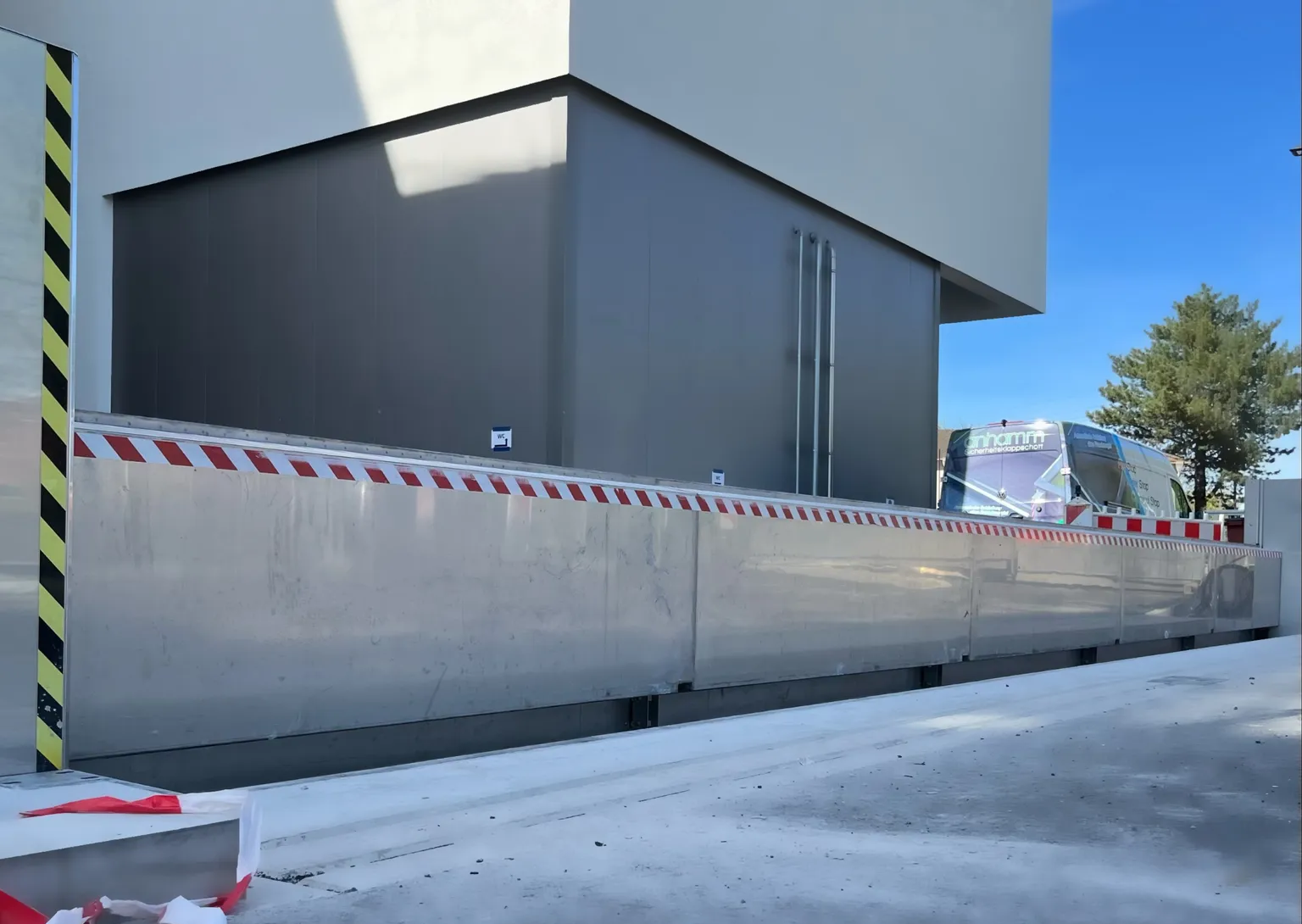
One specially developed solution is the Anhamm water barrier, which holds back floodwater, heavy rain, and uncontrolled amounts of water. It works purely mechanically and is independent of electrical or hydraulic energy sources, which guarantees maximum operational safety even during power outages. For inspiration on combining such systems with other measures, you can look at case studies from regions that have rebuilt after major floods.
If you want to understand the engineering behind these solutions, our technical article Why Spillbarriers Are The Best Flood Protection Solution and the company story Spillbarrier by Anhamm: 30 years of automatic spill containment explain how industrial-grade technology is adapted for entrances, garages and basements in flood protection systems for your home.
Insurance coverage for flood damage
Comprehensive insurance coverage is essential to protect yourself from the financial consequences of flood damage and to maintain an overview of the risks you cannot eliminate technically.
Here are the main types of insurance that are important in this context (names and availability vary by country):
- Natural hazard or flood insurance is necessary to cover damage that is not included in standard homeowners or building insurance.
- Homeowners / building insurance usually covers damage to the building caused by certain water events, but often excludes surface water or river flooding unless an extra flood rider is added.
- Contents insurance protects your belongings inside the home, but may also require additional flood coverage for full protection.
Regular maintenance of backwater protection systems and good documentation of your flood protection measures are crucial to maintaining insurance coverage. In many systems, property owners are responsible for backwater damage unless they have installed appropriate protection and can prove they maintained it.
Emergency measures in the event of flooding
A well-thought-out emergency plan is essential in the event of flooding and is a key part of modern flood-resilience recommendations for homeowners.
Some important elements that should be included in an emergency plan are:
- Safe evacuation routes and meeting points for household members.
- Emergency contact lists, including local authorities, utility companies and neighbours.
- Rescue and clean-up equipment (pumps, extension leads, protective clothing, torches).
- Communication procedures, especially if mobile networks are overloaded.
During flooding, do not enter riverbank areas or floodwater with unknown depth or current. Just a small depth of fast-moving water can knock people off their feet or move vehicles.
It is also important to be able to continue using sanitary facilities safely during a backwater situation. Lifting systems and toilet or shower barriers can provide reliable protection here. Many official flood safety resources emphasise that early preparation and regular drills make a big difference in real events.
If you want further practical checklists on how to prepare your home and family for floods, organisations like national weather services, Red Cross chapters and local environment agencies provide free homeowner guides and flood-readiness checklists online.
Summary: Flood protection systems for your home
In summary, there is no single system that fits every property. The best flood protection systems for your home depend on the type of flooding you face, the layout of your building and how much you can invest in permanent versus mobile solutions. From door and window systems to garage and light-well protection, from drainage upgrades to structural measures, these tools work best when combined into a coherent plan.
Being proactive — assessing your risk, choosing suitable systems for each opening, maintaining your drainage, and backing it all up with appropriate insurance and a clear emergency plan — puts you in the strongest position to minimise future damage and recover more quickly after a flood.
To turn this overview into a concrete action plan, you can combine this article with our in-depth homeowner guides on the 5 most important steps to floodproof your home and flood protection for your home and garden. Together, they give you a practical checklist for prioritising and implementing flood protection systems for your home.

