Automatic flood barriers: how they work, where they fit and their limits
Key takeaways
- Automatic flood barriers are permanently installed at an opening and close without anyone on site; passive types are lifted by the floodwater itself and need no power.
- FEMA classes flood shields that close automatically when triggered by rising floodwater as passive measures and advises considering passive measures where feasible.
- In the Water Spillbarrier, water collecting in the tray floats the panel up, then springs fold it upright and closed: 100% mechanical, no external power.
- A barrier protects only its own opening: walls, slab, floor drains, sewer backflow and seepage have to be planned as well.
- Passive barriers require minimal maintenance, but the tray must be kept clean and inspections should follow a written maintenance plan.
Automatic flood barriers are permanently installed barriers that close an opening, such as a garage door, a car park ramp, a building entrance or a loading dock, by themselves when floodwater arrives. Nobody has to be on site to deploy them. The most robust type is passive: the water itself lifts the barrier, with no power supply, sensor or control system involved. They suit openings that can flood at short notice or out of hours, provided the surrounding structure, drainage and seepage paths are planned with them.
This guide explains the main types, how a float-activated barrier such as the Anhamm Water Spillbarrier works, where these barriers fit, what they cannot do and what to check before you specify one. For an overview of every option for a building, from sandbags to structural measures, see our guide to flood protection systems.
What are automatic flood barriers?
An automatic flood barrier is a flood shield for a door, gate or vehicle opening that is fixed in place and moves into its closed position without human action. US federal guidance on dry floodproofing draws the relevant line. Active measures need someone to install, deploy or activate them before the water arrives; passive measures do not. FEMA gives “flood shields that are designed to automatically close when triggered by rising floodwater on the site” as an example of a passive measure, and advises owners and designers to consider passive measures when feasible, “because effectiveness does not depend on human intervention” (FEMA NFIP Technical Bulletin 3, 2021).
In practice, “automatic” covers two different technologies. Both are usually compared with a third group that is not automatic at all.
Passive, water-activated barriers
A panel or flap lies in a recess or tray set flush with the floor. When water flows in, buoyancy lifts the panel and it seals against fixed side posts or frames. There is no motor, no sensor and no external energy: the flood is the trigger. As a result, the barrier also closes during a power cut, at night or when the building is empty. The Water Spillbarrier belongs to this group.
Powered automatic barriers
Electric, hydraulic or pneumatic drives raise a barrier or close a gate when a water-level sensor or a control signal triggers them. They can be closed in advance of a forecast, but they depend on the power supply, the control system and any backup working during the event. Storms can interrupt mains power, so backup power and regular function tests are part of the design.
Demountable and mobile barriers (not automatic)
Stop logs or panels that slot into permanently fixed guides, freestanding mobile barriers, sandbags and water-activated flood bags all need people to put them in place. They require storage, trained staff and enough warning time. Despite the similar name, the super-absorbent bags described in water-activated flood barriers are a temporary, deployable product, not a permanently installed automatic barrier.
Automatic vs mobile flood protection
The deciding factor is usually warning time. For active measures, FEMA refers to the limit for human intervention in the ASCE 24 standard: a minimum of 12 hours of flood warning time, unless the community operates a flood warning system. The time needed includes recognising the threat, notifying the people responsible, travelling to the building and deploying the measures, sometimes with equipment such as forklifts (FEMA TB 3). Small catchments in hilly terrain can flood with little or no warning, which makes deployable systems hard to rely on there.
| Criterion | Passive automatic | Powered automatic | Demountable / mobile |
|---|---|---|---|
| Trigger | The floodwater itself | Sensor or control signal | People, after a warning |
| External power | None | Required, with backup | None |
| Staff on site | Not needed | Not needed if power and controls work | Needed, with time to deploy |
| Installation | Permanent, recessed in the floor | Permanent, with drives and controls | Fixed guides or none; stored off site |
| Main dependency | A clean, unobstructed tray | Power, controls and their maintenance | Warning time, staff and storage |
Mobile systems remain a sensible choice where flooding is slow and well forecast, or where many openings would make permanent barriers disproportionate. Permanent automatic barriers make most sense at a few critical openings that must close every time, including when nobody is there.
How a passive barrier works: the Water Spillbarrier
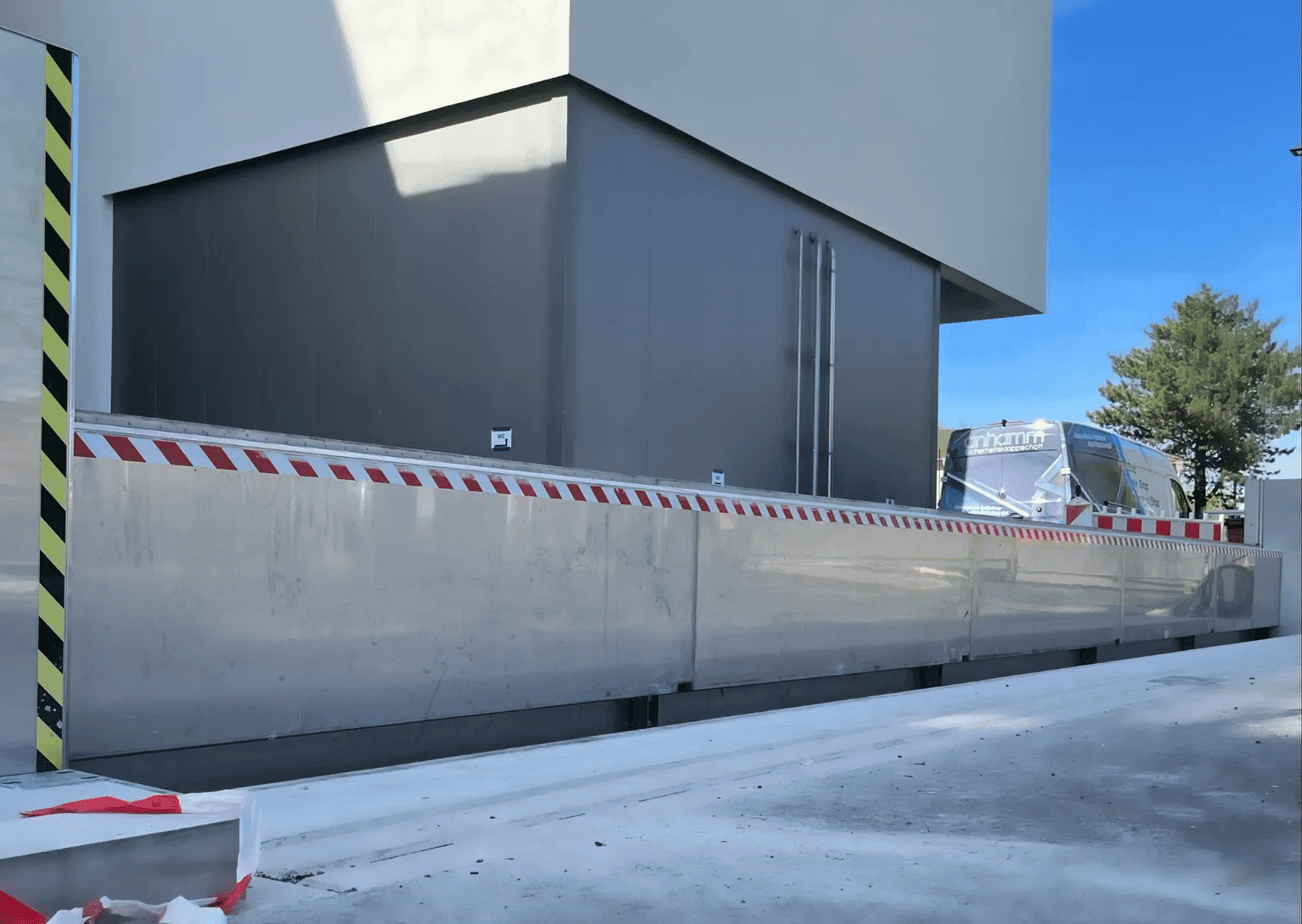
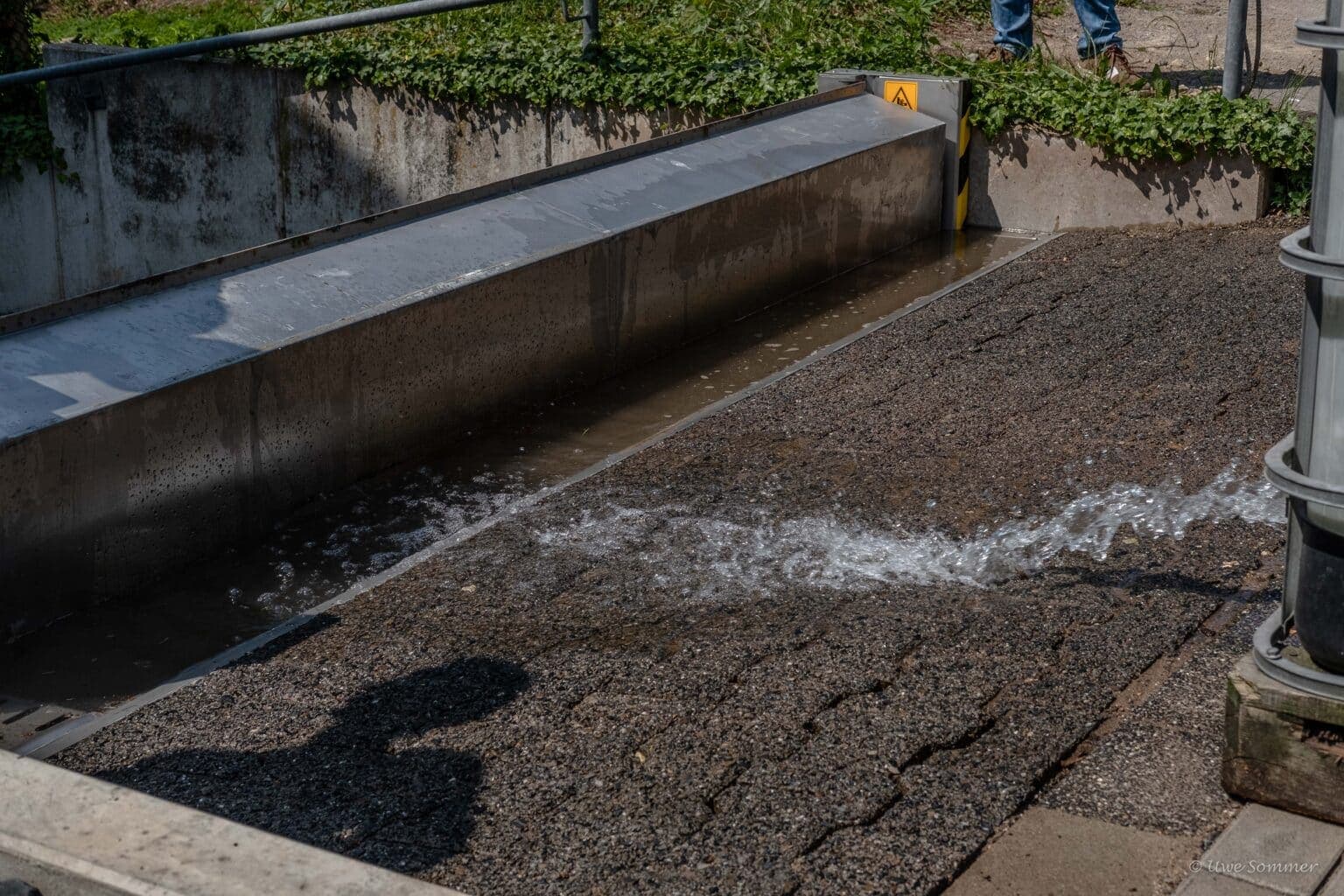
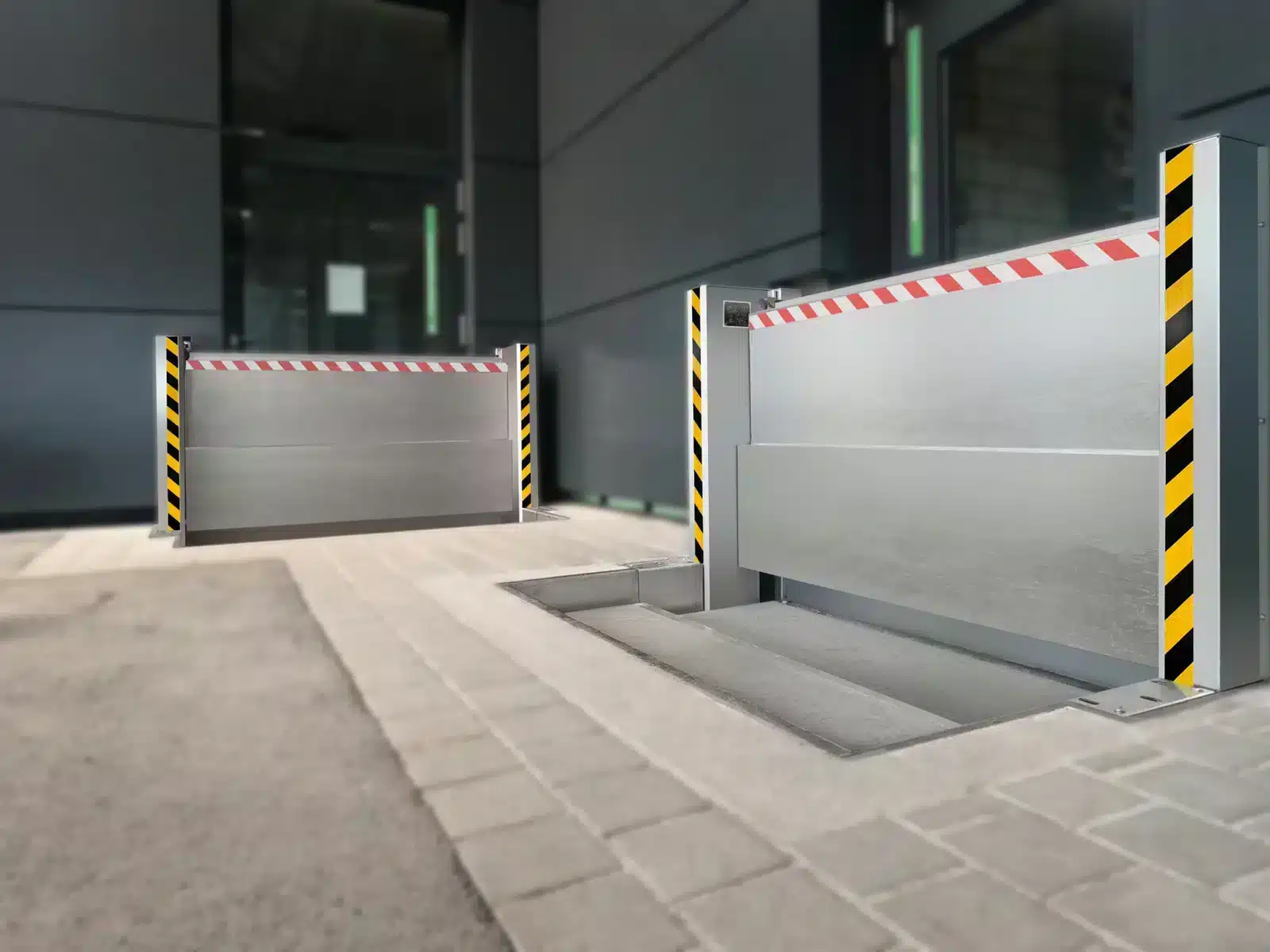
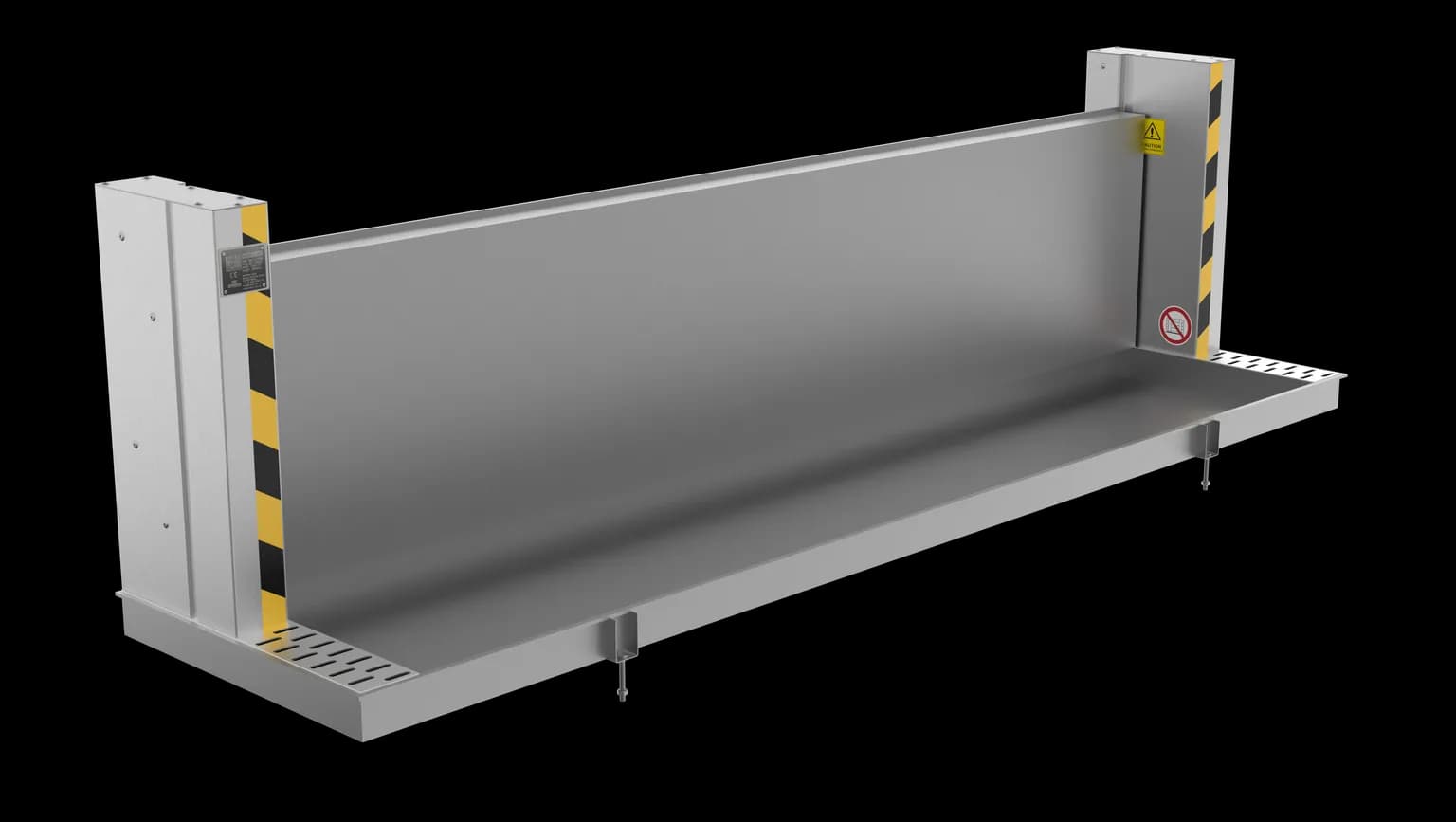
The Water Spillbarrier from Anhamm is a passive, water-activated barrier. It is installed flush with the floor in a tray between two side posts and is 100% mechanical: no motor, sensor or external power supply. Activation takes three steps.
- Water intake: Incoming water flows through the openings into the Spillbarrier tray.
- Automatic release: The water collecting in the tray triggers the barrier, which floats up.
- Seal and retain: Springs fold the panel into an upright, tightly closed position, and the barrier holds the water back.
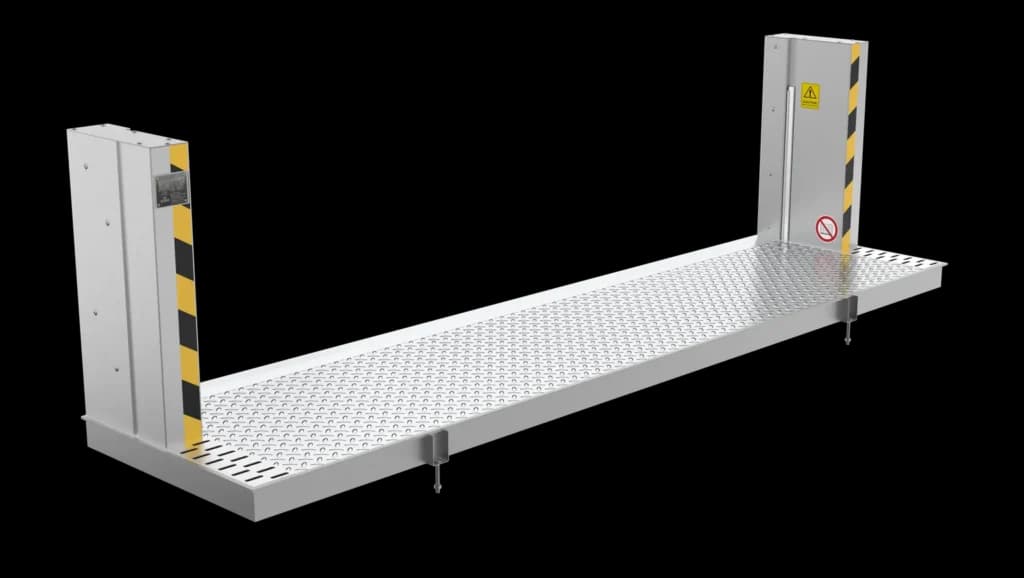
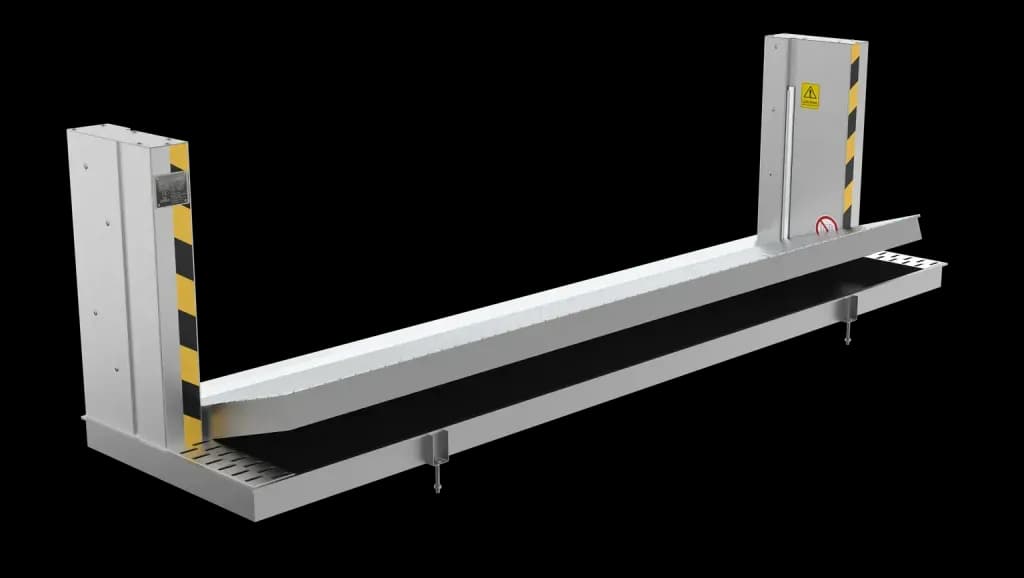
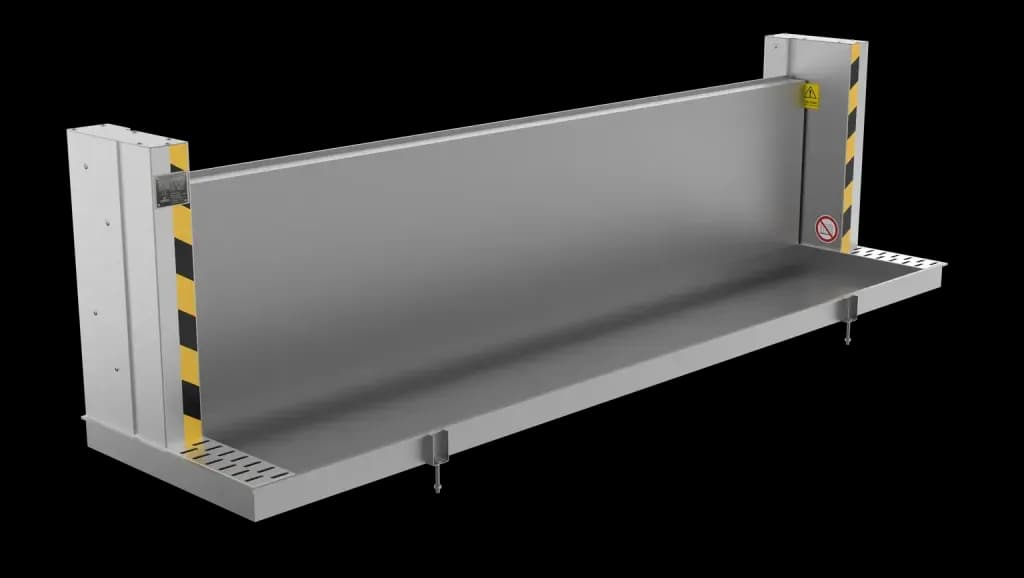
Because the flood itself is the trigger, the barrier also closes at night, at weekends or during a power cut. It is made of AISI 304 stainless steel with PTFE seals, built to measure for the opening width and available in sealing heights from 0.30 m to 2.40 m. Optional audible or visual signals and SmartBarrier notifications report when it has activated.
Where automatic flood barriers fit
Permanent automatic barriers are used at openings that cannot be left to chance:
- Underground car parks and ramps: water running down a ramp reaches every lower level, so the ramp entrance is a critical opening.
- Garages and driveways: of houses and residential buildings, where the opening is used every day.
- Building entrances, basements and plant rooms: where electrical, heating and technical equipment sits below the flood level.
- Loading docks and delivery entrances: where forklifts and trucks cross the threshold constantly and a mobile barrier would be in the way.
- Sites that are unoccupied at night or at weekends: where nobody could deploy a mobile barrier in time.
The Water Spillbarrier is installed flush with the floor, so pedestrians and vehicles cross it in normal operation. The drive-over capability of the Spillbarrier was tested under RW-TÜV supervision (DIN 1055); the load rating for your traffic is confirmed during project planning. Installed examples at residential entrances, parking areas and business premises are shown in the gallery, including the Côte d’Azur, where Spillbarriers have been installed in front of public and private buildings since 2020. For doors and garages specifically, see flood barriers for doors and garages; for typhoon-exposed sites, see automatic flood barriers for the Hong Kong typhoon season.
Limitations to plan for
An automatic barrier closes one opening. It does not make a building watertight on its own, and FEMA lists the usual causes of dry floodproofing failure: unidentified points of entry, poorly maintained components, components with insufficient resistance to flood loads and failure to implement active measures (FEMA TB 3).
Opening width and geometry
Each barrier is designed for its opening. The clear width, the slope of the floor or ramp and the depth available for a recessed tray decide the design. The Water Spillbarrier is made to measure for the opening width, and its design is adapted to site conditions such as sloping garage driveways.
Sealing height and the structure around it
The barrier must be higher than the design flood level, with the safety margin your local rules require. The Water Spillbarrier covers sealing heights from 0.30 m to 2.40 m. The walls, slab and door frame around it must also resist the water pressure at that height: FEMA lists reinforcing walls and slabs to resist water pressure as a dry floodproofing measure in its own right. For houses, French government guidance recommends limiting door barriers to 80 cm to avoid excessive pressure on the building (Géorisques). Higher barriers belong on structures designed for that load. Water can also rise above any design level, so a residual risk always remains.
Drainage, sewers and backflow
A barrier at the door does not stop water rising through floor drains, toilets or sewer connections. Backflow (non-return) valves or shutoff valves are needed on those lines. Rain that falls inside the protected area, for example on a ramp behind the barrier, still has to drain or be pumped away.
Groundwater and seepage
Water also finds its way through joints between walls and slab, cracks and pipe or cable penetrations, especially during long floods or when groundwater rises. FEMA’s list of dry floodproofing measures includes seals for joints and penetrations, sump pumps to control seepage water and backup power for those pumps.
Flow velocity and debris
Fast-flowing water and floating debris add loads that a still-water design does not cover. FEMA notes that ASCE 24 limits dry floodproofing to sites where expected flood velocities next to the structure are 5 feet per second (about 1.5 m/s) or less. The site assessment should therefore include velocity, rate of rise, duration and possible debris impact.
Access and escape
A raised barrier closes the opening for people too. Plan another safe exit and access for emergency services, and make sure staff know what a closed barrier means.
Maintenance
A passive barrier has no motor, control system or power supply to service, so the Water Spillbarrier requires minimal maintenance: periodic cleaning and inspection keep it ready. The main task is keeping the tray free of dirt, leaves and grit so that nothing obstructs the panel. The panel can be lifted by hand for cleaning, and optional service contracts with agreed intervals are available.
Whatever the system, write the inspections into a plan. FEMA reports that some dry floodproofing systems did not give the intended protection partly because components were not regularly tested or properly maintained. It recommends an inspection and maintenance plan covering shields, seals and gaskets, pumps and backflow valves, and notes that annual inspections also keep staff aware of the system (FEMA TB 3).
Planning checklist
- Define the flood scenario: source (river, heavy rain, coast, groundwater), design water level, duration, flow velocity and warning time, using official flood maps and local authority data.
- List every entry route: doors, ramps, light wells, vents, floor drains, sewer connections, cable and pipe ducts.
- Check the structure: have an engineer confirm that walls, slab and frames can take the water load at the chosen height.
- Measure each opening: clear width, floor slope, floor build-up and the depth available for a recessed tray.
- Define the traffic: pedestrians, cars, forklifts or trucks, so the load rating can be confirmed.
- Plan drainage behind the barrier: non-return valves, pumps with backup power and rainwater falling inside the protected area.
- Decide on signalling: whether you need audible or visual signals or remote notification when the barrier activates.
- Set up maintenance: an inspection schedule and a named person responsible.
- Check local requirements: permits, flood insurance conditions and any funding rules.
To find out whether a Water Spillbarrier fits a particular opening, send us the dimensions, photos and the expected flood level through the contact page.
Do automatic flood barriers need electricity?
Passive, water-activated barriers do not: the floodwater lifts them. Powered automatic barriers use electric, hydraulic or pneumatic drives and need a reliable power supply with backup. The Water Spillbarrier is 100% mechanical and works without any external power.
Are automatic flood barriers the same as water-activated flood bags?
No. Water-activated flood bags contain an absorbent material that swells on contact with water and must be laid out by hand before a flood. An automatic flood barrier is permanently installed at the opening and closes by itself. See water-activated flood barriers for the bags.
How high can an automatic flood barrier be?
The Water Spillbarrier is available in sealing heights from 0.30 m to 2.40 m. The usable height also depends on the structure around the opening, which must resist the water pressure; an engineer should confirm this for the chosen height.
Can vehicles drive over an automatic flood barrier?
Floor-recessed barriers are designed to be crossed in normal operation. The drive-over capability of the Spillbarrier was tested under RW-TÜV supervision (DIN 1055); the load rating for your vehicles is confirmed during project planning.
How much maintenance does an automatic flood barrier need?
A passive barrier requires minimal maintenance: keep the tray clean and inspect the barrier periodically. Powered systems additionally need their drives, controls and backup power tested. In both cases a written inspection and maintenance plan is good practice.