
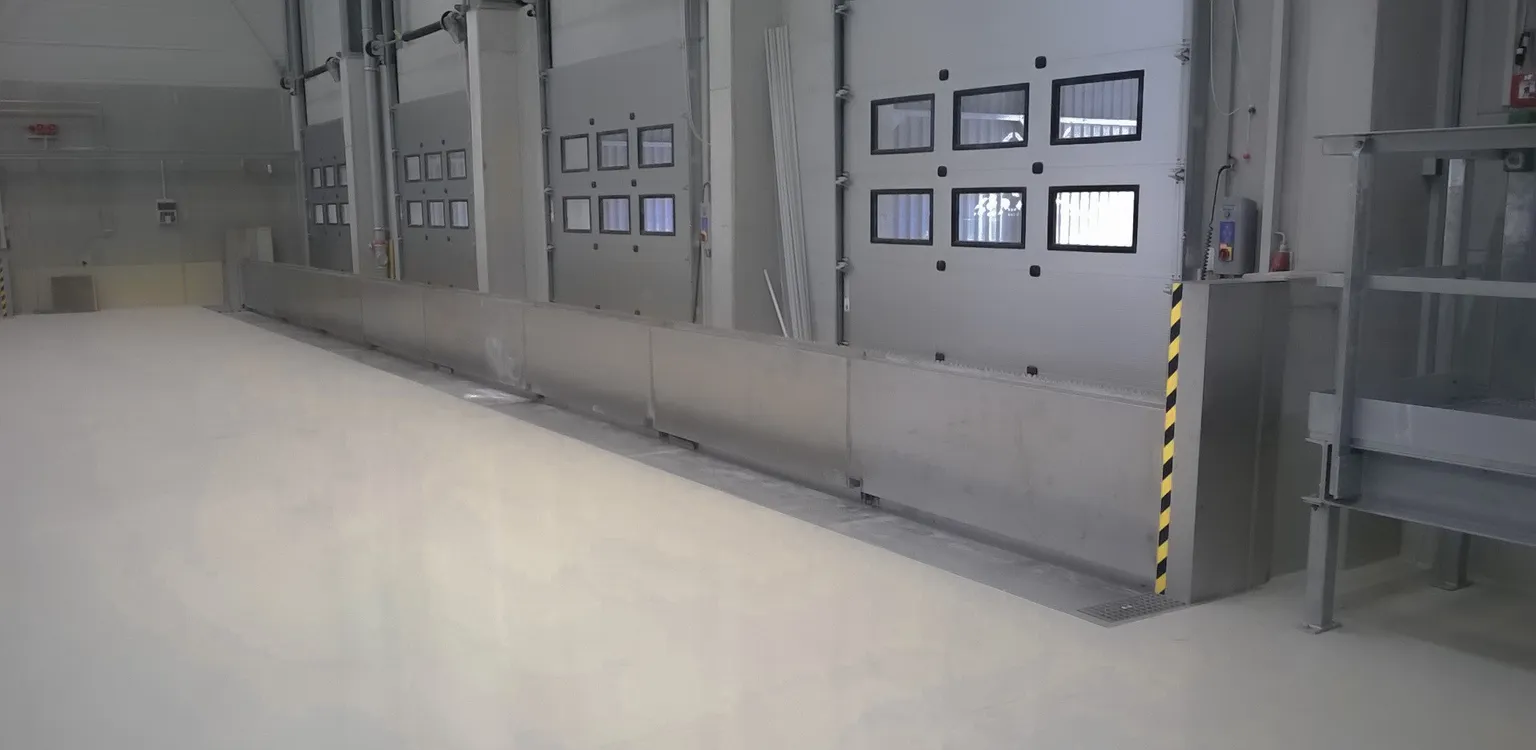
A flood protection gate is a barrier installed across a doorway, driveway, or floor opening that blocks incoming water. The most reliable versions activate automatically — a float mechanism inside the floor channel rises the instant water arrives, sealing the opening without electricity, sensors, or anyone present to operate it. This guide covers how these gates work, what separates automatic systems from manual and temporary alternatives, and what to check before specifying one for a facility.
Key Takeaways
- An automatic flood protection gate uses a float mechanism to activate on water contact — no power supply or manual triggering required.
- Automatic systems remain the only barrier type that still works when the power grid fails, which is common during the same storms that cause flooding.
- Stainless steel construction (AISI 304) is the industry standard for permanently installed flood gates, chosen for corrosion resistance rather than any specific lifespan claim.
- Sizing depends on three numbers: passage width, required sealing height, and the wheel load the gate needs to withstand if vehicles cross it.
What Is a Flood Protection Gate?
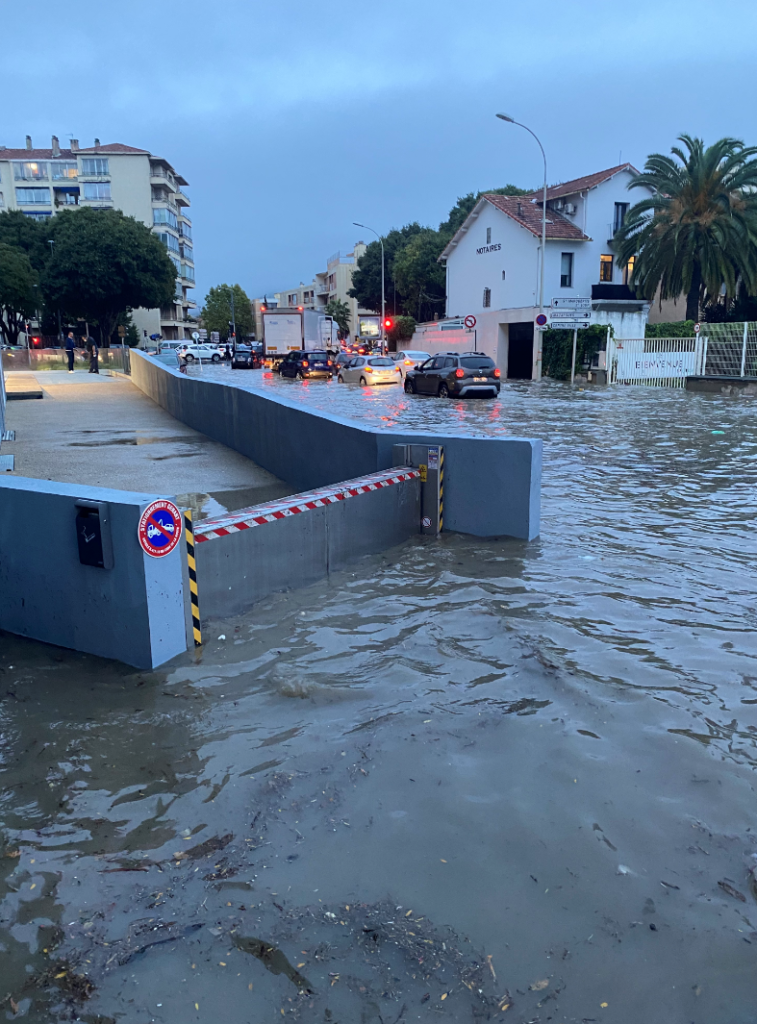
A flood protection gate is a physical barrier positioned across a vulnerable opening — a door, a driveway, a loading dock, a floor drain channel — that stops water from entering a building or storage area once it rises past a threshold. Unlike a flood wall or a berm, a gate is designed to sit flush with the ground during normal operation and only rise into position when it’s needed, so it doesn’t obstruct daily traffic.
The distinction that matters most for facility planning is how the gate activates. Manual gates need someone to install or close them before water arrives. Electric gates need power and, usually, a working sensor. Automatic passive gates use hydrostatic pressure and buoyancy — the same physics that makes a boat float — to trigger themselves the moment water reaches them.
Quick definition
An automatic flood protection gate is a mechanically activated barrier that seals an opening on direct contact with water, using a float mechanism rather than electricity, sensors, or manual operation.
How Automatic Flood Barrier Gates Work
The mechanism is purely mechanical, which is the whole point — nothing that can lose power or fail to receive a signal sits between the water and the response.
- Water enters the floor channel. The gate sits recessed and flat in a floor housing until water reaches it.
- The float rises. Rising water lifts an internal float through buoyancy alone — no electronic trigger.
- The barrier panel pivots upright. Springs assist the panel into a fully closed position as the float lifts it.
- The seal closes the opening. The panel forms a watertight seal against the frame, holding back the water on the exposed side.
- The gate resets automatically. Once water recedes, the panel lowers back to its resting position without manual intervention.
Types of Flood Barrier Gates Compared
Not every opening needs the same solution. The table below compares the main categories used for doors, driveways, and larger openings.
| Barrier Type | Activation | Power Required | Best For |
|---|---|---|---|
| Automatic passive gate | Float / hydrostatic pressure | None | Unattended openings, loading docks, permanent installations |
| Electric sliding/hydraulic gate | Motor + sensor | Yes | Wide openings where automation without a float channel is preferred |
| Aluminum dam beams | Manual assembly | None | Short-notice, temporary protection where staff are on-site |
| Water-filled barriers | Manual fill | None | Temporary perimeter protection, low-precision openings |
| Magnetic panels | Manual attachment | None | Metal-framed doors and windows, short-term use |
The trade-off is straightforward: temporary systems cost less upfront but depend on someone being present, aware of the risk, and able to deploy them in time. For unattended openings, night shifts, or facilities where a flash flood can develop faster than staff can respond, an automatic passive gate is the only category that doesn’t depend on human reaction time.
What Are Flood Protection Gates Made Of?
Permanently installed automatic gates are almost always built from stainless steel rather than aluminum or plastic, because the barrier sits in a floor channel exposed to moisture, road salt, and debris year-round. The Anhamm Spillbarrier water gate is manufactured in AISI 304 stainless steel, chosen for corrosion resistance in outdoor and semi-outdoor installations.
Rather than a general durability claim, the more useful figures are the ones that are actually tested and certified:
- 72-hour tightness rating, RW-TÜV and DMT approved
- FM Approval Standard 2510 water flap gate test — passed a debris-impact test using a 358 kg timber beam dropped from 2 m, with no relevant deformation or leakage
- TÜV-Nord certified (RW-TÜV 9.1.1, LÖWR1/99)
Aluminum dam beams and magnetic panels are lighter and easier to store, but neither is intended as a permanent, always-in-place solution — they’re deployed only when a flood warning gives enough lead time.
Flood Protection Gate Sizes and Technical Specifications
| Specification | Range / Value |
|---|---|
| Passage width | 0.7 m – 45 m |
| Sealing height | 0.3 m – 2.4 m |
| Material | AISI 304 stainless steel |
| Tightness | 72 hours; RW-TÜV, DMT approved |
| Wheel load | 3.25 t forklift axle load (certified via 200,000 load cycles at 6.5 t axle load) |
| Operating principle | Fully mechanical; no electricity or hydraulics |
Because the gate lies flush in a factory-adjusted floor housing, it can be crossed by forklifts, cars, and trucks without being lifted or removed first — a relevant factor for loading docks and driveways where the opening also needs to stay usable day-to-day.
Standards and Certifications

For US and international facilities, flood protection gates typically need to satisfy the same regulatory framework that governs secondary containment more broadly: NFPA 30 for facilities storing flammable or combustible liquids, and EPA 40 CFR 112 (SPCC) where oil storage triggers a Spill Prevention plan. We’ve covered the full regulatory picture — including EPA 40 CFR 264.175 for hazardous waste storage and FM Global underwriting standards — in our guide to climate change flooding and industrial facility compliance.
On the product side, the certifications that apply directly to the gate itself are TÜV-Nord (RW-TÜV 9.1.1, LÖWR1/99), FM Approval Standard 2510, and DIN 1055 for the wheel load rating. Ask any manufacturer for the underlying test data, not just a certification logo — the load rating and tightness period both come from specific, repeatable test conditions that should be disclosed.
Installation and Maintenance
Automatic gates are delivered as a factory-adjusted unit and installed into a prepared floor channel — most installations are completed without structural changes to the surrounding building. Because the mechanism is purely mechanical, ongoing maintenance is limited to periodic cleaning of the floor housing and a functional test to confirm the float still rises and seals correctly.
- Clean debris from the floor channel on a regular schedule, especially before flood season
- Run a manual functional test to confirm the panel rises and re-seats correctly
- Inspect seals visually for wear or debris damage
- Optional limit switches can trigger a warning light or acoustic alarm on activation, wired in by a licensed electrician
Some manufacturers offer optional maintenance contracts for facilities that prefer scheduled professional inspection over in-house checks — useful for larger sites managing multiple barriers across a facility, but not a requirement for the gate to function.
Choosing the Right Flood Protection Gate for Your Facility
Before specifying a gate, confirm four things:
- Opening width — measure the full passage that needs to be sealed, including any margin for uneven ground.
- Required sealing height — based on realistic flood or heavy-rainfall levels for your site, not just historical averages.
- Vehicle traffic — if forklifts or trucks need to cross the opening, confirm the gate’s certified wheel load rating.
- Whether the opening is staffed — unattended entrances, loading docks, and night-shift facilities are the strongest case for automatic over manual systems.
The Anhamm Spillbarrier automatic flood barrier covers this full range — 0.7 m to 45 m passage widths and up to 2.4 m sealing height — as a factory-built, TÜV-certified system for facilities that need door and driveway openings sealed without relying on staff response time.
FAQ
Anhamm Technical Team
This guide was written by the engineers and industrial safety specialists at Anhamm, manufacturer of the automatic liquid containment barrier systems sold under the Spillbarrier brand. With over 30 years designing and installing containment systems across Europe and North America, the Anhamm team supports HSE managers, facility operators, and engineering consultants on flood, chemical, and firewater retention compliance.
Sources and Further Reading
- NFPA 30 — Flammable and Combustible Liquids Code
- US EPA — Spill Prevention, Control, and Countermeasure (SPCC) Rule, 40 CFR Part 112
- FM Approvals — Property Loss Prevention Data Sheets

