
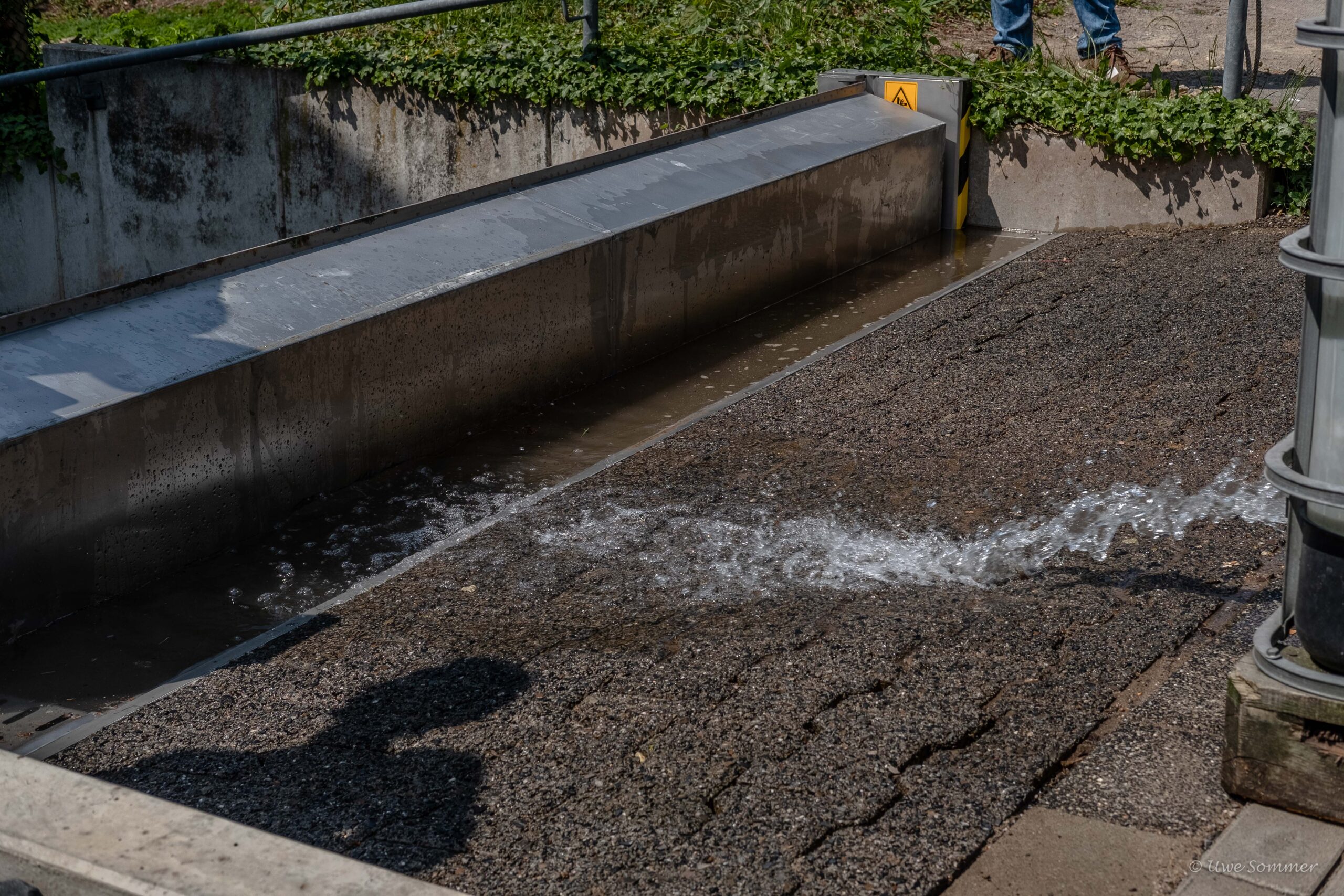
Flood protection for your home is the combination of risk planning, the right barrier systems, correct installation, and a prepared emergency response that prevents water from entering and damaging your property. With flood events increasing in frequency and severity across Europe and North America, every homeowner in an at-risk area needs a clear, actionable plan. This guide walks you through the complete process in five steps — from assessing your flood risk to deploying an emergency plan — so you can protect your home with confidence.
Table of Contents
Key Takeaways
- Flood protection for your home is most effective when it combines passive automatic barriers with a documented emergency plan.
- A thorough risk assessment is the essential first step — it determines which flood type threatens your property and which protection system is required.
- Automatic, mechanically activated flood barriers require no power, no manual deployment, and activate the moment water rises.
- Regular maintenance every two years ensures your home flood protection system performs when it is needed most.
- An emergency plan assigns clear responsibilities before a flood event — making it far more likely those responsibilities are actually carried out.
Why Flood Protection for Your Home Is More Important Than Ever
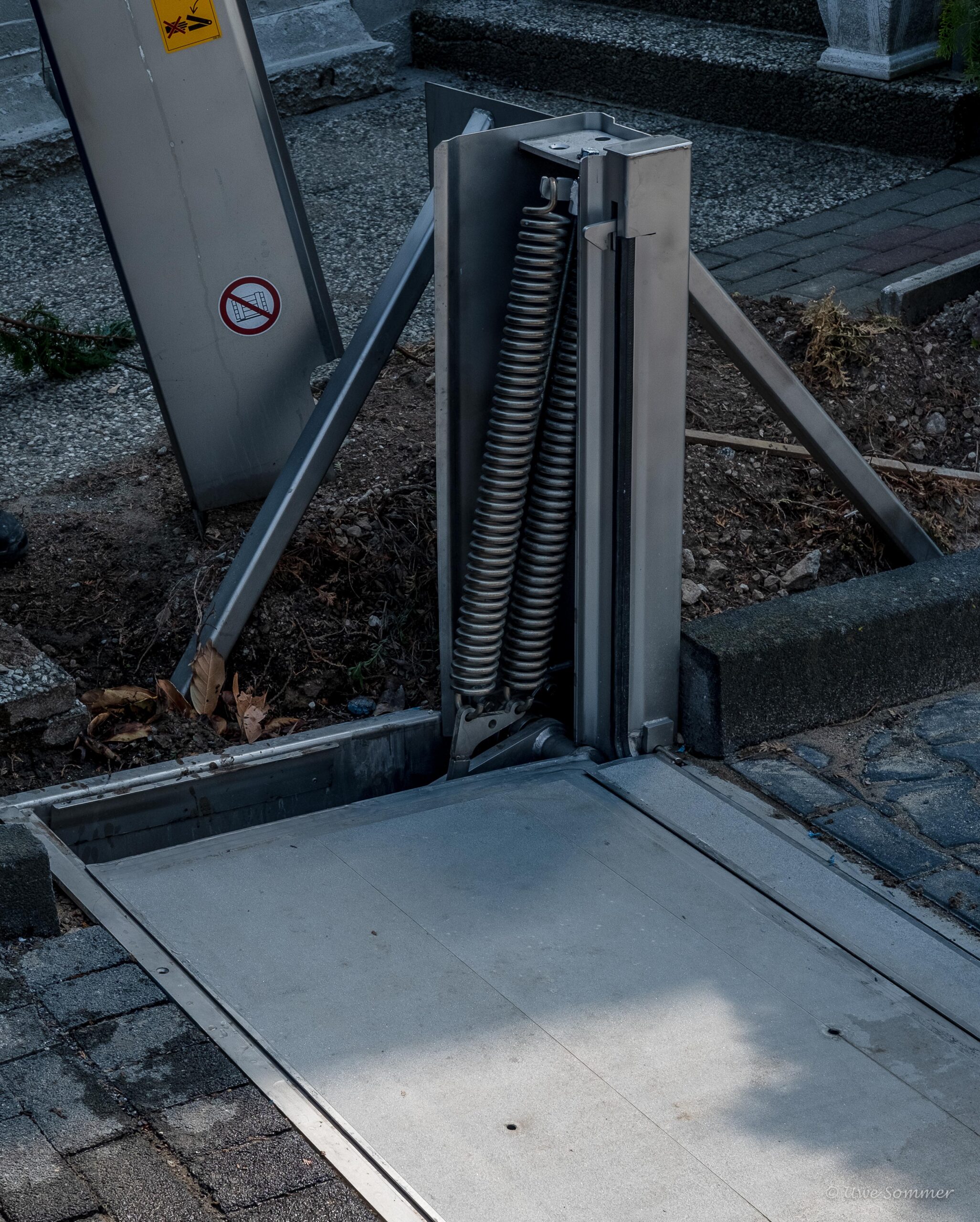
Flooding is one of the most damaging natural hazards affecting homes across Europe. Flood frequency and intensity have been increasing for decades — a trend documented by the European Environment Agency and addressed at the legislative level through EU Directive 2007/60/EC on flood risk assessment and management. River flooding, surface water flooding from heavy rainfall, and sewer surcharge events each present distinct risks to residential properties, and each requires a different protective response. Understanding which type affects your home is the foundation of any effective flood protection strategy.
Preventive flood protection for your home consistently outperforms reactive repair in both cost and outcome. A correctly specified and installed automatic flood barrier protects structural integrity, prevents contents damage, and supports insurance compliance. The lessons from events like the 2021 Ahr Valley flood — which killed at least 135 people and caused billions in damages across Germany — make clear what happens when residential properties lack adequate passive flood protection. Many of the homes that were destroyed had no threshold barriers at all; others had manual systems that could not be deployed in time as water rose within minutes.
Modern automatic flood protection systems activate the moment water reaches the threshold — with no power supply, no manual action, and no delay. This is the critical technical distinction between passive and active systems. In a fast-rising flood event, the minutes required to manually deploy a barrier are often the minutes that determine whether a building stays dry or sustains tens of thousands of euros in damage. For a broader overview of the available flood protection systems and how to choose between them, our dedicated guide covers the full range of options.
Step 1: Flood Risk Assessment — The Foundation of Home Flood Protection
Effective flood protection for your home begins before any product is purchased or installed. The first step is a structured risk assessment that identifies the flood type, expected water depth, and all vulnerable entry points specific to your property. In the UK, this begins with the Environment Agency Flood Map for Planning; in Germany, the Hochwasserzentralen network provides equivalent regional data. These tools categorise your property by flood zone, probability, and expected water depth — the technical inputs that determine every specification decision that follows.
Three flood types are most relevant to home flood protection, and they require different responses. Fluvial flooding (river overflow) tends to rise gradually and is often forewarned by monitoring systems, giving you time to respond. Pluvial flooding (surface water from intense rainfall) can be extremely rapid and highly localised — a blocked drain can cause ground-floor inundation within minutes. Sewer surcharge — where overloaded municipal drainage systems back up through floor drains, toilets, and service penetrations — is among the most common and underestimated causes of internal flood damage, particularly in older urban areas. To understand how to determine your home’s flood risk in full, including the assessment tools and methods used by professionals, our detailed guide provides a practical walkthrough.
Site layout decisions also have a significant long-term impact on flood vulnerability. Buildings on raised foundations, with terrain graded away from the structure and with maximised permeable surfaces — grass, gravel, or sustainable drainage systems (SuDS) — are inherently more resilient. For existing properties, a flood risk survey by a qualified engineer is recommended before committing to a specific strategy, particularly for properties within a defined flood zone or with a history of water ingress. Document all identified entry points with their measured dimensions and estimated maximum water depths — this specification is the direct input for Step 2. The role of climate change in increasing flood risk for homes and industrial facilities is also worth understanding when planning long-term protection, as projections indicate risks will continue to increase.
Step 2: Choosing the Right Flood Protection System for Your Home
The flood protection market offers several product categories, each suited to specific scenarios, water depths, and entry point types. Choosing the wrong system — even an expensive one — will not protect your home if it is not matched to the flood type and entry point dimensions you actually face. The four most relevant categories for residential flood protection are set out below.
| Feature | Permanent Automatic | Temporary / Manual | Backwater Valve |
|---|---|---|---|
| Activation | Automatic — mechanical | Manual — requires deployment | Automatic — float-triggered |
| Response time | Immediate | Minutes to hours | Immediate |
| Power required | No | No | No |
| Flood type protected | Threshold ingress | Perimeter / threshold | Drainage backflow only |
| Service interval | Every 2 years | After each use | Annual |
| Service life | 25–30+ years | 5–15 years | 10–20 years |
For homes with defined, permanent entry points — front doors, garage thresholds, cellar entrances — a permanent automatic flood protection system is the most reliable long-term solution. It removes the human dependency that all manual systems share: the need for someone to be present, alert, and physically capable of deploying the barrier before water enters. For detailed guidance on flood protection for doors and garages — including sizing, anchoring, and threshold detailing — our specialist guide covers each entry point type in depth.
Material selection matters. High-grade aluminium and glass-reinforced polypropylene are the standard frame materials, both offering structural rigidity, corrosion resistance, and a service life exceeding 25 years. Bespoke sizing is critical: the barrier frame must match your opening dimensions precisely to achieve a watertight perimeter seal. A standard off-the-shelf barrier fitted to a non-standard opening will leak under hydrostatic load. For properties also handling flammable or aggressive liquids, additional barrier properties are required — standard flood protection systems are not rated for those applications; you would need specialist fire-resistant barriers for flammable liquids or chemical spill barriers for aggressive liquids instead.
Step 3: Installing Your Home Flood Protection System
Correct installation is the factor that most directly determines whether your home flood protection system will perform reliably under real conditions. A barrier that is misaligned, inadequately anchored, or fitted with a poorly compressed seal will leak under hydrostatic load — and the failure will occur at the moment of greatest water pressure. Installation begins with a floor recess prepared to the exact dimensions specified in the product drawings, maintaining uniform depth across the full span of the opening. Any deviation creates uneven seal compression and a potential water ingress path.
Frame alignment is achieved using wooden wedges or precision tensioning screws before final fixing. Once the frame is confirmed level, it is anchored to the wall structure on both sides using fixings rated for the substrate — expansion anchors for masonry, chemical anchors for concrete, structural screws for timber-frame construction. After fixing, the perimeter seal must be inspected along its full length to confirm uniform compression. A functional water test — simulating activation before handover — is the only reliable confirmation that the installation is watertight. For comprehensive guidance on modern flood protection for doors and windows, including threshold detailing and seal specification by entry point type, our dedicated article covers the full technical scope.
Garage entrances require particular care. Wide spans create greater tolerance demands on the floor recess, and the absence of a fixed door frame means the barrier must be self-supporting, wall-anchored on both sides. For openings exceeding 3 metres, a mid-span support post prevents deflection under hydrostatic load. Aluminium dam beam systems are effective for door thresholds where flood levels may periodically exceed standard threshold height — additional beam sections stack to increase protection height as required. All installations should be carried out by a certified contractor; self-installation risks voiding both the product warranty and your building insurance coverage.
Home Flood Protection Installation: Key Requirements
- Floor recess prepared to exact product specification — uniform depth across full opening span
- Frame levelled using wedges or tensioning screws before final anchoring
- Fixings rated for substrate: masonry, concrete, or timber frame
- Perimeter seal compression confirmed uniformly along full frame perimeter after fixing
- Functional water test completed prior to handover
- Installation documented with date, product batch, and contractor certification details
Step 4: Maintaining Your Flood Protection System
A home flood protection system that has not been maintained since installation cannot be assumed to perform in a real event. Regular maintenance ensures mechanical components remain functional, seals retain their elasticity, and the activation mechanism is clear of obstruction. The following schedule reflects best practice in line with BS EN 13564 — the European standard for anti-flooding devices in buildings.
- Full service inspection every two years — verify activation mechanism, seal condition, fixing integrity, and frame for corrosion or damage
- Hinged and folding barriers: visual check every six months — inspect pivot points, hinge condition, and seal compression
- Perimeter rubber seals: inspect annually for hardening or cracking; replace approximately every 10 years, or earlier when compression loss is observed
- After any flood event activation: clean the housing, remove debris, inspect for damage, and document before returning to standby
Rubber seals are the highest-wear component in any flood protection system. They form the watertight interface between the barrier panel and the frame, and their performance degrades over time through UV exposure, temperature cycling, and contact with contaminants. Periodic cleaning of the barrier housing — removing silt, leaves, and organic debris — prevents obstruction of the activation float and slows seal deterioration. A blocked housing can prevent an otherwise functional automatic barrier from activating, so cleaning is operational maintenance, not cosmetic.
The Spillbarrier system’s purely mechanical operation eliminates the failure categories associated with electrical, pneumatic, and hydraulic components — no solenoids to corrode, no control boards to fail during a power cut, no pneumatic lines to develop leaks. The system also resets automatically once floodwater recedes, requiring no manual reset or call-out. To understand why Spillbarriers are considered among the most reliable automatic flood protection systems available, our comparative technical analysis explains the engineering rationale in detail.
Step 5: Emergency Planning — The Final Layer of Home Flood Protection
A flood protection system secures your entry points, but an emergency plan ensures that every person in your household knows what to do when a flood warning is issued — before water arrives. Register with your national flood alert service: in the UK, this is the Environment Agency Flood Warnings service; in Germany, the Hochwasserzentralen network. Early warning is consistently cited by insurers and emergency services as the single most impactful factor in reducing flood damage outcomes. For a structured approach to creating an emergency plan for your home and garden, including a downloadable checklist, our dedicated guide covers each element in practical detail.
Prepare a dedicated emergency bag and keep it in a known, accessible location above likely flood level. It should contain: copies of key documents in a waterproof wallet; prescription medications for at least three days; cash; a battery or wind-up torch; a portable power bank; waterproof clothing and rubber boots; and a first aid kit. Assign clear responsibilities in advance — who monitors the flood alert, who activates any remaining manual barriers, who isolates gas, electricity, and water, and who leads evacuation if required. An unassigned responsibility in an emergency is a responsibility that will not be carried out.
When a warning is issued, take the following building protection steps in sequence:


Shut off gas, electricity, and mains water at isolation points before floodwater enters. Do not re-enter the building until structural safety has been confirmed — floodwater can compromise foundations, contaminate electrical systems, and introduce biological hazards not visible on the surface. Document all damage with dated photographs before any remediation begins; this evidence is required by most insurers to process claims. The Ahr Valley reconstruction analysis and Washington 2025 flood case study both provide sobering reference points on what post-flood recovery actually costs and requires when flood protection for the home was absent or insufficient.
How Does Automatic Flood Protection for Your Home Work?
An automatic home flood protection system operates on a direct mechanical principle: the rising water itself activates the barrier. There is no sensor network, no control panel, and no power connection. The Spillbarrier system integrates a precision-engineered float mechanism within the barrier frame housing, recessed into the floor at the threshold. As water enters the housing and rises — typically 10 to 20 mm above floor level — the float lifts and drives the barrier panel into the sealed position through a direct mechanical linkage. The panel compresses against the perimeter seal, creating a watertight closure across the full opening width.
This mechanical simplicity is a deliberate engineering choice. Electrically or hydraulically actuated barriers introduce failure modes — power outages, valve seizure, sensor malfunction, control board failure — that are most likely to occur during the same storms and grid disruptions that accompany serious flooding. Spillbarrier eliminates all of these dependencies. It responds to water alone, resets automatically when water recedes, and requires no manual intervention at any stage. For a deeper analysis of why automatic systems provide 24/7 flood protection that no manual system can match, our technical overview explains the full engineering rationale.
Case Study: Automatic Flood Protection During a Real Flood Event
Real-world deployment: Spillbarrier automatic flood protection activating during an active flood event, demonstrating zero-power mechanical response under operational conditions.
Spillbarrier System: Technical Overview
Technical walkthrough of the Spillbarrier permanent automatic flood protection system design, float mechanism, and activation sequence.
Flood Protection Standards Every Homeowner Should Know
Specifying a certified flood protection system for your home is a requirement in many jurisdictions — not just a recommendation. Insurance validity, planning permission for flood-zone developments, and building regulation compliance all depend on demonstrable product certification. The primary standard governing anti-flooding devices for buildings in the UK and EU is BS EN 13564, covering requirements (Part 1), test methods (Part 2), and quality assurance (Part 3). A BS EN 13564-certified product has been independently tested to confirmed watertightness levels at defined hydrostatic pressure — a claim no uncertified product can make.
In Germany, the technical guideline DWA-M 353 (published by the Deutsche Vereinigung für Wasserwirtschaft, Abwasser und Abfall) provides planning and installation requirements for flood protection measures in buildings. At the EU level, Directive 2007/60/EC requires member states to produce flood hazard and risk maps and implement flood risk management plans — the regulatory environment that directly drives demand for compliant flood protection systems across Europe. In the UK, properties in Flood Zones 2 or 3 must demonstrate compliance with NPPF flood risk assessment requirements. For industrial properties, chemical protection barrier system compliance under COMAH or equivalent EU regulations may apply in addition to standard flood protection requirements.
Ready to Protect Your Home?
The Spillbarrier system provides automatic flood protection for your home — activating the moment water rises, with no power, no manual deployment, and no delay. Designed for residential, commercial, and industrial applications.
FAQ
What is flood protection for your home and why does it matter?
Flood protection for your home is the combination of physical barrier systems, drainage measures, and emergency planning that prevents floodwater from entering and damaging your property. It matters because flooding is increasing in frequency due to climate change, and preventive protection is consistently more cost-effective than repairing flood damage after the fact. An automatic system such as the Spillbarrier provides passive, permanent protection that activates the moment water rises — with no manual action and no power required.
What types of home flood protection systems are available?
The main categories are: permanent automatic barriers (mechanically activated, no power required, integrated into door and garage thresholds); aluminium dam beam systems (manually stacked for variable flood depths); water-activated barriers (self-expanding panels triggered by contact with water); backwater valves (automatic drainage pipe closure against sewer surcharge); and temporary deployable barriers (inflatable or panel-based perimeter systems). For comprehensive home flood protection, automatic threshold barriers and backwater valves are often required in combination.
Which flood protection system is most reliable for homes?
Permanent automatic barriers — such as the Spillbarrier — offer the highest reliability because they activate instantly without any human input and contain no electrical or hydraulic components that can fail during a power cut. Manual and temporary systems depend on someone being present and physically deploying the barrier before water arrives, which is not always possible during a fast-rising flood event. For residential properties with defined entry points, a certified permanent automatic system is the recommended baseline.
How often does a home flood protection system need maintenance?
Permanent automatic flood protection systems require a full service inspection every two years. Hinged or folding barriers should be visually checked every six months. Rubber perimeter seals should be inspected annually and replaced approximately every 10 years, or earlier if hardening or cracking is observed. After any real flood event activation, the system should be cleaned, inspected, and confirmed operational before being returned to standby. These intervals align with BS EN 13564 anti-flooding device standards.
Does the Spillbarrier automatic flood protection system require electricity?
No. The Spillbarrier operates entirely on mechanical principles — a float mechanism responds directly to rising water and drives the barrier panel through a mechanical linkage. There are no electrical, pneumatic, or hydraulic components. This means the system provides reliable home flood protection even during power outages, which frequently occur during the storm events that accompany serious flooding.
What flood protection standards apply to residential properties?
In the UK and EU, the primary standard for anti-flooding devices is BS EN 13564, covering performance requirements, test methods, and quality assurance. In Germany, DWA-M 353 provides technical planning and installation guidance for building flood protection measures. UK properties in Flood Zone 2 or 3 must also comply with National Planning Policy Framework (NPPF) flood risk assessment requirements. Always request a type-test certificate referencing the applicable standard when specifying a home flood protection system.
Can a flood protection barrier also protect against sewer backflow?
A threshold barrier protects against water entering through above-ground openings — doors, windows, and garage entries. Sewer backflow — where wastewater backs up through floor drains or toilet connections during sewer surcharge — requires a separate solution: a backwater valve installed within the drainage run. For comprehensive flood protection for your home, both measures are often required in combination, particularly for properties with below-grade spaces or in areas with limited drainage capacity.
Spillbarrier Engineering Team
The Spillbarrier Engineering Team consists of industrial safety engineers, technical writers, and flood protection specialists with extensive experience in automatic containment system design and installation. Our areas of focus:
- Developing automatic, energy-free flood and spill containment systems for residential, commercial, and industrial applications
- Providing technically accurate, actionable guidance on flood protection standards, compliance, and best practice
- Delivering content grounded in engineering principles and documented real-world system performance
Disclaimer: This article is for informational purposes and does not replace professional engineering or flood risk consulting. For site-specific assessment and system specification, consult a qualified flood risk surveyor or structural engineer.

