
Updated in August 2026 — this article has been completely rebuilt, not just translated, using current German government reconstruction data, court and disciplinary records, and reporting from July 2026, five years after the disaster.
Ahr Valley flood recovery is a case study in exactly how long, how contested, and how incomplete disaster rebuilding can remain even in one of the world’s wealthiest countries, with one of its most generous recovery funds. On the night of July 14–15, 2021, catastrophic flash flooding struck the Ahr Valley in Rhineland-Palatinate, Germany, causing tens of billions of euros in damage and becoming one of the deadliest natural disasters in modern German history. For the full breakdown of what caused the flood and what it means for flood protection strategy, see our companion article on key lessons from the 2021 Ahr Valley flood. This article picks up where that one leaves off: what has actually happened in the five years since — the money, the accountability, and the rebuilding itself.
Quick answer: five years after the July 2021 flood, Ahr Valley flood recovery is still incomplete. More than €3.7 billion in reconstruction aid has been approved for the region, but only about €2.4 billion had actually been paid out by July 2026, against roughly €10 billion in total reported damage. Germany’s federal prosecutor closed its criminal investigation into the region’s former top official without charges in 2024 — upheld on appeal in 2025 — though a separate disciplinary finding in 2025 concluded he had “seriously violated” his official duties.
Ahr Valley Flood Recovery: Key Takeaways
- Ahr Valley flood recovery has been dramatically slower than promised: nationally, only about €6.2 billion of the up to €30 billion “Aufbauhilfe 2021” fund had been paid out by mid-2026 — roughly one-fifth, five years after the disaster.
- For the Ahr region specifically, 96.4% of nearly 20,800 completed reconstruction applications were approved, with more than €3.7 billion in aid approved — but only about €2.4 billion actually disbursed by July 1, 2026, against roughly €10 billion in total reported damage.
- Germany’s federal prosecutor closed its criminal investigation into the county’s former top elected official (Landrat) in 2024, finding no sufficient basis to prosecute for negligent homicide — a decision upheld on appeal in October 2025. A separate 2025 disciplinary finding concluded he had “seriously violated” his official duties.
- A 2024 parliamentary investigation spanning 42 hearings and a roughly 2,100-page final report found severe, systemic failures in early warning, coordination, and emergency response — failures with direct relevance to how U.S. counties handle flash-flood alerts.
- Ahr Valley flood recovery is rebuilding differently, not just rebuilding back: new flood infrastructure includes a 480-meter retaining wall and deliberately restored floodplains designed to give the river more room during the next extreme event.
Table of Contents
What Happened During the Ahr Valley Flood?
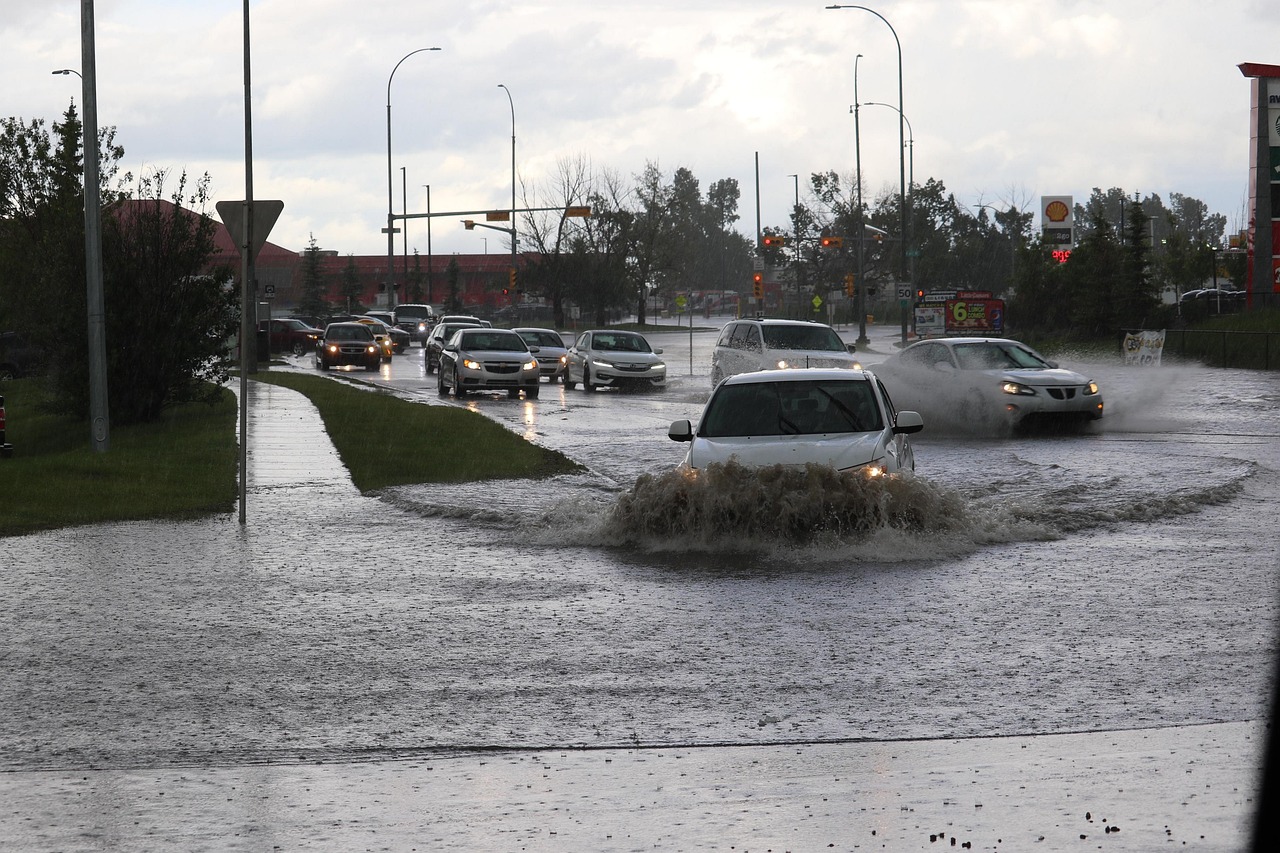
On the night of July 14 into July 15, 2021, a slow-moving low-pressure system dropped extreme, sustained rainfall across western Germany and parts of Belgium. In the narrow, steep-sided Ahr Valley, the river rose with almost no warning, reaching flood levels that overwhelmed homes, bridges, and entire town centers within hours. The disaster killed 135 people in Rhineland-Palatinate (overwhelmingly in the Ahr Valley), with a further 49 deaths in North Rhine-Westphalia and 5 elsewhere in Germany — a national total of 188 deaths. Including Belgium, where 38–39 people died, the broader Western European flood event killed roughly 230 people in total, making it one of the deadliest natural disasters in modern German history.
What made this event so lethal wasn’t just rainfall volume — it was the same climate-driven intensification pattern our research documents in heavy rainfall and flooding trends across the U.S.: a warmer atmosphere holding and then releasing more concentrated moisture, in a narrow valley with almost no time between the first alert and the water arriving.
Ahr Valley Flood Recovery, Five Years On: Where Did the Money Actually Go?
In the aftermath of the flood, the German federal government established a special reconstruction fund, “Aufbauhilfe 2021,” authorizing up to €30 billion nationally to rebuild homes, businesses, and infrastructure across all regions affected by the 2021 floods, not just the Ahr Valley. Five years later, German public broadcaster ZDF reported in July 2026 that only about €6.2 billion — just over one-fifth of that ceiling — had actually been disbursed nationwide. Of that amount, roughly €5.2 billion went to individual states and about €1 billion to federal infrastructure reconstruction.
Ahr Valley flood recovery funding: promised vs. disbursed (5 years later)
Maximum national
fund ceiling
Actually disbursed
nationally by mid-2026
Disbursed specifically
in the Ahr Valley
Source: ZDF (July 2026), citing German Federal Ministry of Finance and Rhineland-Palatinate Ministry of Construction data.
The Ahr Valley itself, in Rhineland-Palatinate, was the hardest-hit single region, and its recovery numbers illustrate the gap between approval and payment — a distinction that matters more than it might first appear. According to the state’s construction ministry, 96.4% of the nearly 20,800 fully submitted applications for reconstruction aid in the Ahr Valley had been approved by the July 2026 cutoff. Approved funding for the region now totals more than €3.7 billion. But approval isn’t the same as money in hand: only about €2.4 billion had actually been paid out by July 1, 2026, with the remaining approved funds still moving through disbursement. Total reported flood damage across the affected region stood at roughly €10 billion as of the June 30, 2026 reporting cutoff — meaning even fully disbursed approved aid wouldn’t cover the complete damage bill.
Why the gap? German reconstruction aid is disbursed in stages tied to construction milestones rather than as a single lump sum — designed to prevent misuse of public funds, but it also means many households had to bridge years of waiting with savings, private insurance, or short-term loans. This is precisely why we built our own guide to determining your home’s flood risk around a simple premise: public recovery funding, even when well-intentioned, cannot be your primary flood strategy.
What Happened to the Officials in Charge During the Ahr Valley Flood?
One of the most consequential parts of Ahr Valley flood recovery has nothing to do with construction — it’s the question of whether anyone was held responsible for how badly the emergency response failed on the night of the flood. That question ran through German courts and disciplinary proceedings for nearly four years before reaching a conclusion.
Jürgen Pföhler, then the top elected county official (Landrat) for the Ahrweiler district, faced a criminal investigation by the Koblenz public prosecutor’s office beginning in August 2021, on suspicion of negligent homicide and negligent bodily harm through failure to act. The core allegation: Pföhler and his crisis team received early flood warnings hours before the disaster but declared a formal state of emergency only at 11 p.m. — by which point, according to a subsequent parliamentary investigation, homes were already being swept away by the floodwaters.
In April 2024, the Koblenz prosecutor’s office announced it was closing the criminal investigation against both Pföhler and the head of the crisis response center, concluding there was insufficient evidence of a prosecutable offense despite the delayed warnings. Victims’ families appealed that decision, but in October 2025 Germany’s Attorney General’s office in Koblenz upheld the dismissal, finding no criminally relevant misconduct after a full review of events before and during the flood night.
That wasn’t the end of the accountability question, though. Separately from the criminal case, Rhineland-Palatinate’s interior ministry pursued a disciplinary proceeding against Pföhler, and in July 2025 that investigation reached a preliminary conclusion with real teeth: it found that Pföhler had “seriously violated his duties as a civil servant” before, during, and after the flood — specifically citing violations of his legal obligations, his duty of proper conduct in office, and the active-response duty required under German civil service law. The ministry indicated it intended to pursue disciplinary charges seeking to strip Pföhler of his pension entitlements, a consequence separate from and independent of the criminal case.
Why this split verdict matters for U.S. emergency management
Germany’s outcome — no criminal conviction, but a formal disciplinary finding of serious duty violations — is a useful template for how accountability can work even when a criminal case doesn’t succeed. This exact pattern played out again during the historic December 2025 flooding in King County, Washington, where the official post-event report documents a strikingly similar sequence: rapid onset, levee stress, and a recovery and accountability process still being assessed months later.
The broader institutional failures went well beyond one official. A parliamentary investigative committee in the Rhineland-Palatinate state legislature held 42 hearing sessions over roughly two and a half years, concluding its evidence-gathering in February 2024 and publishing a final report of approximately 2,100 pages in mid-2024. Its core finding: even though sufficient warning information was available early enough to act, neither the county administration nor state government agencies translated that information into concrete measures, instructions, or public warnings — a near-total absence of coordination and no functioning reporting channels between agencies.
The Ahr Valley Flood Recovery: What’s Actually Changed on the Ground?
Five years on, Ahr Valley flood recovery is not simply reconstructing what was lost — in several towns, it’s deliberately rebuilding with a different relationship to the river. Reporting from Deutsche Welle in July 2026, marking the five-year anniversary, documented new infrastructure specifically designed to give the Ahr more room during future extreme events rather than just holding the same footprint with taller walls.
Rebuilding differently: three concrete changes
480m new retaining wall | Restored floodplains reversing prior development | Redesigned bridges to reduce debris-damming
A new 480-meter retaining wall has been constructed in one of the hardest-hit stretches of the valley, engineered specifically around lessons learned from how the 2021 flood behaved. Restored floodplains are being reestablished in select locations, deliberately reversing decades of prior development that had encroached on the river’s natural flood zone — trading some previously buildable land for flood storage capacity during extreme events. And redesigned bridges are being rebuilt to reduce the debris-damming effect that worsened flooding in 2021, when bridges clogged with trees and vehicles acted as dams that redirected floodwater into homes.
This “room for the river” approach — deliberately restoring floodplain capacity rather than only hardening defenses — connects directly to the broader shift we cover in climate change flooding and industrial facility safety, where the same logic of designing for a wetter future, not the historical past, is reshaping U.S. risk assessment. At the individual building level, that same shift shows up in the growing adoption of the automatic barrier systems covered in our guide to flood protection systems for the home — protection that doesn’t require an entire river corridor to be redesigned before it starts working.
What the Ahr Valley Flood Recovery Means for U.S. Disaster Preparedness
The Ahr Valley case offers several concrete, transferable lessons for how U.S. communities think about disaster recovery and flood protection at both the institutional and individual level.
- Reconstruction funding timelines are almost always longer than initially promised. Even with a well-funded, politically prioritized recovery program, only about one-fifth of Germany’s national flood reconstruction fund had been disbursed five years later. U.S. households relying on FEMA Individual Assistance or SBA disaster loans after a major flood should plan for a multi-year recovery timeline, not a multi-month one.
- Early warning failures are an institutional problem, not just a technology problem. Germany had the meteorological data needed to warn residents hours in advance — the failure was in translating that data into a declared emergency and public alerts.
- Accountability doesn’t have to mean criminal conviction to have consequences. Germany’s disciplinary process, running in parallel to the criminal case, produced a formal finding of serious duty violations even after criminal charges were dropped.
- Individual flood protection remains essential regardless of how public recovery funding proceeds. The most direct way to apply this lesson is to check your own exposure right now: First Street’s Flood Factor is a free interactive tool where you can enter any U.S. address and get an immediate flood risk score on a 1–10 scale, projected 30 years forward. Our own guide to flood protection for your home and garden picks up from there with concrete product and layout decisions. For a smaller-scale but directly comparable example of what that protection looks like in practice, this documented case study of a residential flood barrier installation on Puget Sound, Washington shows the same underlying logic as the Ahr Valley’s infrastructure response, just at the scale of a single home: protection engineered to a known point of water entry, installed before disaster forces the decision.
Ahr Valley Flood Recovery: Conclusion at a Glance
The funding
€6.2B of a possible €30B disbursed nationally; €2.4B paid out (€3.7B approved) specifically in the Ahr Valley, against ~€10B in total damage.
The accountability
No criminal charges, but a formal 2025 finding of “serious duty violations” against the former top official.
The investigation
42 hearings, ~2,100-page report finding systemic coordination and warning failures.
The rebuild
New 480m retaining wall, restored floodplains, redesigned bridges — rebuilding differently, not identically.
What to take away
Even a well-resourced, high-profile disaster recovery effort takes far longer than initial promises suggest, and institutional accountability for emergency-response failures rarely resolves in a single clean verdict. For any flood-prone community, in Germany or the U.S., building-level protection and realistic expectations about recovery timelines matter more than optimistic funding announcements.
Ahr Valley Flood Recovery: Frequently Asked Questions
Is Ahr Valley flood recovery finished, five years after the disaster?
No. As of mid-2026, German state officials acknowledged reconstruction in the Ahr Valley was not yet complete. While 96.4% of fully submitted reconstruction applications had been approved and more than €3.7 billion in aid approved, only about €2.4 billion had actually been disbursed, against roughly €10 billion in total reported damage.
Was anyone held criminally responsible for the emergency response failures?
No criminal charges were filed. Germany’s Koblenz prosecutor’s office closed its investigation into the county’s former top official in 2024, finding insufficient evidence for a negligent homicide conviction, and that decision was upheld on appeal in October 2025. However, a separate disciplinary proceeding concluded in 2025 that the official had seriously violated his civil service duties, with disciplinary consequences pursued independently of the criminal case.
What did the parliamentary investigation into the Ahr Valley flood find?
A Rhineland-Palatinate state parliamentary committee held 42 hearings over roughly two and a half years and published a nearly 2,100-page final report in 2024. It found that although sufficient warning data was available well before the flood struck, neither county nor state authorities translated that information into concrete emergency measures, warnings, or coordinated action.
How is the Ahr Valley being rebuilt differently than before the flood?
Rather than simply restoring the pre-2021 layout, several Ahr Valley communities are rebuilding with more room for the river: a new 480-meter retaining wall, deliberately restored floodplains that reverse prior development encroachment, and redesigned bridges intended to reduce the debris-damming effect that worsened flooding in 2021.
What can U.S. communities learn from the Ahr Valley flood recovery timeline?
Three lessons stand out: disaster reconstruction funding timelines are almost always longer than initial promises suggest, even with strong political will and financing; early warning failures are typically institutional and coordination failures rather than purely technological ones; and building-level flood protection remains essential regardless of how quickly public recovery funding arrives, since households and businesses with their own protection avoid years of dependence on a slow-moving public fund.
About the Author
Josef Anhamm is Managing Director of anhamm Liquid Barrier Products GmbH, headquartered in Moers, Germany, with U.S. operations based in Webster, NY. This family-owned company has developed and manufactured mechanical retention systems for firewater, hazardous substances and floods for over 30 years, deployed in more than 42 countries.
This article was originally published in 2025 as a direct translation of German-language source material and was completely rewritten and expanded in August 2026 using current reconstruction, legal, and disciplinary records marking the flood’s five-year anniversary.
Sources and Further Reading
- Ahr Valley reconstruction funding status, five years on — ZDF
- Germany’s Ahr Valley: rebuilding better after deadly flood — Deutsche Welle
- Jürgen Pföhler case record — Wikipedia (German)
- Attorney General upholds dismissal of criminal case — SWR
- Parliamentary investigation final report summary — SPD Fraktion Rheinland-Pfalz

