Climate Change Flooding: New Challenges for Industrial Facility Safety
Key takeaways
- The IPCC finds heavy precipitation has become more frequent and intense since the 1950s, and projects extreme daily rainfall to intensify by about 7% per 1 °C of warming.
- For industrial sites, floods are also a chemical-safety risk: flooded bunds cannot contain releases, power and cooling fail, and staff may not reach the site.
- At Arkema’s Crosby plant in 2017, Harvey floodwater cut power and backup power; organic peroxides decomposed and burned, and more than 200 residents were evacuated.
- A climate-aware flood assessment tests scenarios beyond historical design values, maps hazardous materials against water levels and checks safeguards for common-cause failure.
- Passive, water-activated barriers protect openings without power or staff, but they complement a risk assessment and an emergency plan rather than replace them.
Climate change is increasing flood risk for industrial facilities because heavy rainfall is becoming more frequent and more intense, and rising seas make coastal flooding more likely. For sites that store or process hazardous materials, the danger goes beyond water damage: floodwater can overwhelm containment, carry chemicals off site and knock out the power and the people that safety systems depend on. This guide summarises what the science says, explains how floods turn into chemical incidents, and sets out the practical steps that reduce the risk: assessing the site, protecting openings, keeping hazardous materials contained and planning for the emergency.
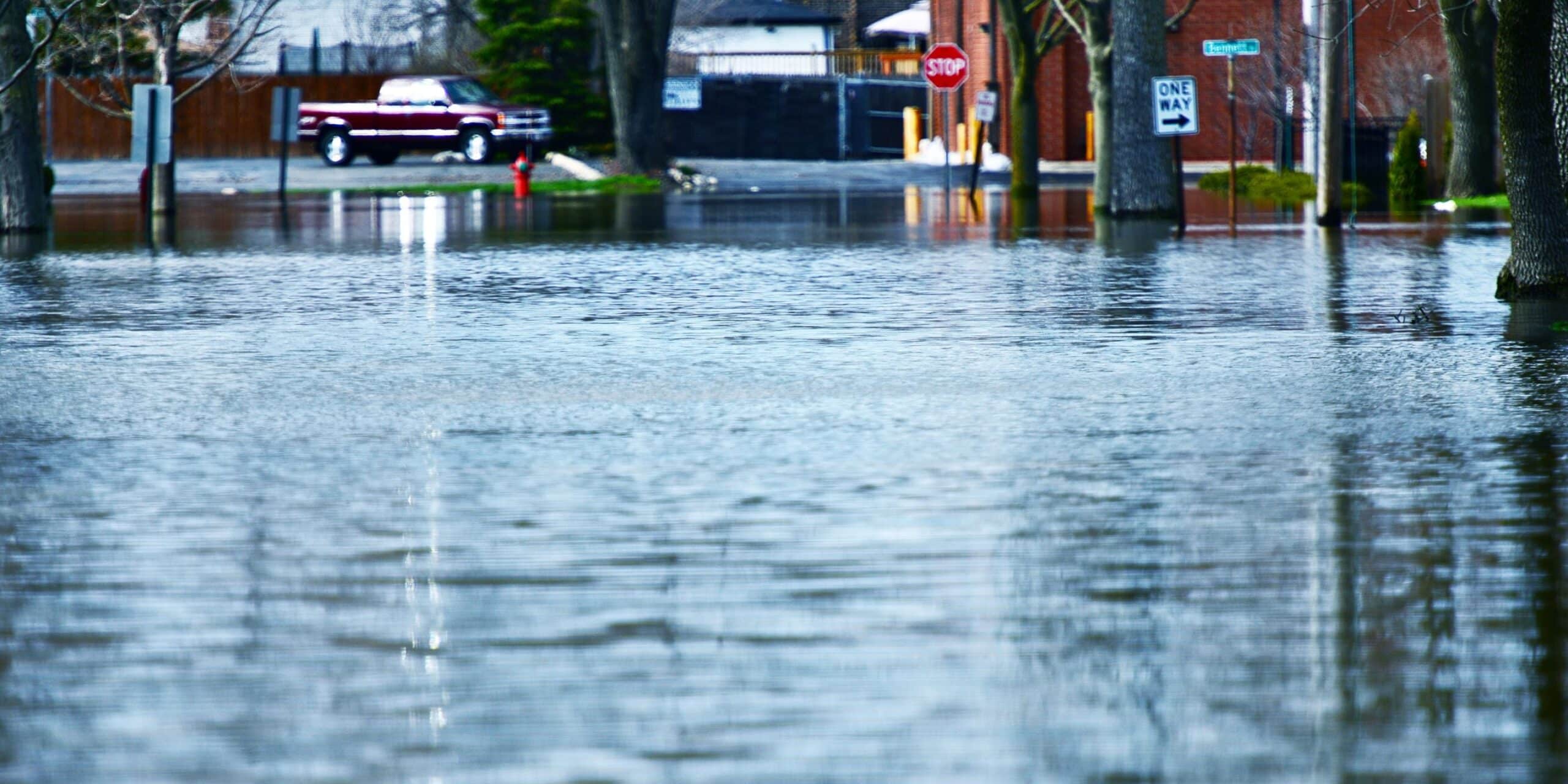
What the science says about climate change and flooding
The Intergovernmental Panel on Climate Change (IPCC) concludes in its Sixth Assessment Report that the frequency and intensity of heavy precipitation events have increased since the 1950s over most land areas with enough data to analyse trends, and that human-induced climate change is likely the main driver (IPCC AR6 WGI, Summary for Policymakers, A.3.2).
The physics behind this is well understood. The atmosphere’s capacity to hold moisture rises by about 7% for each 1 °C of warming (the Clausius-Clapeyron relation), and the IPCC finds that heavy precipitation intensifies at a similar rate, from sub-daily downpours to seasonal totals, which increases the severity of flood hazards (IPCC AR6 WGI, Technical Summary). At the global scale, extreme daily precipitation events are projected to intensify by about 7% for each additional 1 °C of global warming (SPM B.2.4).
Three findings matter most for site planning:
- More intense rainfall and river flooding. At 2 °C of global warming and above, heavy precipitation and associated flooding events are projected to become more intense and frequent across many regions of North America and Europe (SPM C.2.3).
- Compound flooding. Human influence has likely increased the chance of compound flooding in some locations, for example a storm surge combined with extreme rainfall or high river flow (SPM A.3.5).
- Coastal flooding. Because of sea level rise, extreme sea levels that occurred once per century in the recent past are projected to occur at least annually at more than half of all tide-gauge locations by 2100 (SPM C.2.5).
Individual events show the same signal. For the July 2021 rainfall that caused the floods in Germany’s Ahr-Erft area and along the Meuse in Belgium, World Weather Attribution found that human-induced climate change had made a 1-day rainfall event of this kind in the wider region between 1.2 and 9 times more likely, and about 3-19% more intense. The lessons from the Ahr valley flood apply directly to industrial sites. In 2024, river flows in 30% of Europe’s river network exceeded the ‘high’ flood threshold, the most widespread flooding since 2013, according to the Copernicus European State of the Climate 2024.
For the rainfall mechanisms in more detail, see our article on heavy rainfall and flooding and the guide to how floods form, their types and protection.
What this means for design values
Drainage, containment and flood defences are usually sized from historical data: a flood map, a 100-year flood level or a precipitation-frequency estimate. FEMA treats areas with a 1% or higher chance of flooding each year as high risk. For rainfall, the current authoritative US precipitation-frequency dataset is NOAA Atlas 14, available through the Precipitation Frequency Data Server; NOAA is developing NOAA Atlas 15, which is planned to provide both present-day and future estimates.
In practice, this means treating historical design values as a minimum. Check how the site behaves in a more severe event than the one it was designed for, and remember that intense local rainfall can flood a site outside a mapped flood zone when drains and sewers are overwhelmed.
Why floods turn into chemical incidents: Natech risk
Accidents in which a natural hazard triggers a fire, explosion or toxic release are called Natech accidents (natural-hazard triggered technological accidents). The European Commission’s Joint Research Centre (JRC) notes that, with the expected increase in the intensity and frequency of natural events from climate change, Natech risk is an increasing concern. It also points out that safety measures designed for conventional accidents are often ineffective or insufficient against Natechs, because they are usually not designed to withstand a natural event (JRC, Seveso Common Inspection Criteria: Natech Risk Management).
The JRC guidance describes what typically goes wrong when a hazardous site floods:
- Flooded catchment bunds are typically unable to contain a release, so hazardous liquids spread over a much larger area.
- Utilities are disrupted: power for process control and safe shutdown, cooling, and water for firefighting.
- Storage tanks with a low filling level are more likely to fail in floods because of buoyancy.
- Floodwater becomes a new pathway that carries released substances to people and the environment.
- Emergency services may be busy with the wider disaster, and staff may be unable to reach the site.
Case study: Arkema, Crosby (Texas), 2017
During Hurricane Harvey, flooding at the Arkema plant in Crosby caused the loss of power and backup power to all the low-temperature warehouses storing organic peroxides. Workers moved the product to refrigerated trailers on higher ground, but three trailers could not be moved and eventually flooded and failed. The peroxides decomposed and burned, and more than 200 residents living nearby were evacuated and could not return home for a week. The U.S. Chemical Safety Board found a significant lack of guidance for planning for flooding and other severe weather, and concluded that facilities must ensure critical safeguards and equipment are not susceptible to failure by a common cause.
The lesson is general: when the flood takes out the primary safeguard and its backup at the same time, the protection concept fails. In 2024 the OECD, UNECE and JRC published a guide for senior leaders in industry and public authorities on managing these risks; the JRC’s announcement uses the same Hurricane Harvey example ({a(JRC_NEWS, 'JRC, 2024')}).
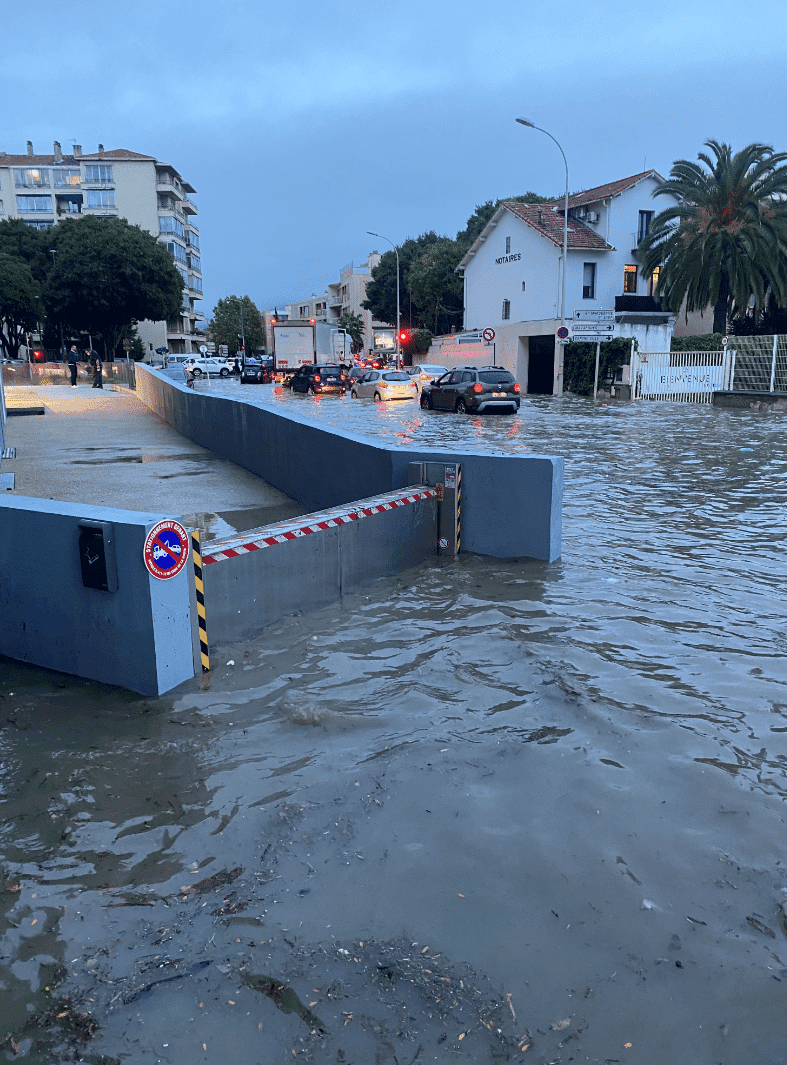
How flooding affects an industrial site
Most flood damage at industrial facilities follows a small number of patterns:
- Water entry through openings: doors, loading docks, ramps, cable ducts and floor drains, including backflow from overloaded sewers.
- Containment that fills up: rainwater and floodwater take up the capacity a bund needs to hold a leak. Under the EPA SPCC rule, secondary containment for bulk oil storage must hold the entire capacity of the largest container plus sufficient freeboard to contain precipitation (40 CFR 112.8(c)(2)). That freeboard covers rain falling into the bund; floodwater flowing into it from outside is a separate scenario to assess.
- Floating and shifting containers: drums, IBCs and partly filled tanks can float, tip over or tear their pipe connections.
- Contaminated runoff: released substances leave the site through drains or over the ground, into surface water and neighbouring property.
- Loss of power and controls: pumps, alarms, cooling and electrically operated gates or valves stop working.
- Long shutdowns: after the water recedes, equipment has to be cleaned, dried and tested before production can restart.
Fire and flood can also coincide, for example when floodwater reaches reactive substances or cuts the cooling of temperature-sensitive products, as at Crosby. Contaminated firewater then has to be retained as well; our guide to chemical barrier systems covers spill and firewater retention in more detail.
How to assess your site’s flood risk in a changing climate
- Establish the hazard. Check the official flood maps, local surface-water flooding, coastal exposure and the site’s own flood history. Our article on determining flood risk with FEMA maps and other tools explains the main US tools.
- Go beyond the design flood. Assess at least one more severe scenario, for example a higher water level or a short, intense storm on site, rather than relying only on historical return periods.
- Map hazardous materials against water levels. Record what is stored where, at what height, and what would happen if each storage area were flooded.
- Identify every entry path. Doors, dock levellers, ramps, drains, ducts and sewer connections, both for water coming in and for contaminated water going out.
- Check safeguards for common-cause failure. List the safety functions that depend on grid power, backup generators, pumps or people on site, and ask whether the same flood could disable them all.
- Compare warning time with response time. The JRC recommends comparing the lead time before a natural hazard hits with the time the site’s emergency procedures need, and closing any gap.
- Review regularly. Update the assessment when new hazard information becomes available, for example new flood maps or climate projections.
Protection measures that still work during a flood
Keep water out of critical areas
Openings are where most water enters a building, so the choice of protection for doors, docks and ramps matters. The main options differ mainly in what they need in order to work:
| Approach | How it is deployed | Main limitation in a fast-developing flood |
|---|---|---|
| Sandbags and temporary barriers | Manually, from storage | Need staff, materials and warning time; often unavailable at night or when roads are cut |
| Demountable flood barriers | Stored panels installed by trained staff | Need people on site and enough lead time |
| Powered gates, valves and pumps | Electric or hydraulic drive, often triggered by sensors | Depend on power or backup power, which a flood can knock out |
| Passive, water-activated barriers | Raised by the incoming water itself | Must be sized for the expected water level and installed and maintained correctly |
| Permanent walls and raised thresholds | Always in place | Restrict access and traffic; not possible at every opening |
For an overview of these technologies, see our article on water-activated flood barriers.
Keep hazardous materials in, and floodwater out of containment
- Store hazardous liquids above the expected flood level, or in areas whose openings are protected.
- Anchor tanks and secure drums and IBCs so that they cannot float or shift.
- Keep bund drain and bypass valves closed. The SPCC rule requires bypass valves to be normally sealed closed and opened only under responsible supervision after the retained rainwater has been inspected (40 CFR 112.8(c)(3)).
- Protect floor drains and sewer connections against backflow.
- Plan where firewater will be retained if a fire occurs while the site is flooded.
Plan for the loss of power and people
Avoid safety functions that rely only on grid power. Place backup power and critical controls above the flood level, and prefer measures that work without power or manual intervention for the openings that matter most. The Crosby case shows why: the backup failed together with the main supply.
Prepare the emergency response
Turn weather and flood warnings into predefined actions with clear triggers and times. The JRC guidance recommends, among other things, identifying a ride-out crew to secure the facility, securing or removing objects that could float, anchoring light equipment, warning the authorities when a Natech accident is possible, and training employees on the procedures. Exercise the plan: a procedure that has never been tested is unlikely to work at night during a flash flood.
Where automatic barriers fit
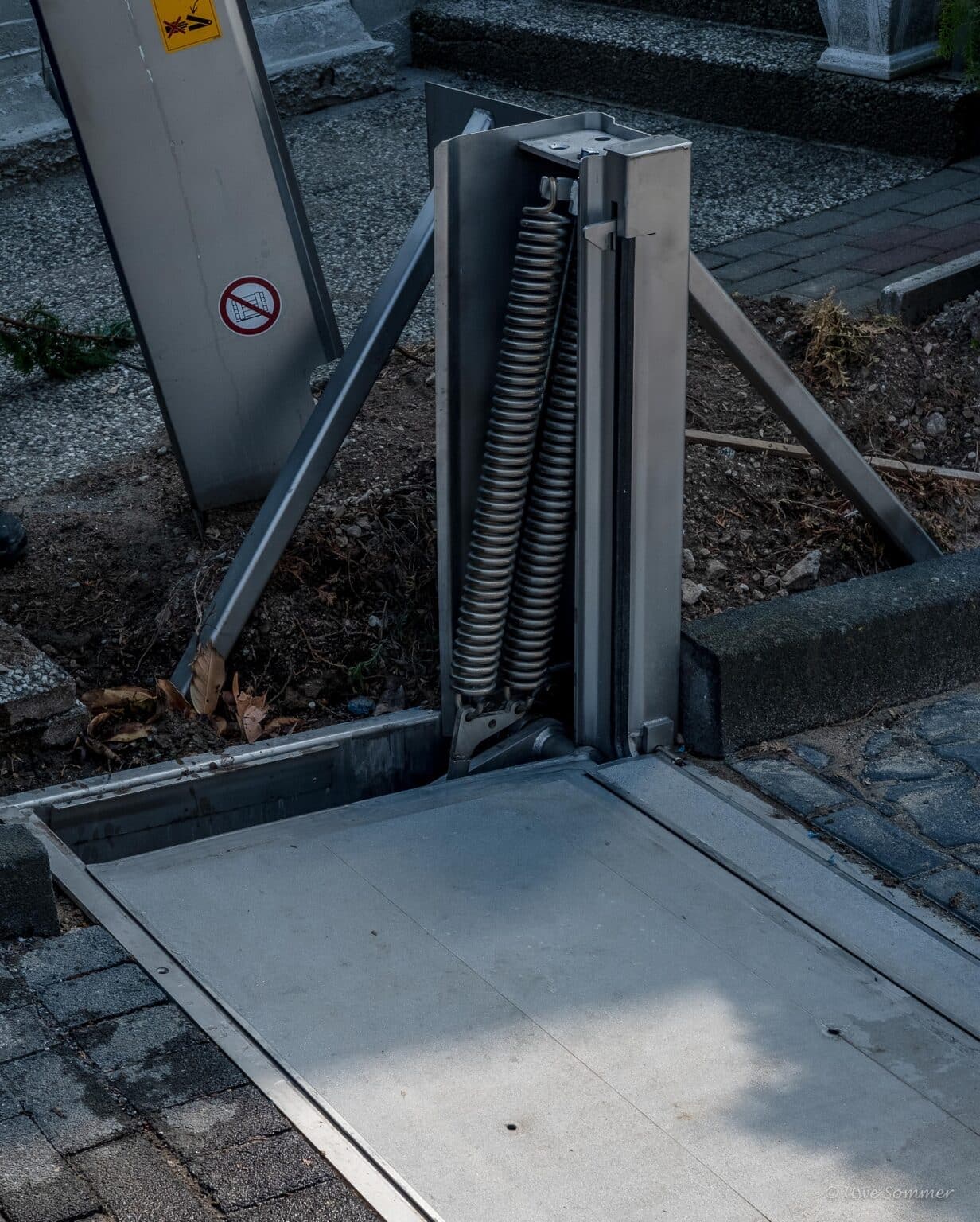
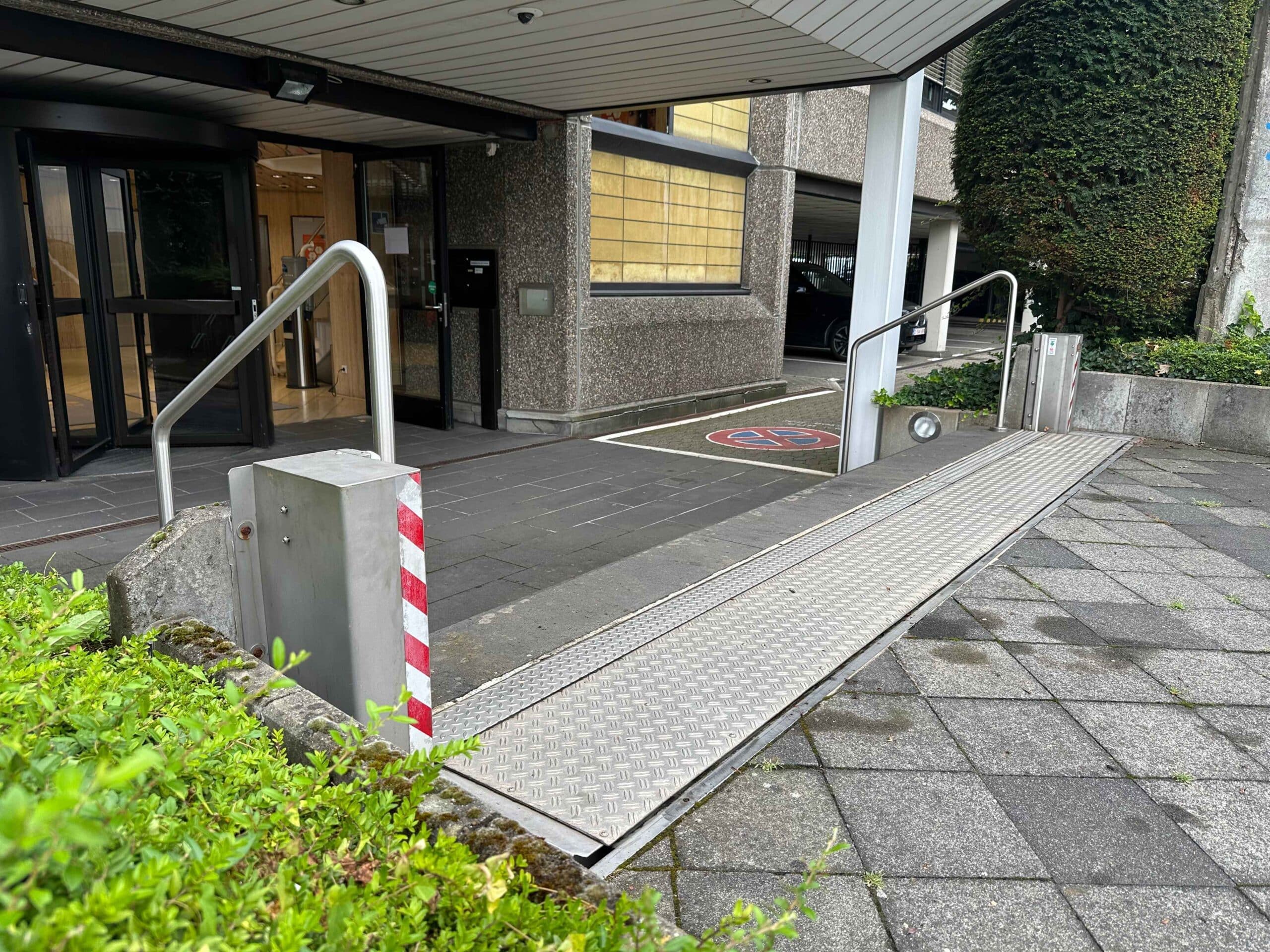
Passive barriers address two weaknesses that climate-driven floods expose: they do not need power, and they do not depend on someone being on site. The Water Spillbarrier automatic flood barrier is installed flush with the floor across an opening. Incoming water collects in its tray and makes the barrier float up; springs then fold it into an upright, sealed position. It works purely mechanically, without external power, is made of AISI 304 stainless steel and is made to measure for the opening, with sealing heights from 0.30 m to 2.40 m.
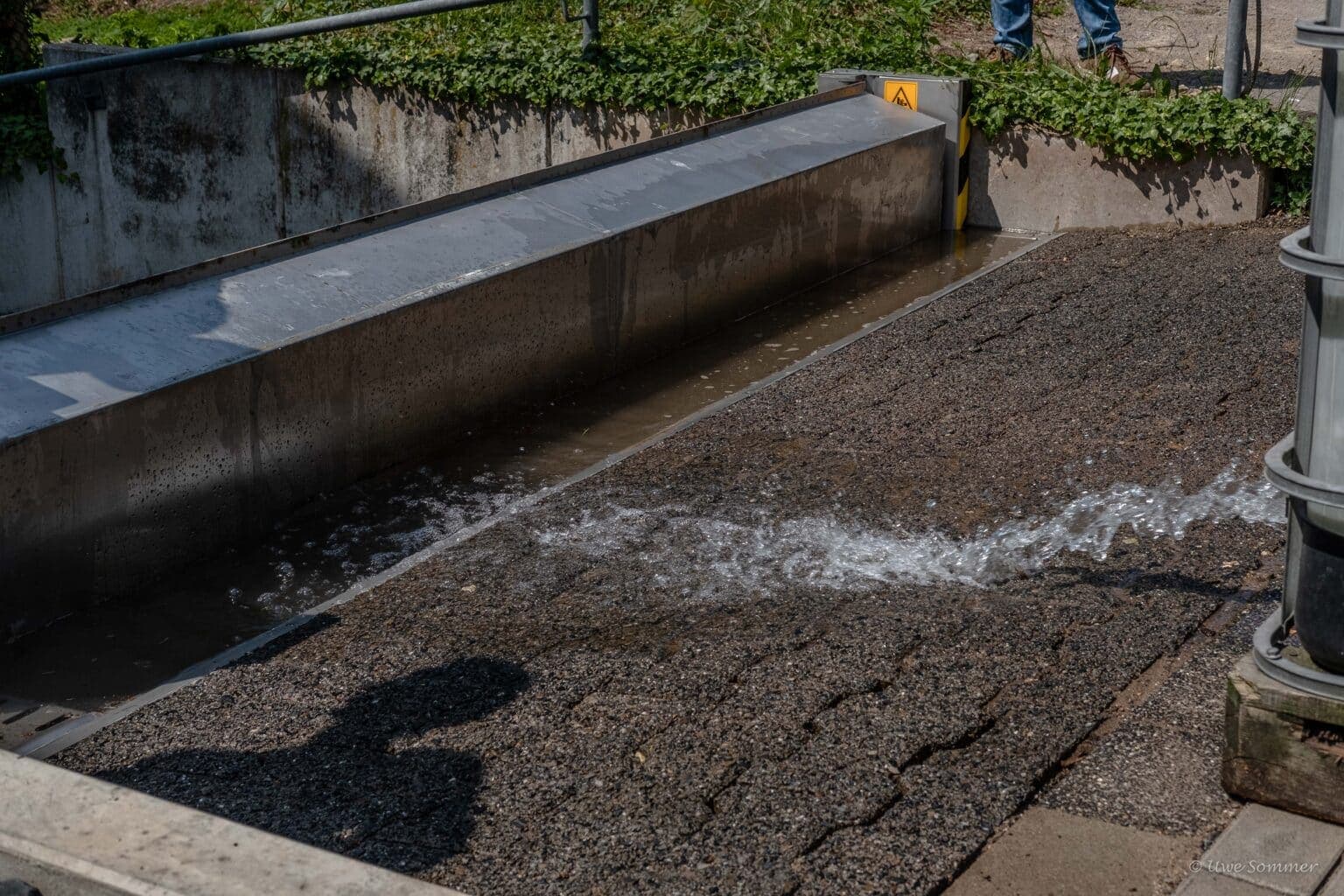
Where the main concern is a chemical or firewater release rather than incoming floodwater, the Chemical Spillbarrier works on the same principle to keep liquids inside a storage or production area. It is designed to meet EPA SPCC and NFPA 30 requirements, and its leak-tightness for at least 72 hours was tested under the supervision of RW-TÜV.
A barrier is one layer of protection, not a substitute for the risk assessment and emergency plan described above. The required height, the suitability for vehicle traffic and the interaction with drainage are confirmed for each project. To discuss a specific site, contact our engineering team.
Is climate change making floods worse?
Yes, for heavy rainfall and coastal flooding in particular. The IPCC finds that heavy precipitation has become more frequent and intense since the 1950s over most land areas with sufficient data, that human-induced climate change is likely the main driver, and that extreme daily precipitation is projected to intensify by about 7% for each 1 °C of further warming. Sea level rise also makes extreme coastal water levels more frequent (IPCC AR6 WGI SPM).
What is a Natech accident?
A Natech accident is a fire, explosion or toxic release at an industrial site that is triggered by a natural hazard such as a flood, storm or earthquake. Floods are a typical trigger: they can overwhelm containment bunds, cut power and cooling, and spread released substances. The 2017 Arkema fire in Crosby, Texas, after Hurricane Harvey is a well-documented example.
Is a site outside the 100-year flood zone safe from flooding?
Not necessarily. Flood maps describe a reference event based on historical data, and intense local rainfall can flood a site outside a mapped zone when drains and sewers are overwhelmed. Because heavy rainfall is intensifying, a site assessment should also test a more severe scenario than the mapped one.
Does SPCC secondary containment protect against flooding?
Only partly. The SPCC rule requires secondary containment for bulk oil storage that holds the largest container plus sufficient freeboard for precipitation (40 CFR 112.8). It is not designed to keep out floodwater flowing in from outside; a flooded bund loses its capacity and can release its contents. Flood entry into containment areas needs to be assessed and addressed separately.
How does an automatic flood barrier work without electricity?
A passive barrier uses the incoming water as its energy source. In the Water Spillbarrier, water collects in the tray of the floor-mounted barrier and makes it float up; springs then fold it into an upright, sealed position. No power supply, sensors or staff are needed for it to close.
Sources
- IPCC (2021): Climate Change 2021, The Physical Science Basis, Summary for Policymakers
- IPCC (2021): Climate Change 2021, The Physical Science Basis, Technical Summary
- World Weather Attribution (2021): Heavy rainfall which led to severe flooding in Western Europe made more likely by climate change
- Copernicus Climate Change Service and WMO (2025): European State of the Climate 2024, Flooding
- European Commission JRC (2020): Seveso Common Inspection Criteria No. 10, Natech Risk Management
- European Commission JRC (2024): New guide to help manage risks from technological accidents triggered by natural hazards
- U.S. Chemical Safety Board (2018): CSB releases Arkema final report
- eCFR: 40 CFR 112.8, SPCC Plan requirements for onshore facilities
- FEMA: Flood Maps
- NOAA Office of Water Prediction: NOAA Atlas 15, update to the national precipitation frequency standard