
Introduction
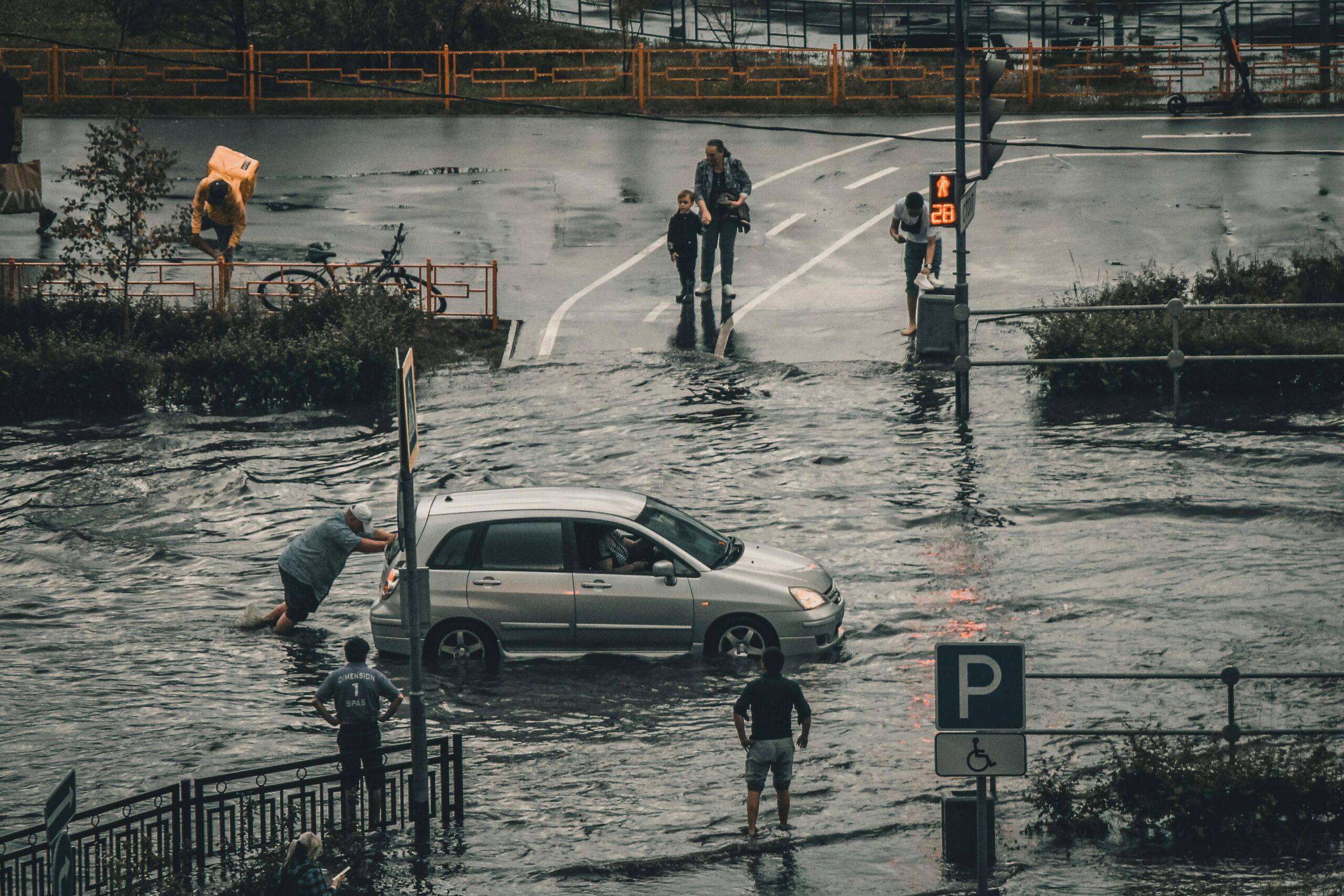
Climate change is fundamentally reshaping the flooding risk landscape for industrial facilities across the United States. Climate change refers to the long-term shift in global climate patterns that redistributes water volumes throughout the hydrological cycle. Extreme weather events — including heavy rainfall, storms, and heat waves — are occurring more frequently as a result. According to World Weather Attribution (WWA), heavy rainfall events in Western Europe have become 1.2 to 9 times more likely due to global warming, with intensity increasing by 3–19%. For facility managers, HSE professionals, and plant operators in the chemical, manufacturing, and logistics sectors, this means one thing: existing safety systems against flooding and flood risk are no longer sufficient.
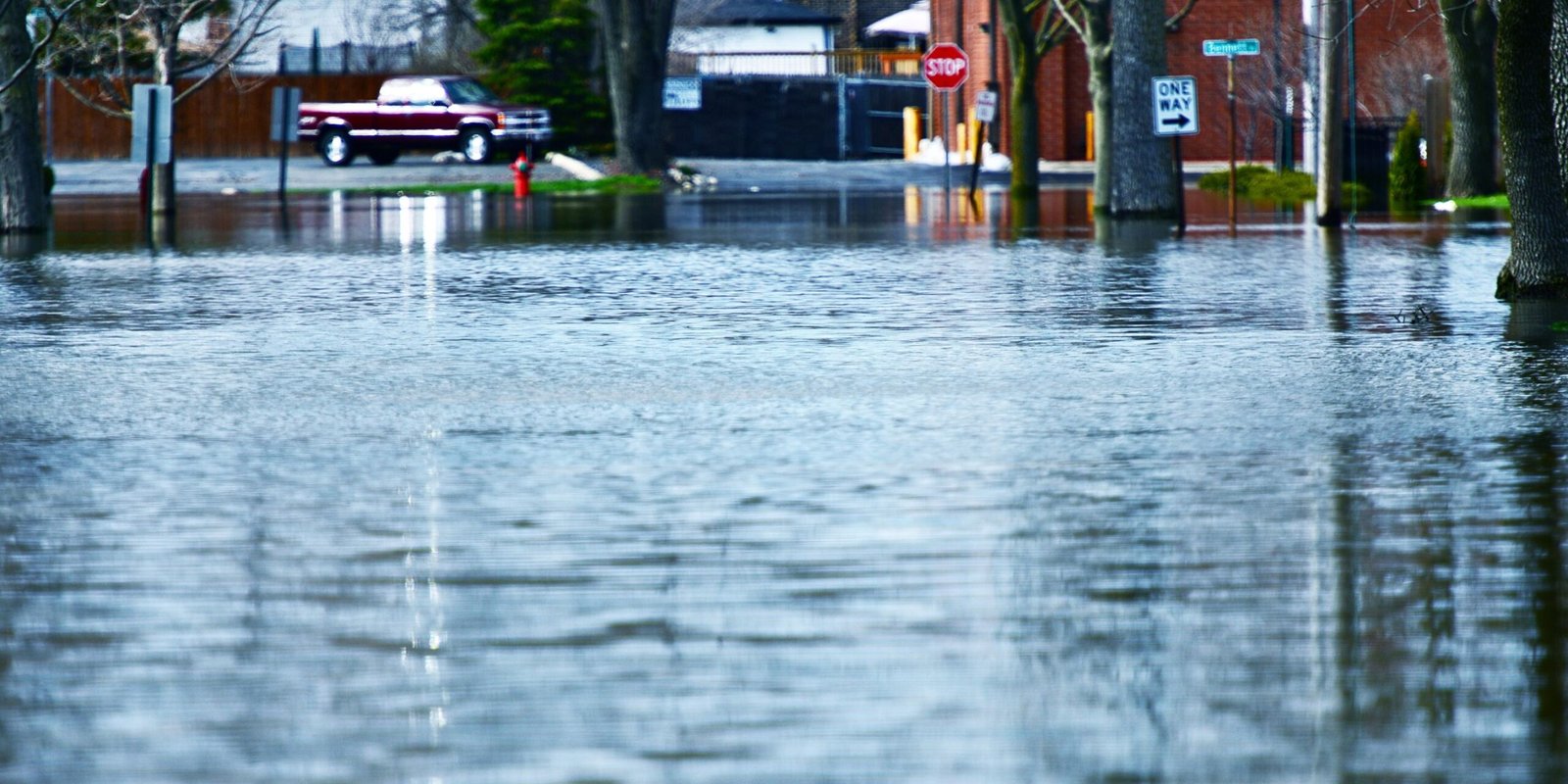
This article covers the concrete impact of climate change flooding on industrial safety, analyzes real-world flood hazard scenarios, and presents modern protection concepts for US facilities. The focus is on automatic, energy-independent containment systems that operate reliably during floods, chemical spills, and firewater incidents — even when the power goes out.
Quick Definition
Climate change flooding refers to the increase in flood events caused by global warming that directly endangers industrial facilities. Automatic barrier systems like the energy-independent Spillbarrier flood protection system seal openings instantly upon water contact — without any external power supply, making them essential protection against climate-driven flooding.
Key takeaways from this article:
- Climate change dramatically intensifies flooding and flood risk for US industrial facilities
- Heavy rainfall and flash floods threaten chemical storage areas more than ever before
- Power outages during extreme weather make active flood protection systems unreliable
- Passive, water-activated flood barriers provide fail-safe protection without external power
- Climate projections demand new design standards for secondary containment volumes
- Low-maintenance stainless steel systems significantly reduce failure risk during flooding
What Does Climate Change Flooding Mean for Industrial Facilities?
Climate change flooding encompasses all flood-related risks that are being intensified by global warming—and for US industrial operators, the stakes have never been higher. Extreme weather events, including heavy rainfall, heat waves, droughts, and storms, are occurring with greater frequency and intensity. Warmer air holds approximately 7% more water vapor per degree Celsius of warming according to the Clausius-Clapeyron relationship, a physical law documented in the EPA’s Climate Change Indicators: Heavy Precipitation. The result: precipitation levels and flood events that were once considered “100-year events” are now occurring on a decade-by-decade basis.
According to NOAA’s Billion-Dollar Weather and Climate Disasters database, the US experienced 55 billion-dollar weather events in 2025 alone, with flooding representing some of the costliest incidents for industrial sites. Climate change is increasing flood risk for technical installations through more frequent extreme weather events, and the rising frequency of flash floods and heavy rainfall requires a full reassessment of existing safety systems. Technical standards such as NFPA 30 and EPA 40 CFR 112 (SPCC) are being updated to reflect the escalating realities of climate-driven flooding.
For industrial plant safety, these flood events create direct, operational risks: flooding of storage areas, release of hazardous chemicals, and uncontrolled firewater discharge all threaten local waterways and the environment. Research from UCLA published in Nature Communications found that nearly 3,800 hazardous US facilities — including oil refineries, chemical plants, and waste treatment sites — face flood risk as early as 2050 under current emissions trajectories. The connection between climate change, flooding, and industrial protection is no longer theoretical — it is an operational and legal imperative. Plant operators should proactively assess their site-specific flood risk.
Climate Change Fact
The 2021 Ahr Valley flood in Germany was made 1.2 to 9 times more likely by climate change, according to World Weather Attribution. In the US, NOAA recorded 55 billion-dollar weather disasters in 2025 — flooding is now the “new normal” for industrial sites nationwide.
Heavy Rainfall and Climate Change Flooding: The Biggest Risks for US Facilities
Heavy rainfall in the US context is defined as precipitation exceeding 1 inch per hour or flash flood events that overtop local drainage infrastructure. During the 2021 floods in Western Europe, over 3.5 inches fell in a single event — with devastating consequences for industrial sites. In the US, events like the 2024 Houston flooding and repeated Gulf Coast storms have demonstrated the same destructive pattern. The 2021 Ahr Valley flood disaster serves as a critical case study: over 180 fatalities and more than $40 billion in damages, with numerous industrial facilities directly impacted.
According to the Insurance Information Institute (III), flooding is the most common and costly natural disaster in the United States. The US industrial flood barriers market was valued at $4.5 billion in 2022 and is projected to reach $7.8 billion by 2030 — driven precisely by the escalating impact of climate change flooding on manufacturing and chemical storage facilities.
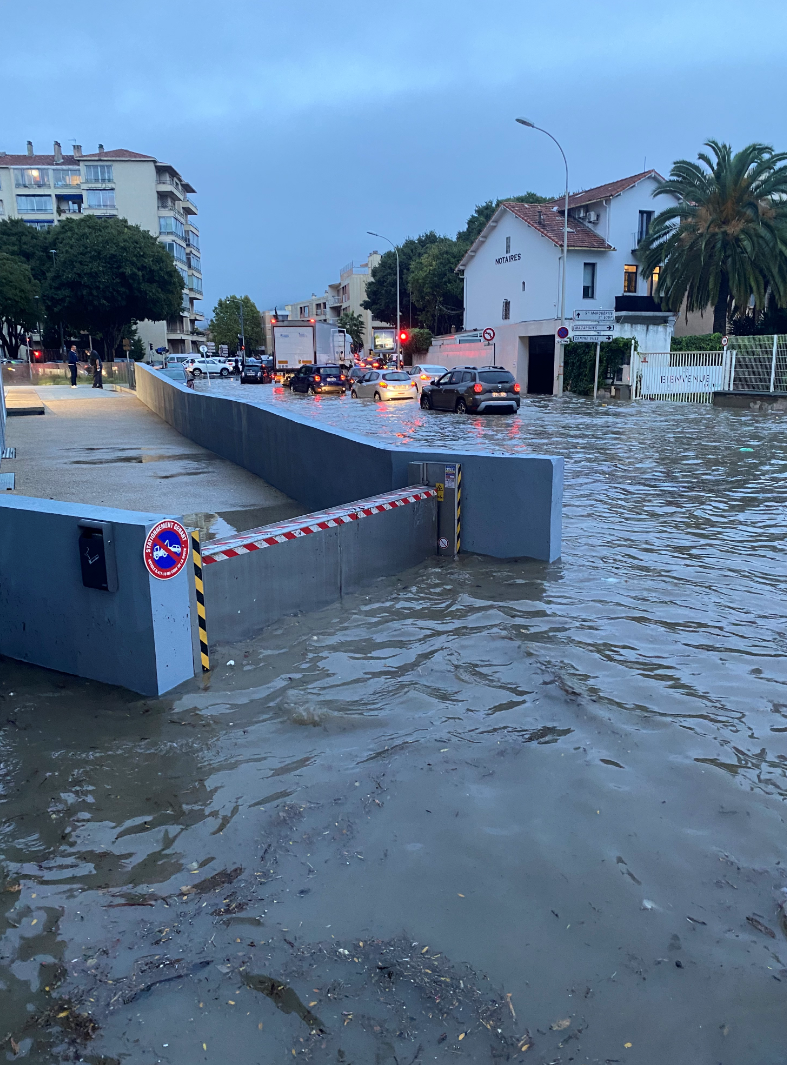
The impacts of climate change flooding on US production and storage facilities include:
- Floodwater entering chemical storage areas and active production zones
- Mixing of stormwater runoff with hazardous substances, triggering EPA SPCC violations
- Overflow of secondary containment berms and retention systems during extreme flood events
- Discharge of contaminated water into adjacent waterways in violation of the Clean Water Act
- Floating and tipping of containers as floodwater rises rapidly
- Seal and gasket failure caused by flood debris and hydrostatic pressure
Conventional secondary containment systems routinely fail during extreme rainfall because they were engineered to historical baseline data that climate change has already invalidated. Automatic flood barriers with float mechanisms, by contrast, activate the instant water makes contact and seal openings without any manual intervention — critical for climate-driven flooding scenarios that develop in minutes, not hours.
| Flood Scenario | Risk Without Protection | Protection via Automatic Barrier |
|---|---|---|
| Flash flood / heavy rainfall (>1 in/hr) | Storage flooding, chemical spill, EPA violation | Instant seal upon water contact |
| River or coastal flooding | Groundwater contamination, CWA liability | Automatic activation, zero staff dependency |
| Storm surge / flash flood | No reaction time for manual systems | Fail-safe protection without power, low-maintenance |
How Climate Change Flooding Overwhelms Existing Protection Systems
When flooding strikes, uncontrolled water masses enter hazardous material storage areas and mix with stored chemicals — creating a contamination scenario that can trigger severe EPA and OSHA enforcement actions. Under EPA 40 CFR 112 (Spill Prevention, Control, and Countermeasure), facility operators have a legal obligation to prevent the discharge of oil and hazardous substances into navigable US waterways. A flood-triggered spill can result in federal penalties, mandatory remediation costs, and reputational damage that far exceeds the cost of prevention.
Conventional containment systems fail during extreme climate change flood events because they were designed using historical precipitation data that no longer reflects current conditions. Updating to current NOAA climate projections is urgently required. This is especially critical for chemical spill containment in industrial facilities, where flooding can trigger cascading environmental damage affecting entire communities downstream.
Typical damage patterns during climate change flooding events include:
- Floating and tipping of chemical containers as floodwater rises rapidly
- Seal and gasket failure from debris impact and hydrostatic pressure during flooding
- Uncontrolled chemical release into the surrounding environment via floodwater
- Complete failure of manual systems due to insufficient reaction time during flash floods
Firewater Containment During Climate Change Flooding
The situation becomes critically dangerous when fire and flooding occur simultaneously — a scenario that is increasingly common as climate change intensifies both wildfire and flood frequency across the US. Firewater is frequently contaminated with chemicals, oils, or combustion residues and cannot be discharged uncontrolled into waterways, particularly under the EPA SPCC rule. Integrated, dual-threat protection solutions are therefore essential for fire and flood protection in warehouses and logistics centers.
The critical challenge: when power fails — which regularly occurs during severe storms, flash floods, and coastal flooding — active containment systems shut down completely. This is the exact moment protection is most urgently needed. Professional barrier systems must therefore operate entirely without power and activate automatically. For firewater applications, FM Global-compliant fire protection barriers provide the combined protection required.
Safety Notice: Climate Change Flooding
An automatic Spillbarrier flood protection system significantly reduces your EPA SPCC and Clean Water Act liability during flooding events and simplifies compliance audits. It operates entirely without electricity — even during climate-driven power outages.
Why Traditional Flood Sealing Systems Fail
Manual and power-dependent systems have critical vulnerabilities during climate change flooding events. Temporary sandbags and portable flood barriers require 10–30 minutes to deploy — time that simply does not exist during a sudden flash flood or storm surge. A 2025 NOAA report confirmed that flash flood events in the US now develop 40% faster on average than in the 1980s baseline period.
Additional weaknesses of traditional flood protection systems include:
- Dependency on on-site personnel being present and available during flood events
- Power outages during storms render all electric flood protection systems completely inoperable
- Operator error under stress and in dark or flooded conditions dramatically increases risk
- Manual systems cannot be deployed in time during night shifts, weekends, or unmanned hours
Low-maintenance, automatic flood protection systems eliminate all of these vulnerabilities. They activate without any human intervention and operate reliably even during total power failures — delivering the protection US industrial operators need from climate change flooding.
Modern Protection Concepts Against Climate Change Flooding
Climate-adapted flood protection systems for US industrial facilities rely on passive, energy-independent technologies that cannot be defeated by power loss. The core principle is simple: a system that requires no electricity cannot fail due to a power outage during flooding. A system that activates automatically is never dependent on staff response time — the single most critical factor when a flash flood develops in under 15 minutes.
Automatic Flood Barriers: How They Work Against Climate Flooding
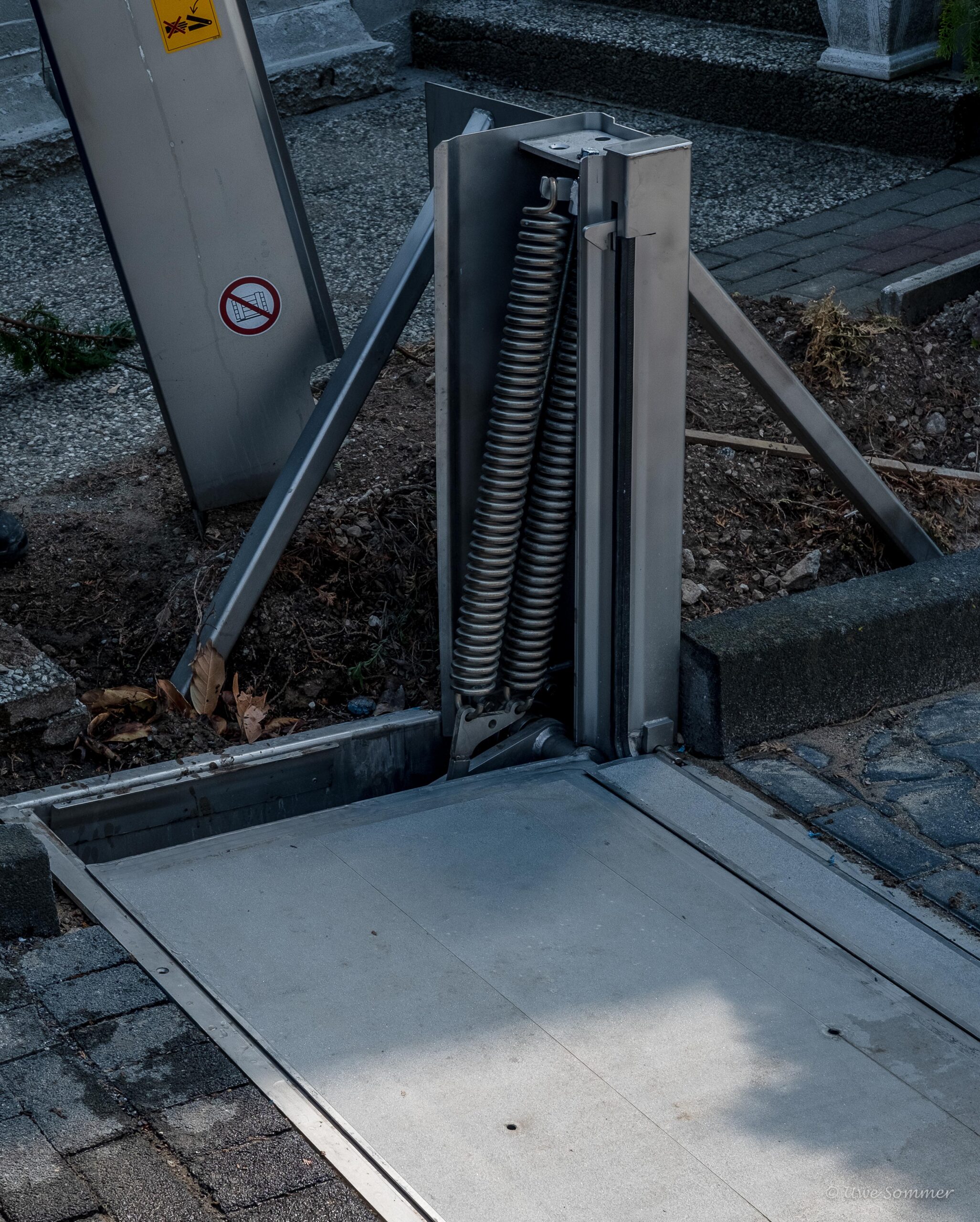
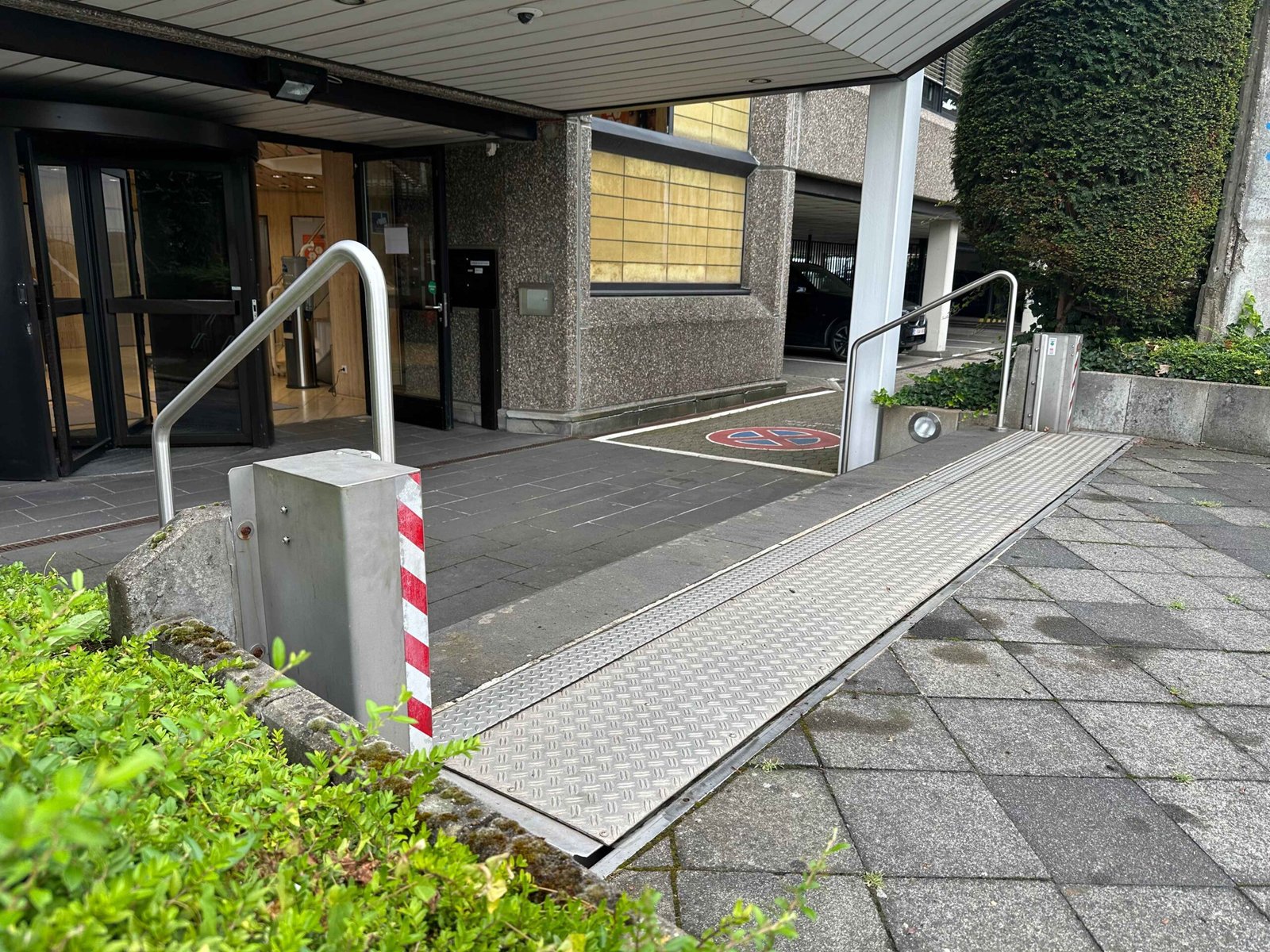
Energy-independent flood protection systems like the Spillbarrier operate on a straightforward but highly effective engineering principle. A stainless steel float mechanism continuously monitors for incoming liquid and automatically seals the protected opening upon contact — no power, no sensors, no staff required. The key differences between flood protection technologies come down to reliability under real-world conditions, particularly when power is unavailable.
How the Automatic Flood Barrier Works: Step by Step
- Floodwater approaches the barrier: Climate-driven flood water, stormwater runoff, or firewater flows toward the protected door opening or floor channel.
- Float mechanism activates automatically: The stainless steel float in the floor channel responds to liquid contact and rises — without electricity, without sensors, without any signal.
- Barrier seals the opening instantly: The barrier panel rises and forms a watertight seal against the opening — blocking floodwater without any manual intervention.
- Containment volume is maintained: The system holds the required secondary containment volume, preventing uncontrolled spread of contaminated floodwater under NFPA 30 and EPA 40 CFR 112.
Operates 24/7 at every climate change flood event — fully automatic and energy-independent.
This fail-safe principle delivers flood protection without external power and without manual operation. System performance has been validated in tests retaining up to 10,000 liters (2,642 gallons) per unit — sufficient for the majority of climate change flooding scenarios encountered at US industrial facilities. For securing door openings, access points, and loading docks, see our guide on industrial flood barrier gate solutions.

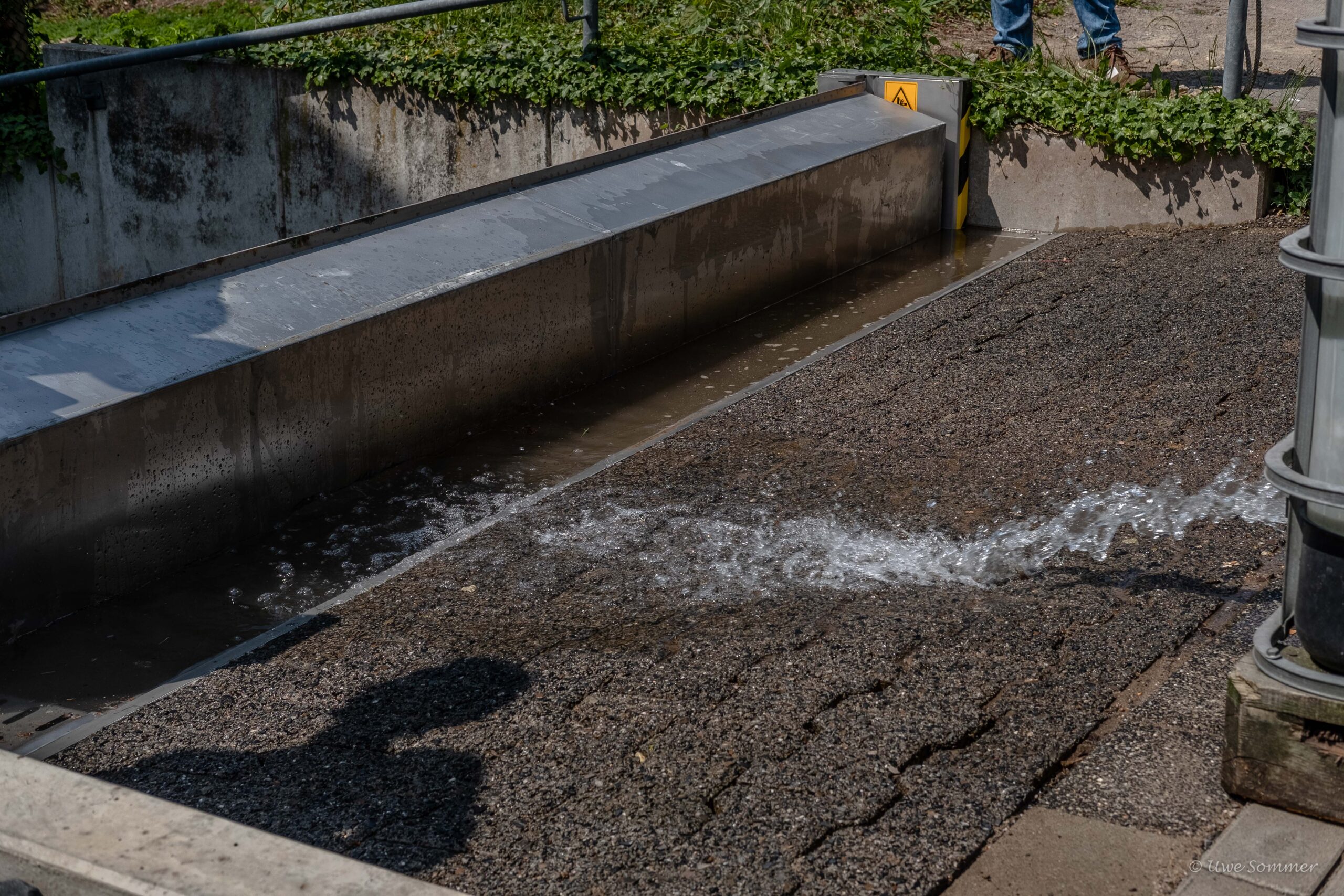
Video: Spillbarrier automatic flood barrier deployed during a real climate change flood event — fully automatic activation, zero power required (Anhamm case study)
Comparing Flood Protection Systems for US Industrial Facilities
Choosing the right flood protection system for your facility depends on several operational factors. The table below shows the critical performance differences during climate change flood events — particularly the scenarios that matter most to US plant operators: power outages, flash flood response time, and EPA compliance.
| Criteria | Manual Flood Systems | Electric Flood Systems | Automatic Passive Flood Barriers |
|---|---|---|---|
| Function during power outage (common during flooding) | Yes | No | Yes |
| Response time during flash flood | 10–30 min. | Seconds | Instant |
| Staff dependency during flood event | High | Low | None |
| Maintenance requirements | High | Medium | Low |
| US regulatory compliance | Conditional | Conditional | Yes (NFPA 30, EPA 40 CFR 112) |
| Climate change flood resilience | Low | Medium | High |
For critical applications in chemical storage facilities, production areas, and logistics centers, industrial safety experts and FM Global recommend automatic passive solutions for climate change flood protection. These deliver the highest reliability during extreme weather and satisfy both domestic standards (NFPA 30, EPA 40 CFR 112) and international benchmarks. For firewater containment applications, FM Global-compliant fire protection barriers are also available. Download our flood protection technical datasheet (PDF) for full specifications.
Planning Tip: Climate Change Flood Protection
When selecting a flood protection system, prioritize performance during power outages — statistically, power grids fail during the same extreme weather events that cause flooding. Passive automatic flood barriers are the only system that remains fully operational when the grid goes down.
Storm Events and Wind Loads: The Secondary Climate Threat
Increasing storm frequency is placing new demands on industrial facility components that go beyond direct flooding. Wind loads on tank roofs, piping systems, and safety equipment are increasingly exceeding their original design specifications — particularly as Category 4 and 5 hurricanes become more frequent along the Gulf Coast and Eastern Seaboard. Even when storms don’t directly cause flooding, they damage infrastructure in ways that dramatically increase vulnerability when the associated rainfall arrives.
The safety consequences are significant:
- Tank roof damage creating spill risk before or during subsequent flooding
- Loosened pipe connections that fail when exposed to subsequent flood pressure
- Grid power failure disabling all electric warning and protection systems simultaneously
Weather-independent protection technologies are becoming mission-critical as a result. Passive stainless steel systems withstand extreme storm and flood conditions while operating without any external power supply — a combination that no electric system can replicate.
Temperature Extremes and Their Impact on Flood Protection Systems
Heat waves and cold snaps directly affect the materials and seals used in flood protection systems — often degrading their performance precisely when climate events make them most needed. The US EPA’s Climate Change Indicators confirm that heat stress is the strongest climate signal for US infrastructure degradation.
During heat events, flood protection systems face:
- Material fatigue and seal failure — critical if subsequent flooding follows a heat event
- Increased evaporative losses from open chemical storage containers
- Cooling system overload at facilities with heat-sensitive production processes
During cold weather events, the risks shift:
- Embrittlement of plastic and polymer components in barrier systems
- Pipe bursts from ice formation creating sudden, uncontrolled spill scenarios
- Frozen mechanical components causing system failure at the critical activation moment
These temperature extremes require climate-resilient flood protection concepts that perform reliably across the full temperature range. The stainless steel Spillbarrier flood protection system is engineered for operating temperatures from -22°F to +176°F (-30°C to +80°C), covering the full spectrum of US climate conditions.
Financial Case for Climate Change Flood Protection Investment
The business case for proactive flood protection investment is clear and quantifiable. Investments in industrial flood protection carry upfront costs, but represent an unavoidable measure to avoid long-term losses from flood damage, production downtime, regulatory fines, and liability exposure. As climate change flood events become more frequent across the US, securing the performance and continuity of industrial assets through targeted investment is not optional — it is a fiduciary responsibility.
With climate change flooding accelerating, securing the reliability of US industrial facilities through targeted investment is becoming a business-critical decision. Careful planning that combines financial efficiency with engineering requirements enables operators to tailor solutions to their specific site conditions.
Flood protection investment is typically funded through a combination of:
- Capital expenditure budgets allocated to facility resilience and safety
- Federal and state flood mitigation grants, including FEMA Hazard Mitigation Grant Program (HMGP) funds
- Insurance premium reductions tied to documented flood mitigation measures
- Tax deductions for qualified disaster-resilience capital improvements
Operators should not wait for a flood event to expose their vulnerabilities — the consequences are disproportionate. According to NOAA’s Billion-Dollar Disaster database, the average cost of a single flooding event affecting an industrial facility now exceeds $15 million when production downtime, remediation, and regulatory penalties are included. The cost of proactive protection is a fraction of that figure.
Measures such as low-maintenance, automatic flood protection barrier systems deliver strong return on investment by reducing operating costs and simplifying compliance with NFPA 30, EPA 40 CFR 112, and related US standards during climate change flooding events.
US Regulatory Framework for Industrial Flood Protection
US regulatory requirements form the legal backbone for industrial flood protection — and non-compliance during a climate change flood event can expose operators to federal enforcement, civil liability, and cleanup costs that dwarf the cost of prevention. The primary framework governing industrial spill and flood containment in the US includes NFPA 30, the EPA SPCC rule, and OSHA Process Safety Management standards.
NFPA 30 (Flammable and Combustible Liquids Code) establishes secondary containment requirements for storage areas and requires that containment systems prevent discharge to public waterways, sewers, and adjacent property. These requirements become critically relevant when climate change flooding overwhelms inadequately designed containment systems.
The EPA’s Spill Prevention, Control, and Countermeasure (SPCC) rule under 40 CFR Part 112 requires facilities that store oil above threshold quantities to develop and implement a Spill Prevention Plan — with secondary containment as a core engineering requirement. Gig Harbor, Texas, and Louisiana Gulf Coast operators have faced multi-million-dollar enforcement actions following flood-triggered spills that violated SPCC requirements.
Key US regulations relevant to climate change flood protection:
- NFPA 30: Secondary containment requirements for flammable and combustible liquid storage
- EPA 40 CFR 112 (SPCC): Spill Prevention, Control, and Countermeasure requirements for oil storage facilities
- EPA 40 CFR 264.175: Secondary containment standards for hazardous waste container storage areas
- OSHA 29 CFR 1910.119 (PSM): Process Safety Management standard covering highly hazardous chemical facilities
Only facilities with flood protection systems that operate reliably during the climate events that cause both flooding and power outages can guarantee compliance under all of these standards simultaneously.
Environmental Sustainability and Industrial Flood Protection
Environmental responsibility and industrial flood protection are inseparable in the context of climate change flooding. US regulations including the Clean Water Act and EPA 40 CFR 112 mandate that industrial operators take proactive steps to prevent contaminated floodwater from reaching public waterways — not just respond after the fact. NFPA 30 and OSHA PSM standards reinforce this by requiring engineered containment systems that function under foreseeable flood conditions.
By implementing robust flood protection measures, US industrial operators can simultaneously:
- Protect their facilities from climate change flooding damage and associated business interruption
- Prevent contaminated floodwater from reaching rivers, groundwater, and local communities
- Protect the environment from chemical spills triggered by flooding events
- Maintain EPA, OSHA, and NFPA compliance even during extreme flood events
The link between technical flood protection solutions and environmental stewardship is direct: preventing a flood-triggered spill is always more effective — and less costly — than remediating one. Anhamm Spillbarrier has been engineering automatic liquid containment systems for over 30 years with this principle at the core of every product design.
Common Challenges and Proven Solutions for US Operators
Planning climate-resilient flood protection for US industrial facilities consistently reveals the same set of engineering and operational challenges. The following solutions are based on real-world flood events and current recommendations from NFPA, EPA, and FM Global.
Underestimating Climate Change Flood Volumes
The problem: Many existing US facilities were designed to historical precipitation data that climate change has already rendered obsolete. NOAA projects a 20–50% increase in heavy precipitation events across major US industrial regions by 2050 — meaning systems that passed inspection last year may be inadequate today.
- Update your secondary containment design basis to current NOAA climate projections for your region — not 30-year historical averages
- Integrate redundant, automatic flood protection systems that activate independently of their design threshold — if water appears, they seal
- Use water-activated flood barrier systems that respond to any water contact, regardless of volume or speed of onset
Power Failure During Critical Flood Events
The problem: During storms, flash floods, and coastal flooding events, power grids frequently fail. Electric flood protection barrier systems and electronic sensors become inoperable at the exact moment they are most urgently needed.
- Deploy energy-independent flood barrier systems with mechanical float activation — no electricity required under any conditions
- In critical infrastructure — chemical storage facilities, fuel tank farms, pharmaceutical production — automatic Spillbarrier systems activate upon liquid contact with zero power dependency
- The answer to reliable flood protection during power outages is unambiguous: passive mechanical systems
Inadequate Maintenance Cycles for Flood Systems
The problem: Conventional flood protection systems require frequent maintenance. During staffing shortages or following prolonged extreme weather periods, maintenance cycles are routinely missed — leaving systems degraded precisely when the next flood event arrives.
- Invest in low-maintenance flood protection systems manufactured from corrosion-resistant stainless steel — suitable for aggressive chemical environments with minimal inspection intervals
- Conduct preventive inspections of all flood protection systems before extreme weather season (spring thaw, hurricane season, monsoon season depending on your US region)
- Do not wait for a climate change flood event to reveal weaknesses in your protection system
Energy-Independent Flood Protection
No power supply required — operates fully during grid failures caused by climate change flood events, hurricanes, or storms.
Low-Maintenance Design
Stainless steel mechanical construction — minimal lifecycle costs for flood protection across decades of service.
NFPA 30 & EPA Compliant
Meets US regulatory requirements including NFPA 30, EPA 40 CFR 112 (SPCC), and FM Global standards for industrial flood containment.
Conclusion: Climate Change Flooding Demands New Safety Standards
Climate change has fundamentally altered the flood risk conditions facing US industrial facilities. Heavy rainfall, flash floods, and temperature extremes are occurring more frequently and exceeding historical design baselines for secondary containment systems. Conventional safety systems — particularly manual and power-dependent flood protection solutions — cannot keep pace with the new demands of climate change flooding.
Automatic, energy-independent flood protection systems by Spillbarrier provide a robust, proven answer to these challenges. They operate during power outages, activate without staff intervention, and satisfy both US regulatory standards (NFPA 30, EPA 40 CFR 112) and international benchmarks (FM Global). For chemical containment needs, explore the Spillbarrier chemical spill protection system. For firewater containment, the fire protection barrier provides FM Global-compliant dual-threat coverage.
Recommended Next Steps for US Facility Operators
- Conduct a site flood risk assessment: Evaluate your facility against current NOAA climate projections for heavy rainfall, flash flooding, and storm surge in your region
- Audit existing flood protection systems: Identify power-dependent and manual systems that will fail during a climate change flood event — especially during simultaneous power outages
- Select compliant passive barrier systems: Choose NFPA 30 and EPA 40 CFR 112-compatible passive flood barriers for all critical containment zones
- Plan and implement protection: Size your containment volume to current NOAA design storms and install Spillbarrier flood protection systems at all high-risk openings, loading docks, and floor drains
Related topics for further research on climate change flooding:
- Developing NFPA 30 and EPA SPCC-compliant containment designs for climate-adapted industrial facilities
- Flood insurance implications for US industrial facilities under escalating climate risk
- Integrating automatic flood protection into BIM-based facility design and renovation planning
- NFPA 30 and EPA 40 CFR 112 updates addressing climate change flood scenarios
Frequently Asked Questions (FAQ)
How does an automatic flood barrier work without electricity?
The float mechanism uses only the Archimedes principle to activate the barrier. When liquid reaches the stainless steel floor housing, a float rises and mechanically lifts the sealing plate — no wiring, electronic sensors, or remote control required. This fail-safe principle guarantees reliable operation even during power outages, which are statistically common during the same extreme weather events that cause flooding. Full technical specifications are available in the Spillbarrier flood protection technical datasheet (PDF): https://spillbarrier.com/wp-content/uploads/2025/03/2-Page-Waterstop-en-1.pdf-1.pdf
What US standards apply to industrial flood and spill containment systems?
The primary US standards are NFPA 30 (Flammable and Combustible Liquids Code) and EPA 40 CFR 112 (SPCC rule). NFPA 30 requires secondary containment that prevents discharge to public waterways and adjacent property. EPA 40 CFR 112 mandates Spill Prevention Plans with engineered containment for oil storage facilities. For hazardous waste container areas, EPA 40 CFR 264.175 applies. For firewater retention, FM Global Data Sheet 2510 is the leading international standard. OSHA 29 CFR 1910.119 (PSM) governs highly hazardous chemical facilities.
Can a Spillbarrier system contain aggressive chemicals during a flood event?
Yes. Spillbarrier systems are manufactured in 316L stainless steel (1.4404) and tested across a pH range of 1 to 14. This grade provides proven chemical resistance against concentrated mineral acids, caustic alkalis, organic solvents, and petroleum hydrocarbons. For particularly aggressive substances or complex chemical mixtures, a case-by-case chemical compatibility verification is recommended. Our technical team can perform this evaluation at no cost prior to system specification. For dedicated chemical spill applications, see the Spillbarrier chemical spill protection system at spillbarrier.com/chemical-spill-protection/
Where should automatic flood barriers be installed in a warehouse or industrial facility?
Priority installation points are: (1) loading dock doors and bay openings that connect to hazardous liquid storage zones, (2) loading and unloading docks where flammable liquids are handled, (3) floor drains and trench drains in hazardous materials storage areas, (4) door thresholds separating distinct fire compartments. The risk analysis required by NFPA 30 and EPA SPCC Plans identifies these locations precisely for each facility. See our guide on industrial flood barrier gate solutions at spillbarrier.com/blog/flood-protection-gate/
How is the correct activation threshold determined?
The activation threshold is defined during the sizing phase based on two opposing criteria: avoiding accidental activation from routine cleaning water, and guaranteeing immediate, reliable activation during an actual spill or flood event. In practice, it is calibrated based on the density of the stored liquids, the minimum volume that could be accidentally spilled, and the facility’s cleaning procedures. Our engineers perform this calibration during system commissioning, ensuring the threshold meets both NFPA 30 requirements and your site’s operational conditions.
What maintenance do automatic containment systems require?
Spillbarrier systems require a minimum annual maintenance of approximately 15 minutes — a functional test using a manual pump to verify the rise and fall of the sealing plate. No consumable parts, batteries, or lubricants are required. An annual visual inspection of the floor housing and seals is recommended. This low maintenance burden is a decisive advantage over motorized fire doors, which require annual maintenance contracts and periodic inspections per NFPA 25 and OSHA 29 CFR 1910.37. Before hurricane season or spring flood season, an additional pre-event inspection is recommended.
Are Spillbarrier systems compliant with NFPA 30 and EPA 40 CFR 112?
Spillbarrier systems are designed to meet the requirements of NFPA 30, EPA 40 CFR 112 (SPCC), EPA 40 CFR 264.175 (hazardous waste container storage), and applicable FM Global standards. Compatibility with industrial insurer requirements — including FM Global and Lloyd’s engineering standards — is evaluated on a project-by-project basis. We support our clients in preparing the technical documentation required for OSHA inspections, EPA SPCC plan audits, and insurance underwriting reviews. Contact our team at spillbarrier.com/contact/ to obtain compliance documentation specific to your project.
Anhamm Editorial Team — Manufacturer of Spillbarrier Systems

Anhamm Technical Team
Engineers specializing in industrial flood protection and liquid spill containment — Manufacturer of Spillbarrier systems
This guide was written by the engineers and industrial safety specialists at Anhamm, manufacturer of the automatic liquid containment barrier systems sold under the Spillbarrier brand. With over 30 years of experience designing and installing containment systems in demanding industrial environments across Europe and North America, the Anhamm team supports HSE managers, facility operators, and engineering consultants in bringing their facilities into compliance with NFPA 30, EPA 40 CFR 112 (SPCC), OSHA PSM, and FM Global requirements.
Areas of expertise: NFPA 30 Compliance · EPA SPCC Rule (40 CFR 112) · FM Global Standards · OSHA PSM (29 CFR 1910.119) · Secondary Containment Engineering · Firewater Retention · Chemical Spill Containment · Climate Change Flood Risk
Sources and Further Reading
- World Weather Attribution (WWA). (2021). Heavy rainfall leading to severe flooding in Western Europe made more likely by climate change.
- NOAA National Centers for Environmental Information. (2025). Billion-Dollar Weather and Climate Disasters.
- US EPA. (2024). Oil Spill Prevention, Control, and Countermeasure (SPCC) Rule — 40 CFR Part 112.
- FM Global. (2025). Property Loss Prevention Data Sheet 7-83: Drainage and Containment Systems.
- Insurance Information Institute (III). (2025). Facts + Statistics: Flood Insurance.

