
Engineering Analysis of Industrial Flood Barriers During the 2025 Washington Flood Event
The December 2025 Washington flooding event demonstrated why industrial facilities in riverine zones need automatic flood protection systems. For example, when the Desimone Levee failed near Tukwila, the resulting floods inundated industrial zones with 12–18 inches of water, threatening manufacturing facilities, warehouses, and logistics hubs across Tukwila, Kent, and Renton. Meanwhile, the region, including parts of Oregon and Southwest Washington, experienced widespread impacts from the severe weather and flooding.
Over 2,600 homes were flooded during the December 2025 floods, with significant damage to infrastructure as well. Additionally, at least one person died due to the flooding, and floodwaters led to the evacuation of thousands of residents in the region. In particular, King County and Pierce County were among the hardest hit areas. Meanwhile, the National Weather Service issued flood watches for multiple counties, including King and Pierce, as the event unfolded.
This Washington flooding case study analyzes how flood barriers—specifically spillbarriers—would have prevented facility damage during the December 2025 flood event. Through engineering verification and real flood data, we demonstrate why spillbarriers and flood protection systems are essential for industrial facilities at risk from flooding.
Key Takeaways
- Measured flood depth: Industrial zones saw ~12–18 inches of water with 18–24 hour exposure.
- Barrier performance fit: anhamm flood barriers seal at ~7 inches and are rated up to 36 inches—covering the observed depths with margin.
- Risk reduction: Preventing water entry protects electrical systems, equipment, inventory, and reduces spill-related liability.
- ROI profile: One avoided flood can offset barrier investment multiple times over versus downtime + remediation costs.
- Compliance/insurance: Certified testing (e.g., FM approval / impact-load testing) supports risk engineering and insurer acceptance.
Introduction to Washington State Flooding
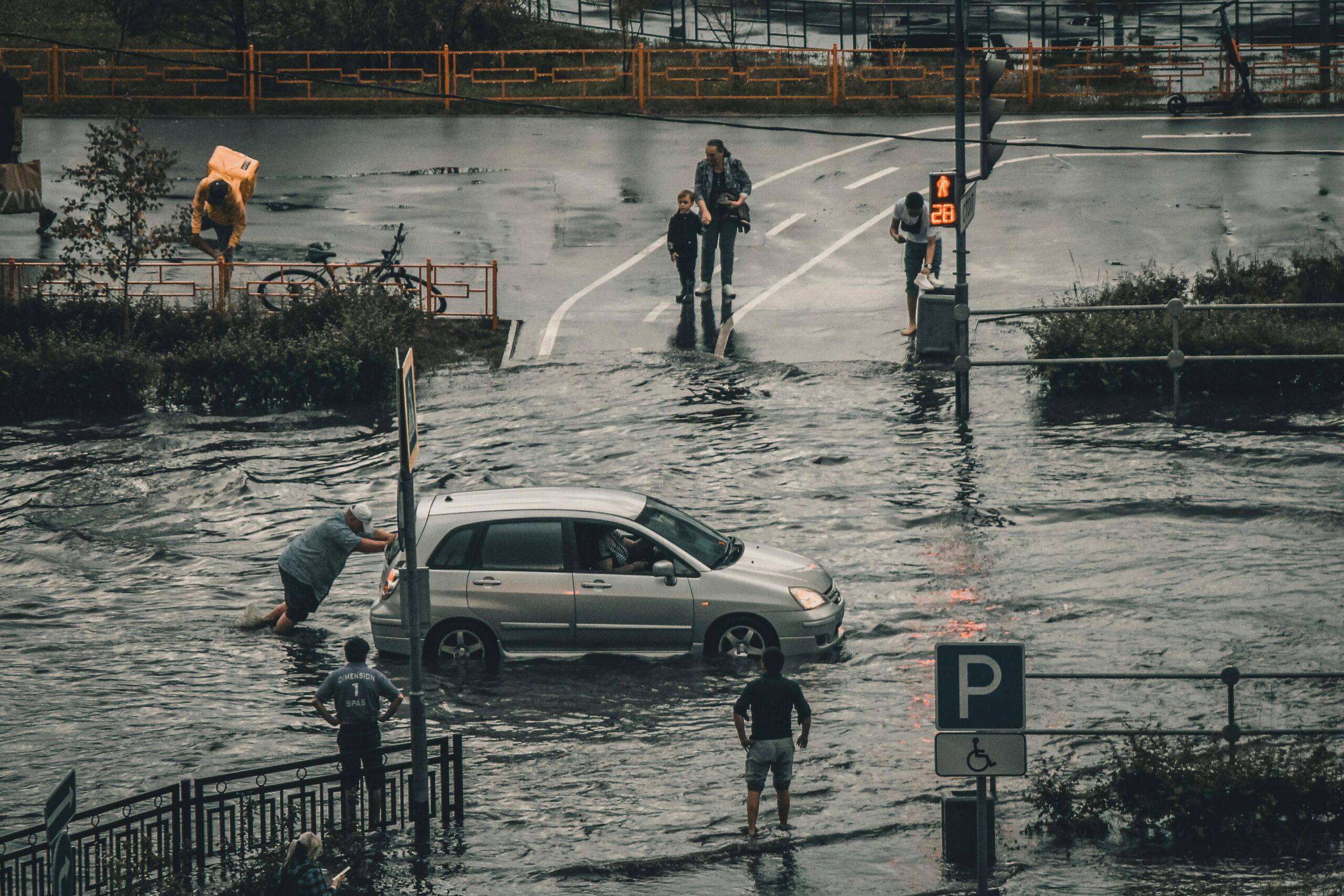
Flooding in Washington state is a persistent and complex natural hazard, shaped by the region’s distinctive geography and climate. In particular, as part of the Pacific Northwest, Washington is frequently impacted by atmospheric river events—long, narrow bands of moisture that deliver intense, sustained rainfall to western Washington.
Atmospheric River Events: Concentrated Moisture Corridors
An atmospheric river is a long, narrow region in the atmosphere that transports most of the water vapor outside of the tropics. For example, these corridors can deliver large amounts of rain when they make landfall. Atmospheric rivers transport moisture from Pacific waters in the tropics and can appear as fire hoses on weather radar systems. As a result, these storms often result in heavy rainfall that overwhelms rivers, streams, and low-lying areas, triggering river flooding and flash floods across the state. For instance, during major events, atmospheric rivers have delivered up to 2 feet of rain in some areas over a week, resulting in approximately 9 million acre-feet of water in Western Washington. Overall, the total rainfall from these events highlights the scale and impact of flooding in the region.
Riverine Flooding: Major Waterway Overflow
Riverine flooding refers to the overflow of rivers and streams, inundating adjacent land and facilities. For instance, major rivers such as the Skagit River, Snoqualmie River, and Green River are particularly prone to flooding, with flood warnings and watches regularly issued for these waterways during periods of significant precipitation. Consequently, the combination of saturated ground, rapid snowmelt, and additional rain can quickly escalate flood risk, especially in low-lying areas and river valleys. Additionally, urban centers and coastal regions in western Washington are also vulnerable, as heavy rainfall can lead to urban flooding and strain local stormwater systems.
Stormwater Flooding in Cities: Local Drainage System Failure
In cities, stormwater flooding occurs when rainfall overwhelms city drainage systems, causing water to accumulate in streets and low-lying areas. Moreover, climate change is intensifying these challenges, with projections indicating more frequent and severe heavy rainfall events in the future. Consequently, this increases the risk of flooding in Washington state, making it essential for residents, local governments, state and federal agencies to work together on preparedness, response, and long-term mitigation. Therefore, understanding the unique flood risks facing Washington’s communities is the first step toward building resilience and protecting property, infrastructure, and lives from the growing threat of flooding in Washington.
About anhamm & Washington Flood Protection
Anhamm manufactures patented spillbarrier systems that deploy passively without electricity, hydraulics, or manual intervention. The company is based in Moers, Germany and distributes globally through spillbarrier.com.
This Washington flood case study provides detailed engineering analysis of the December 2025 floods to demonstrate how passive flood barrier systems prevent industrial facility damage when deployed at flood-vulnerable entrances during flood events.
Part 1: Understanding the December 2025 Washington Flooding
Why the December 2025 Washington Flooding Was Exceptional
In addition, the Pacific Northwest experienced an unprecedented sequence of three atmospheric river events during Washington flooding in December 2025 (December 10–14). Moreover, each system brought warm, moisture-laden air from the Pacific, creating sustained heavy rainfall and heavy precipitation across multiple elevation zones simultaneously during this flood event.
Precipitation Pattern During December 2025 Washington Flooding:
- Lower elevations (Seattle, Tacoma, coastal zones): 2–4 inches of rainfall during the flooding in 48 hours
- Mountain zones (Cascade and Olympic ranges): 20–24 inches of precipitation during the floods (mix of rain and wet snow)
- Secondary surge zones (river valleys): Significant snowmelt from warming temperatures during the flooding
As a result, several feet of snow accumulated in higher elevations, while heavy rain and heavy precipitation in lower areas led to record flooding. Additionally, flooded areas were reported across multiple affected counties, including mobile home parks, residential communities, and natural waterways, highlighting the widespread impact of the event. Meanwhile, as rain fell for days, the cumulative impact overwhelmed rivers and saturated the ground, prolonging flooding conditions. Furthermore, additional rain during the atmospheric river events slowed the recession of floodwaters. In fact, the Skagit River reached a record crest of 37.62 feet near Mount Vernon during the event.
This combination created a “perfect storm” for Washington: heavy direct rainfall in river valleys + massive snowmelt from mountains = unprecedented runoff during the December 2025 floods.
The Desimone Levee Failure: Step-by-Step Timeline of Washington Flooding
December 13 Evening: Water Pressure Intensifies During Washington Flooding
By evening on December 13, the Green River near Tukwila had risen to approximately 18 feet during the flooding event. The Desimone Levee—designed to protect 30,000+ residents in Tukwila, Kent, and Renton—was built in the 1970s. Water pressure during this flood was increasing at approximately 1–2 feet per hour.
December 14, 2:00 AM: Seepage Detected During Washington Floods
Levee maintenance crews detected active seepage during the flood—water migrating through the soil structure. Therefore, this failure mode is critical during severe flooding because it indicates hydraulic pressure inside the levee is exceeding soil resistance.
December 14, 4:30 AM: Breach Point Forms During Washington Flooding
At approximately 4:30 AM, a breach developed during the flooding event. According to CNN reporting (December 15, 2025), the Green River reached approximately 22 feet in height—the highest level recorded in over 60 years of Washington flood history. Consequently, the water pressure at the breach during this flooding event was approximately 0.9–1.0 psi.
December 14, 4:45–6:00 AM: Uncontrolled Release During Washington Floods
Once the initial breach began during the flooding event, flow rate accelerated exponentially. As a result, this December 2025 flood event released approximately 200 meters of water width at ~3–4 feet per second, inundating industrial and residential zones.
Industrial Zone Impact: Water Depths During December 2025 Washington Flooding
| Distance from Levee | Water Depth (December 2025 Washington Flooding) | Exposure Duration | Recession Rate During the Flood |
|---|---|---|---|
| 0.5 km (nearest flood zone) | 18–22 inches | 18–20 hours | ~1 inch/hour |
| 1.0 km (moderate flood distance) | 12–16 inches | 20–24 hours | ~0.5 inch/hour |
| 2.0 km (distant flood impact) | 6–10 inches | 24–30 hours | ~0.3 inch/hour |
Part 2: What Happened to Facilities Without Flood Protection During The Washington Flood
Damage Pathway: How Washington Flooding Destroys Industrial Operations
Phase 1: Water Entry During Washington Flooding (First 10–30 Minutes)
Water enters ground-level openings when floodwaters reach the facility. Consequently, for a typical industrial facility without flood barriers, water infiltration begins immediately during the floods, traveling at ~2–3 feet/second into the building.
Phase 2: Equipment Failure During Washington Flooding (30 Min–2 Hours)
As a result, during the flooding, water depth of 12–18 inches reaches electrical panels typically located at 3–4 feet above ground in unprotected facilities. This flood scenario causes:
- Electrical panel failure
- HVAC system shorts during the floods
- Manufacturing equipment control failures from flooding
- Complete facility shutdown from the floods
Phase 3: Inventory Loss During Washington Flooding (2–6 Hours)
Floodwater spreads throughout the facility, damaging raw materials, finished goods, and stored equipment. As a result, manufacturers can lose $100,000–$300,000+ in inventory.
Phase 4: Environmental Contamination from Washington Flooding (Ongoing)
Additionally, during the flooding, hazardous materials stored onsite (solvents, oils, chemical reagents) float in floodwater, creating EPA violations and environmental liability—costs often exceeding direct damage from the floods. For prevention strategies and compliant containment options, see our guide to chemical protection barrier systems.
Financial Impact of December 2025 Washington Flooding
| Damage Category | Cost During the Flood | Cause of Damage in the Flood |
|---|---|---|
| Equipment & Machinery | $50,000–$100,000 | Water damage from flooding to electrical systems, HVAC, machinery |
| Inventory Loss | $100,000–$300,000 | Flooding destroys raw materials, finished goods, supplies |
| Business Interruption | $50,000–$75,000 | 3–7 day shutdown for drying/repairs after the flooding |
| Environmental Remediation | $50,000–$100,000 | EPA cleanup required when floodwater contaminates materials |
| Regulatory Penalties | $25,000–$50,000 | EPA violations when floods cause spills from facilities |
| TOTAL FACILITY DAMAGE (Single Flooding Event) | $275,000–$625,000 | This is what the December 2025 flood cost unprotected facilities. Additionally, during this event, over 2,600 homes were flooded and significant damage occurred to infrastructure, highlighting just how much damage these severe weather events can cause. |
Part 3: How Spillbarriers Work (Engineering Explanation)
What Is a Spillbarrier?
Anhamm spillbarriers are an automatic, passive flood barrier that use float-activated technology to seal building entrances without electricity, hydraulics, or manual intervention. Additionally, during the flood, when floodwater rises and reaches the barrier, an internal float cup is displaced upward by rising water. Consequently, this triggers a mechanical linkage that raises a sealing flap vertically, creating a complete watertight seal within seconds—providing flood protection during the floods.
The Float-Activation Mechanism: How Flood Barriers Protect During Flooding
7-Step Activation Sequence During Flooding
Step 1: Water Entry (0–30 seconds into flooding)
When floodwater begins entering the floor recess where the spillbarrier is installed, water level in the barrier housing rises.
Step 2: Float Displacement (30–60 seconds during the flood)
Inside the housing is a sealed float cup chamber. As water level rises during the flooding, the float cup—less dense than water—begins to rise with the water level during the flood event.
Step 3: Mechanical Linkage Activation (60–90 seconds of flooding)
Connected to the float cup is a mechanical lever system (no motors, no electronics). As a result, as the float rises during the flooding, it pushes a connecting rod upward, linked to the main sealing flap.
Step 4: Flap Closure Progression (90–180 seconds of flooding)
As the float continues to rise during the flooding, the sealing flap progressively raises from horizontal toward vertical, sealing against the door frame during the flood event.
Step 5: Complete Seal Achieved (When water reaches 7 inches during flooding)
When water depth reaches approximately 7 inches during flooding, the float has risen enough to achieve complete flap closure. Therefore, all water ingress is prevented—flood protection is activated during the flood.
Step 6: Sustained Seal (Throughout the flood event)
As long as water level remains above 7 inches during the flooding, the seal remains engaged. Consequently, water pressure outside the barrier maintains compression on seals throughout the flood event.
Step 7: Recovery Phase (After the flood recedes)
As floodwaters recede, water level drops. The float descends, linkage reverses, and the flap lowers back to resting position. Finally, a manual hook mechanism allows operators to assist—no power required for recovery after floods.
Technical Specifications: Flood Barrier Performance Data
| Technical Parameter | Specification / Value | Relevance to Flood Protection |
|---|---|---|
| Activation During Flooding | ~7 inches water depth | Barrier begins sealing earlier than December 2025 flood depths |
| Full Seal Achieved | 7–12 inches water depth | Complete sealing confirmed before peak flooding |
| Maximum Rated Height | 36 inches (0.9 meters) | FM Global approved for this dimension during floods |
| Maximum Rated Width | 30 feet (multiple units for larger openings) | Can protect large loading docks from flooding |
| Hydrostatic Pressure Rating | 1.5+ psi | Exceeds pressure from 12–18″ flooding by 2–3x |
| Primary Material | Stainless steel 1.4301 | Corrosion resistant for long service life during flooding |
| Power Requirement | ZERO (passive float mechanism) | Works automatically during flooding without electricity |
| Maintenance | Annual inspection | Simple functional test after flooding events |
Part 4: Engineering Verification – Would anhamm Flood Barriers Have Prevented Washington Flooding Damage?
This is the critical analysis: the December 2025 floods created measurable water depths (12–18 inches). Spillbarrier has published technical specifications for flood protection. Therefore, we can directly compare actual flood load vs. rated capacity.
| Engineering Parameter | December 2025 Flood Actual | Flood Barrier Rating | Safety Margin | Assessment |
|---|---|---|---|---|
| Maximum Water Depth During Flooding | 18 inches | 36+ inches rated for flood protection | 2.0x margin | Barrier capacity far exceeds flood depths |
| Activation During Floods | Flood reaches facility at ~12 inches | Activates at 7 inches for flood protection | Early trigger | Seals before peak water arrives |
| Hydrostatic Pressure During Flooding | ~0.8 psi (at 18″ depth) | Rated 1.5+ psi for flood barriers | 1.9x margin | Pressure well within flood barrier limits |
| Exposure Duration of Flooding | 18–24 hours | No time limit specified for flood protection | Indefinite | Flood barrier can hold seal throughout the event |
Part 5: Industry Standards & Flood Barrier Compliance
Flood barriers are not “all the same.” For industrial sites, the difference between a barrier that looks robust and one that is proven in certified testing is critical for risk management, insurance acceptance, and regulatory exposure. In this section, we summarize the most relevant compliance and testing frameworks for flood protection—starting with FM Global performance testing, then highlighting impact-load certification (FM-2501), and finally the regulatory context under OSHA and EPA.
FM Global Approval for Flood Barriers
FM Global is a leading loss-prevention authority. This approval indicates that a flood barrier has been evaluated against defined performance requirements—important for sites with strict risk-engineering and insurance standards.
In practice, FM Global approval for flood barriers means:
- Physical testing validates flood barrier performance claims
- Materials verified for durability during flooding
- Installation protocols standardized for flood protection
- Insurance implications: Facilities with FM-approved flood barriers often receive discounts
FM approval: Rated up to 0.9 meters (36 inches) height with opening widths to 30 feet for flood protection.
Certified Safety Even Under Extreme Impact Loads (FM-2501)
Beyond water tightness, industrial flood protection must also withstand debris impact (e.g., floating timber, pallets, heavy objects). anhamm flood barriers were successfully tested to the FM-2501 water flap gate test in a realistic impact scenario: a specially prepared timber beam was directed at the upper center of the system.
Result: passed without relevant deformation or impermissible leakage—watertight sealing and structural integrity remained intact. Therefore, this supports reliable use as an automatic flood barrier where debris impact can occur.
- FM-2501 tested
- Real-world debris impact scenario
- Seal integrity verified
| Impact Test Parameter | Value |
|---|---|
| Timber beam diameter | Ø 43 cm |
| Impact mass | 358 kg |
| Drop height | 2 m |
| Speed & impact angle | 2.1 m/s · ~70° |
OSHA & EPA Compliance for Flood Protection
Compliance is not only about preventing water entry—it also reduces spill risk and downstream liability. OSHA 1910.106 (Flammable Liquid Storage) and EPA 40 CFR 264.175 (Secondary Containment) both address flood-related hazards. Consequently, flood barrier systems that reduce floodwater ingress help protect equipment, limit hazardous material migration, and support compliance during flooding and other flood events.
Role of Federal Emergency Management Agency in Washington Flooding Response
The Federal Emergency Management Agency (FEMA) is a cornerstone of flood response and recovery efforts in Washington state. In addition, when flooding strikes, FEMA mobilizes quickly to provide disaster assistance to affected communities, working in close partnership with state and local governments. For example, this support includes funding for emergency repairs, debris removal, and direct aid to residents and businesses impacted by flood waters.
Furthermore, beyond immediate disaster assistance, FEMA plays a vital role in long-term flood risk reduction. In practice, the agency allocates federal funding for flood mitigation projects, such as levee construction, floodplain restoration, and infrastructure upgrades, helping to protect Washington communities from future flooding events. For example, programs like the Building Resilient Infrastructure and Communities (BRIC) initiative have been instrumental, with over $180 million in federal funding directed toward flood mitigation projects across Washington state.
At the same time, FEMA’s collaboration with state and local governments ensures that resources are deployed efficiently and that recovery efforts address the unique needs of each affected area. However, challenges remain, as delays or reductions in federal funding can impact the pace and scope of critical flood protection projects. Despite these hurdles, FEMA’s ongoing partnership with Washington state and its communities is essential for managing disaster related costs, supporting repairs, and building resilience against the increasing risk of flooding in Washington.
Conclusion: What This Washington Flood Case Study Means for Industrial Facilities
Overall, the December 2025 Washington flood illustrates a common industrial risk pattern: a fast-moving riverine event creates shallow-but-decisive water depths (often 12–18 inches) that are enough to shut down operations, damage equipment, and trigger costly environmental and compliance exposure.
Therefore, based on the verified load comparison in this case study, anhamm flood barriers would have prevented floodwater entry at typical ground-level openings by sealing early (around 7 inches) and maintaining a watertight barrier throughout the event. In other words, that means protecting the highest-cost failure points first: electrical rooms, production areas, stored goods, and hazardous materials zones.
If your site sits near a river corridor, low-lying drainage path, or urban stormwater pinch point, the next step is a simple facility-level assessment: identify entry points, map expected flood depths, and prioritize protection for the highest-consequence doors, docks, and ramps. As a result, when you engineer protection around measured water levels—rather than assumptions—you reduce downtime, lower total risk, and improve compliance readiness before the next event.
Frequently Asked Questions
What caused the December 2025 Washington flooding, and why did impacts spread so quickly?
Atmospheric rivers delivered intense rainfall and accelerated runoff, pushing rivers and levee systems beyond capacity and causing rapid inundation in low-lying industrial zones.
What floodwater depth should industrial facilities plan for in flood-prone areas?
Facilities should plan based on local flood history and site elevation, but many damaging events involve 12–18 inches at entrances—enough to flood buildings, damage equipment, and trigger downtime.
How do automatic flood barriers work without electricity during a flood event?
Passive systems use rising water to trigger a mechanical seal (often via a float mechanism), allowing the barrier to deploy automatically even during power outages.
What certifications matter most when choosing a flood barrier for industrial sites?
Look for independent performance testing and recognized standards (e.g., FM approval and impact-load testing such as FM-2501) to validate watertightness, durability, and debris-impact resistance.
How do flood barriers support EPA and OSHA compliance during flooding?
By limiting water ingress and reducing the chance of hazardous material migration, flood barriers help lower spill risk, support secondary containment expectations, and reduce regulatory exposure during flood events.
Sources & Citations for Washington Flooding Analysis
Protect Your Facility From Floods
Contact anhamm for a comprehensive site assessment of your facility’s flood risk and flood barrier options. The engineering team will evaluate your specific vulnerability to floods, recommend appropriate flood protection systems, and provide installation timeline and exact pricing.
About anhamm: anhamm manufactures automatic spillbarrier and flood protection systems from Moers, Germany. Distributes globally through spillbarrier.com, providing FM Global-approved passive flood barriers for industrial facilities seeking protection from flooding and other flood events.

