
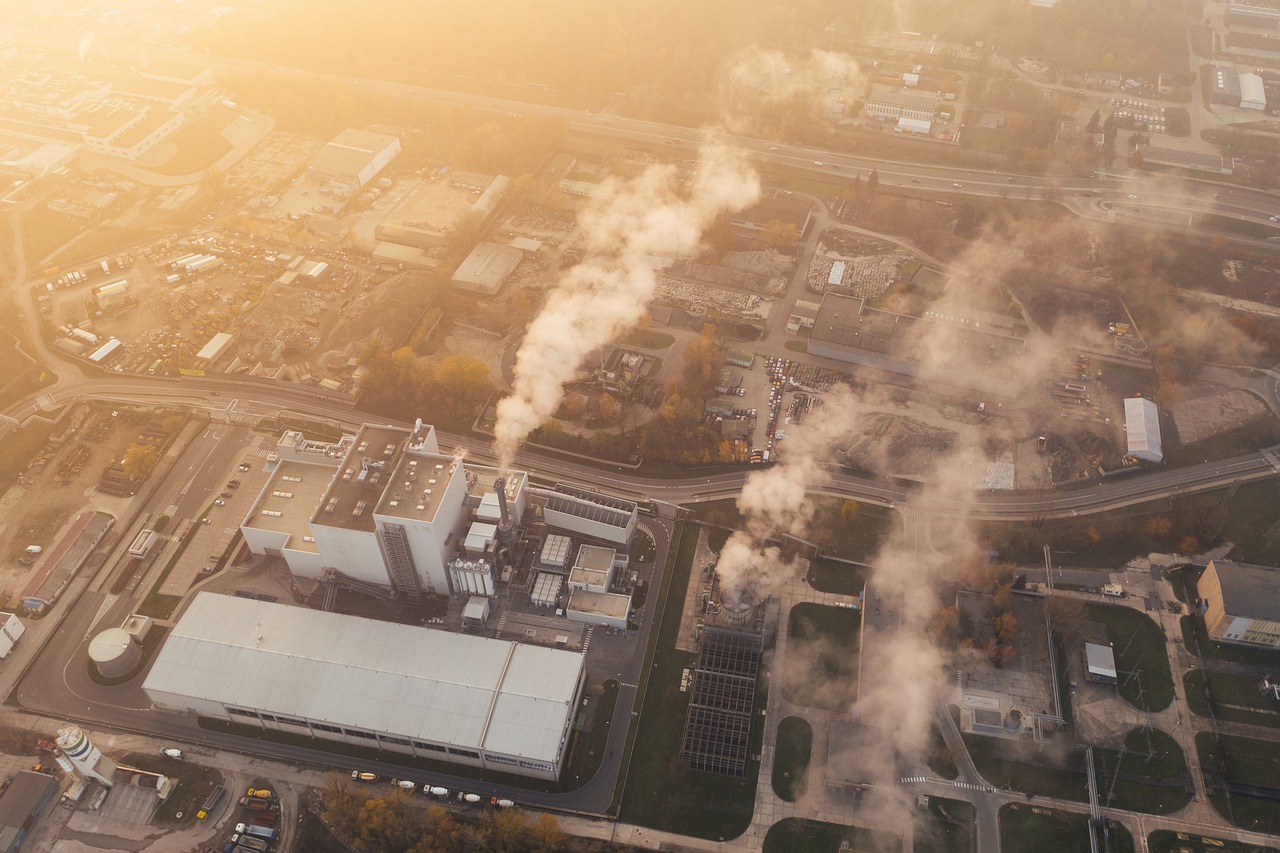
This comprehensive guide addresses the critical needs of industrial facility managers, EHS professionals, and compliance officers across Europe. It explores the essential role of chemical spill barriers in preventing environmental contamination and ensuring workplace safety. You will gain insights into compliance with EU regulations like Seveso III, the technical advantages of modern solutions like the anhamm Chemical Protection Barrier, and actionable strategies to secure your infrastructure against aggressive liquid hazards.
Key Takeaways
- Modern chemical spill barriers like the anhamm Chemical Protection Barrier offer reliable protection against aggressive chemicals and significantly reduce long-term costs.
- European industrial facilities face growing challenges in protecting against chemical leaks and flooding due to tightened environmental regulations.
- Professional barrier systems outperform traditional protection measures through automatic deployment times under 30 minutes and superior tightness.
- Legal requirements under the EU Water Framework Directive and Seveso III Directive demand effective precautionary measures against chemical contamination.
- anhamm’s innovative technology enables flexible application across various industries from chemical plants to logistics centers with proven cost-efficiency.
What are Chemical Spill Barriers for Aggressive Liquids?
Chemical spill barriers for aggressive liquids are specialized protection systems that prevent the leakage, spread, or ingress of dangerous, often corrosive and toxic liquids. These barriers serve active preventive environmental protection and occupational safety, representing a key function in the hazardous material management of modern industry. A particularly effective example of this is the anhamm Chemical Protection Barrier, which was developed specifically for these high requirements.
The functionality of modern chemical spill barriers is based on sophisticated materials and innovative construction principles. While traditional retention systems often operate passively, modern solutions offer automatic triggering mechanisms and maximum responsiveness.
Difference Between Temporary and Permanent Barrier Systems
Temporary systems, such as flexible barriers made of polyethylene or polyurethane, score points through quick installation and adaptability. They are particularly suitable for changing deployment locations and emergency situations. Permanent barrier systems, on the other hand, are fixed installations offering permanent protection with high stability and reliable sealing.
Material Requirements for Aggressive Chemicals
Contact with acids, alkalis, and solvents places the highest demands on the materials used. High-performance plastics like chemically resistant polyethylene, Stainless Steel (AISI 304 or better), and special membranes must withstand extreme temperatures, corrosive properties, and mechanical loads.
The technology is characterized by its versatile applicability for various chemical substances. Through modular design, different protection requirements can be flexibly covered – from the temporary securing of a warehouse to the permanent protection of entire production plants.
Types of Aggressive Chemicals and Their Specific Risks
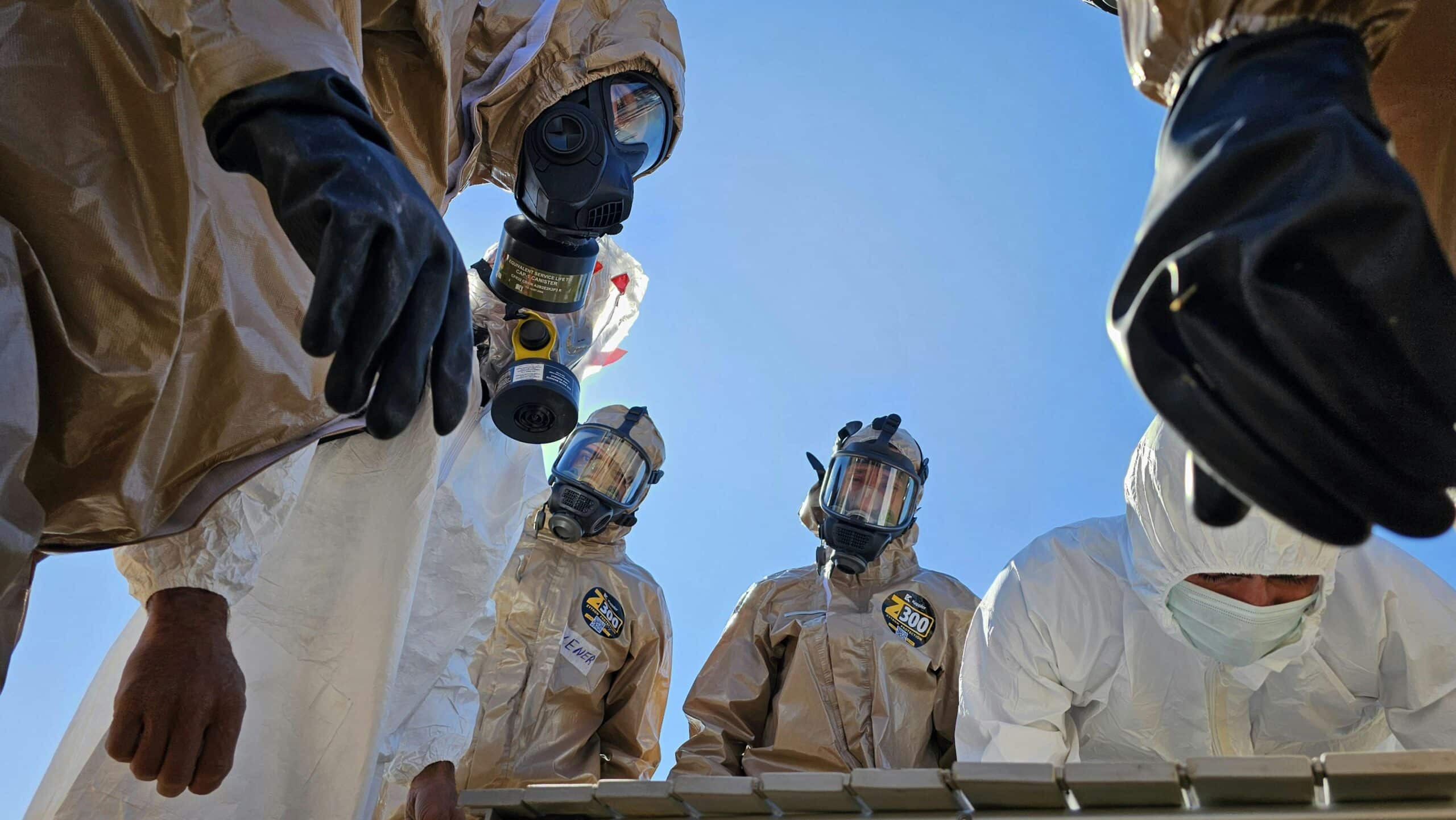
The variety of aggressive chemicals in the industry requires a differentiated understanding of their specific hazard potentials. Each substance class brings unique challenges for storage, handling, and protection measures.
Acids and Alkalis: Corrosion Potential and Material Damage
Strong acids like sulfuric acid or hydrochloric acid, as well as concentrated alkalis, attack metals, concrete, and many plastics. In the event of leaks, they can cause significant material damage within minutes and pose an enormous risk to groundwater and soil contamination. Safety precautions prescribed by EU standards typically include special safety cabinets and retention systems.
Organic Solvents: Permeation and Environmental Hazard
Solvents like acetone, toluene, or dichloromethane are characterized by their ability to penetrate many conventional materials. They place special demands on barriers, as they can exploit even the smallest leaks. The contamination of water and soil by these substances can require decades of remediation measures.
Flammable Liquids: Fire and Explosion Risks
The storage of flammable liquids requires not only protection against spreading but also consideration of fire resistance duration and distance to other areas according to the ATEX Directive. In fires, the resulting vapors can spread over long distances and create additional hazards.
Toxic Chemicals: Health Hazards and Contamination Risks
Highly toxic substances require absolute safety during handling and storage. Even small amounts can pose significant health hazards if released. The CLP Regulation (EU implementation of GHS) defines strict requirements for the provision and use of appropriate protective measures.
Reactive Substances: Unpredictable Chemical Reactions
When storing different chemicals together, unpredictable reactions can occur. The correct assessment of compatibility and required protective measures is crucial for the safety of the entire operation.
Modern Challenges in Chemical Protection in Europe
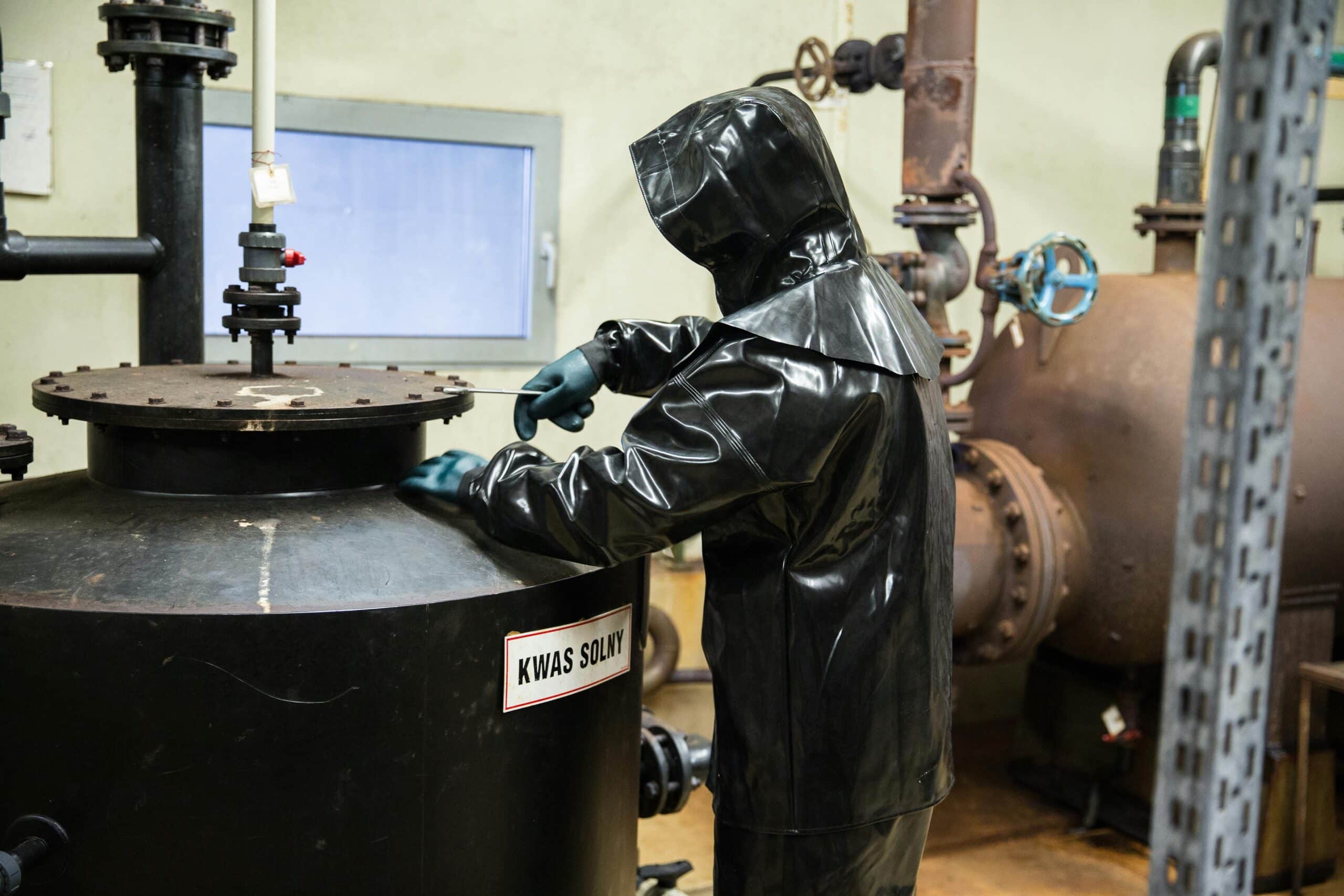
The European industry today faces unprecedented challenges in dealing with aggressive chemicals. These developments require innovative solutions and professional protection concepts.
Increasing Extreme Weather Events and Flood Risks
Heavy rainfall events and flooding are hitting European industrial areas with increasing frequency and intensity. When water enters areas with stored chemicals, catastrophic consequences can arise. Traditional protection measures like sandbags often fail due to the enormous water volumes and short reaction times.
Tightened EU Environmental Regulations and Their Impact
The European REACH Regulation and the Industrial Emissions Directive (IED) have significantly tightened the requirements for chemical protection. Companies today must seamlessly prove that they have taken all reasonable precautionary measures. Violations can lead to severe penalties and lengthy remediation procedures.
Aging Infrastructure in European Chemical Parks
Many industrial plants in Europe date back to the 1960s and 1970s. This aging infrastructure is often not designed for today’s safety standards. The retrofitting of effective barrier systems is becoming a critical task for plant operators.
Rising Insurance Costs for Inadequate Protection Measures
Insurance companies are evaluating risks much more strictly today. Companies without professional protection concepts must expect drastically rising premiums or, in the worst case, receive no coverage at all.
The anhamm Chemical Protection Barrier addresses these challenges through its unique combination of automatic activation, chemically resistant materials, and flexible adaptability. The system can be installed preventively as well as deployed quickly in emergency situations, making it the ideal solution for the complex requirements of modern industrial operations.
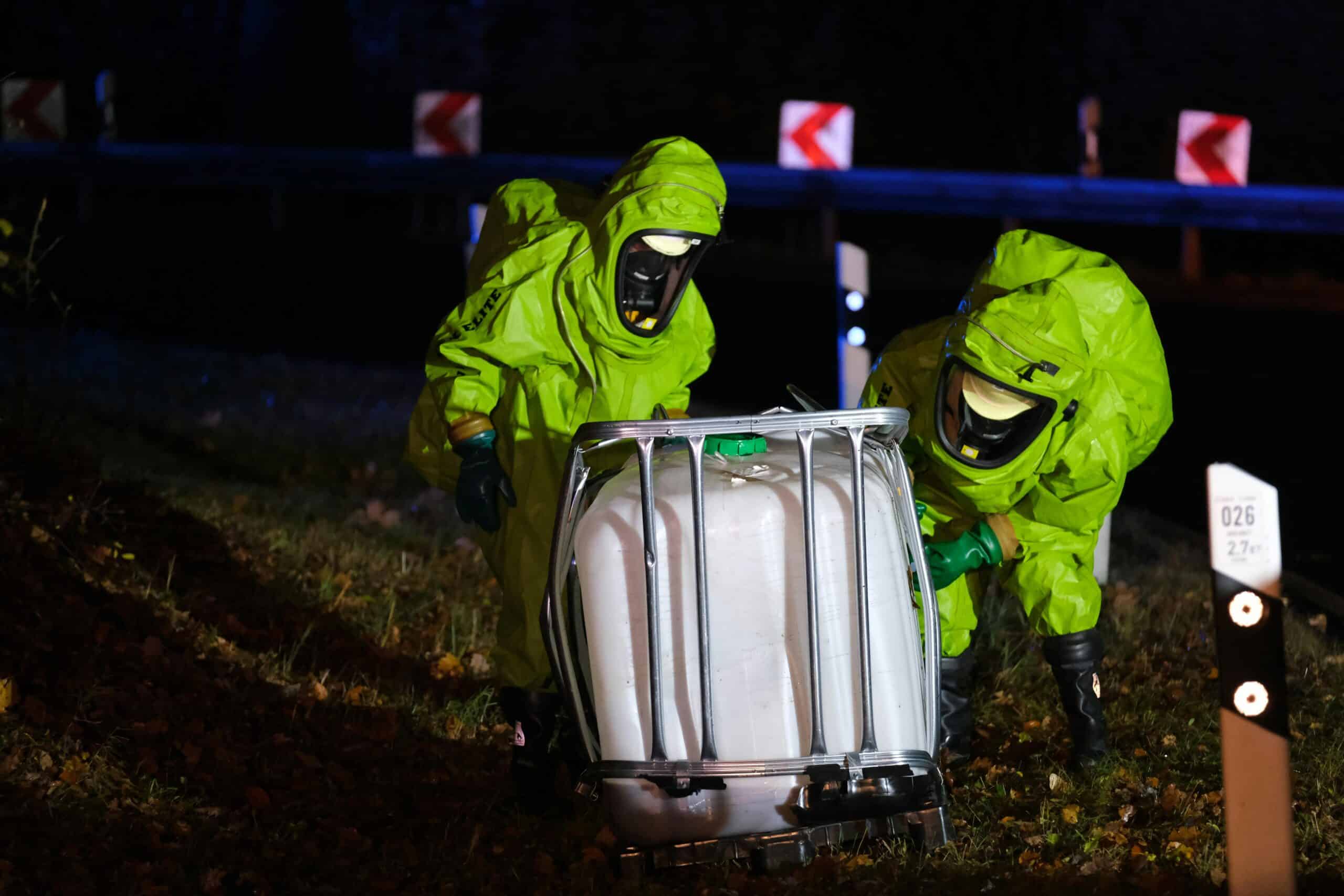
anhamm Chemical Protection Barrier: Professional Protection Against Chemical Hazards
The technology represents the state of the art in the field of professional chemical spill barriers. In contrast to conventional solutions, it offers a combination of automated safety, professional reliability, and high material quality that sets new standards industry-wide.
Technical Superiority Over Temporary Solutions
While sandbags and other temporary measures must be positioned manually and often offer inadequate tightness, the anhamm solution works fully automatically. Upon leak detection, the barrier rises automatically; the liquid fills the containment device and triggers a float mechanism that activates the barrier and minimizes escape routes. This is particularly important for extinguishing water retention.
Chemically Resistant Materials and Sealing Systems
The system uses high-quality, chemically resistant materials that retain their properties even during prolonged contact with aggressive substances. The sealing systems are designed to function reliably even under extreme conditions and ensure maximum barrier effect.
Fast Deployment Times in Emergencies
A crucial advantage lies in the reaction speed. The system can be fully activated in less than 30 minutes – a timeframe that often decides the limitation of damage spread in chemical incidents.
Modular Design for Flexible Adaptation
The modular construction allows the system to be adapted to a wide variety of deployment scenarios. Whether protecting individual storage rooms, large-scale production plants, or critical infrastructure – the technology is scalable and configurable.
Longevity and Reusability as a Cost Advantage
Unlike disposable products such as sandbags or binding agents, the system is designed for long-term use. After activation, it can be cleaned, maintained, and reused, significantly reducing the total cost of ownership.
Technical Specifications and Performance Features
The technical data underscore the performance capability in demanding industrial environments:
| Feature | Specification |
|---|---|
| Retention Height | Up to 2.5 m |
| Pressure Resistance | Up to 25 kN/m² |
| Temperature Range | -30°C to +60°C |
| Deployment Time | Under 30 Minutes |
| Lifespan | 20+ Years with proper maintenance |
| Maintenance Interval | Annual Inspection |
Chemical Resistance Table
| Substance Class | Resistance | Specifics |
|---|---|---|
| Acids (pH < 2) | Excellent | Tested up to 98% concentration |
| Alkalis (pH > 12) | Excellent | Long-term tests over 1000 hours |
| Organic Solvents | Very Good | Special seals available |
| Oils and Fuels | Excellent | Proven in refineries |
| Salt Solutions | Excellent | Ideal for coastal operations |
These technical properties make the technology the first choice for companies looking for maximum environmental protection in industry at minimal operating costs.
Practical Examples and Areas of Application in Industry
The versatility of anhamm technology is evident in its broad application across various industrial sectors. European companies have successfully implemented the system and report significant improvements in safety and cost-efficiency.
Chemical Plants: Protection Against Leaks in Production Facilities
In a major European chemical park, anhamm technology was installed to secure reactors processing highly concentrated acids. The automatic system has already functioned multiple times during smaller leaks and was able to prevent the spread before major damage occurred.
Pharmaceutical Industry: Containment of Highly Active Substances
A leading pharmaceutical manufacturer uses anhamm chemical spill barriers to protect its production areas for highly active pharmaceutical ingredients (APIs). The precise tightness of the system ensures that even the smallest amounts are reliably retained – a critical factor for compliance with GMP Standards.
Automotive Industry: Protection Against Painting Chemicals
In automotive plants, large quantities of aggressive solvents and painting chemicals are used daily. The modular design of the chemical spill barriers allows production lines to be flexibly protected without disrupting operations.
Logistics and Port Operations: Emergency Protection for Hazardous Goods Transport
European ports have implemented anhamm systems for the transshipment of hazardous goods. The fast deployment capability is particularly valuable in logistics and port operations, as accidents during transport often occur unpredictably and require immediate reaction.
Success Stories from European Companies
A medium-sized chemical company in Central Europe was able to reduce its insurance premiums by 40% by installing chemical spill barriers. The investment amortized itself after just 18 months through saved costs and avoided downtime.
These practical examples impressively demonstrate how anhamm satisfies the most diverse application requirements while consistently delivering reliable results.
Installation and Maintenance of Chemical Spill Barriers
Proper installation and regular maintenance of chemical spill barriers are crucial for their effectiveness. The system was developed to minimize installation effort while ensuring maximum reliability.
Step-by-Step Guide to Correct Installation
- Site Analysis: Assessment of local conditions, chemical types, and hazard potentials.
- System Planning: Dimensioning the barrier based on maximum storage quantities and flow rates.
- Preparation: Preparation of the installation surface and provision of necessary connections.
- Assembly: Installation of the barrier elements and connection to the control system.
- Function Test: Comprehensive testing of all system components under real conditions.
- Documentation: Creation of complete installation and maintenance documentation.
Maintenance Intervals and Inspection Routines
The anhamm technology is designed for minimal maintenance effort:
- Monthly: Visual inspection of seals and mechanical components.
- Quarterly: Function test of automatic triggering mechanisms.
- Annually: Complete system inspection by a certified service technician.
- After Use: Thorough cleaning and verification after chemical contact.
Cleaning After Contact with Aggressive Chemicals
After contact with chemicals, a standardized cleaning protocol follows:
- Neutralization of any acid or alkali residues.
- Thorough rinsing with demineralized water.
- Use of specific cleaning agents depending on the type of contamination.
- Drying and inspection of all components.
- Documentation of the measures taken.
Long-term Storage and Storage Conditions
For temporary non-use, the following storage conditions should be maintained:
- Dry, constant temperature environment (5-35°C).
- Protection against direct sunlight.
- Regular check of the sealing elements.
- Documented storage rotation for multiple systems.
anhamm’s Service Offering and Technical Support
Comprehensive service support includes:
- 24/7 technical hotline for emergencies.
- Preventive maintenance programs.
- Fast spare parts supply.
- Training for operating personnel according to EU OSHA guidelines.
- Regular system updates and modernizations.
Professional support by anhamm ensures that the chemical protection barrier delivers optimal performance over its entire lifespan and meets all regulatory requirements.
Future Trends and Innovations in Chemical Protection
The future of chemical protection is shaped by technological innovations and changing environmental conditions. anhamm positions itself as a pioneer in developing forward-looking solutions.
Smart Barrier Technology and IoT Integration
The integration of Internet of Things technologies is revolutionizing the monitoring of barrier systems:
- Continuous monitoring of system parameters.
- Predictive maintenance through AI-supported data analysis.
- Remote diagnosis and maintenance.
- Integration into central control systems.
- Automatic reporting to emergency services.
Developments in Materials Science
Advances in material development enable even better chemical resistance:
- Self-healing polymers for longer lifespan.
- Nano-coatings for improved surface properties.
- Bio-based materials for more sustainable solutions.
- Intelligent materials with adaptive properties.
Automated Deployment Systems for Emergencies
Future systems will react even faster and more autonomously:
- Fully automatic activation upon leak detection.
- Drone-supported inspection and maintenance.
- AI-based damage prediction.
- Integrated decontamination systems.
anhamm’s Research and Development
anhamm continuously invests in innovation:
- Development of modular building block systems.
- Improvement of material resistance.
- Integration of digital monitoring technologies.
- Development of industry-specific solutions.
Sustainability and Environmental Compatibility
Future barrier systems must also meet sustainability requirements:
- Recyclable materials.
- Energy-efficient operation.
- Minimization of the carbon footprint.
- Circular economy compatible concepts.
Continuous innovation ensures that anhamm solutions are up to future challenges and offer companies optimal long-term protection.
Conclusion and Recommendations for Action
The importance of professional chemical spill barriers for aggressive chemicals will continue to increase in the European industry. Tightened environmental regulations, rising damage sums, and increased extreme weather events make innovative protection concepts a business necessity.
Summary of Key Findings
The analysis clearly shows that modern barrier systems like the anhamm Chemical Protection Barrier are superior to conventional solutions in all relevant areas:
- Higher reliability through automatic activation.
- Better chemical resistance through high-quality materials.
- Lower total costs through reduced maintenance and insurance discounts.
- Full compliance with all regulatory requirements.
- Future-proof through continuous technical development.
Urgency of Professional Protection Measures
Companies that still rely on outdated or makeshift protection measures expose themselves to significant risks. The costs of a single major incident can jeopardize the company’s existence. Preventive protection through professional barrier systems is therefore not an option, but a necessity.
Concrete Steps to Implement a Chemical Protection Strategy
- Risk Assessment: Comprehensive analysis of all stored and processed chemicals.
- Inventory Analysis: Assessment of existing protection measures and identification of weaknesses.
- Requirement Determination: Dimensioning required barrier systems.
- Provider Comparison: Evaluation of available technologies and providers.
- Investment Decision: Consideration of TCO and ROI calculations.
- Implementation: Professional installation and commissioning.
- Training: Training of operating personnel.
- Monitoring: Continuous monitoring and optimization.
Why anhamm represents the optimal solution
The anhamm system combines all advantages of modern barrier technology in one system:
- Proven technology with over 20 years of experience.
- Comprehensive approvals and certifications.
- Modular design for individual requirements.
- Professional service and support.
- Continuous development and innovation.
For companies seeking maximum protection with optimal economic efficiency, the best available solution is the flip-up barrier.
Consultation and Product Information
Do not hesitate any longer to modernize your chemical protection concepts. Contact the experts at anhamm today for a non-binding consultation and detailed product information. Seize the opportunity to optimally secure your company against chemical risks while realizing economic benefits.
Frequently Asked Questions (FAQ)
The barrier is designed for a lifespan of over 20 years with proper maintenance. The materials used are specifically developed for continuous contact with aggressive chemicals. With intended use and regular inspection, the system retains its protective function for decades. The chemically resistant seals and components are continuously developed to withstand new substances as well.
While the anhamm barrier is resistant to most industrial chemicals, highly concentrated hydrofluoric acid, certain organic peroxides, and some exotic solvents can cause material damage upon long-term contact. For prevention, these substances should be stored in special secondary containment systems. Additionally, anhamm offers special seals and coatings for particularly aggressive applications. A prior compatibility check ensures optimal material selection.
The decisive difference lies in the active vs. passive protection function. Conventional retention basins can only hold limited amounts and offer no protection against overflows. The anhamm barrier, on the other hand, activates automatically upon leaks, adapts to different volumes, and actively prevents spreading. Additionally, it is modularly expandable, weather-resistant, and can be installed both temporarily and permanently. Investment costs amortize faster due to versatility and longevity compared to rigid retention systems.
anhamm offers comprehensive training programs for operating personnel. Basic training covers system function, operation, maintenance, and emergency procedures and takes one day. Additionally, specialized courses for maintenance technicians and safety officers are offered. After installation, all relevant employees receive practical instruction. Annual refresher training and emergency drills ensure that personnel can react competently in an emergency. All training is tailored to the specific conditions of the respective operation.
The anhamm barrier is designed for rapid deployment. Automatic systems trigger instantly upon detection. Manual override or deployment typically takes less than 30 minutes, ensuring containment before significant environmental damage occurs.
Secure Your Facility Now
Don’t wait for an emergency. Protect your employees and the environment with professional barrier systems.
SCHEDULE A CONSULTATION NOW
