
As climate change increases the frequency and intensity of extreme weather, flood protection has become one of the most consequential decisions a homeowner can make. Floods are already the most common and costly natural disaster in the United States, and NOAA’s disaster database shows inland flooding alone has caused over $203 billion in damage since 1980. This article explains what actually causes flooding, how climate change is changing the risk picture, and which preventive measures homeowners can put in place — backed by FEMA, NOAA, and NFIP data rather than general assumptions.
Key Takeaways
- Flooding is most often driven by heavy rainfall, river overflow, and overwhelmed storm sewers — a risk that’s significantly higher in urban areas with sealed, impervious surfaces.
- NOAA has recorded 403 separate billion-dollar weather and climate disasters in the US since 1980, and inland flooding is one of the costliest categories at $203 billion in cumulative damage.
- Standard homeowners insurance does not cover flood damage — protection requires a separate NFIP or private flood policy, in addition to physical measures like backflow valves and automatic barriers.
- A property’s FEMA flood zone designation is the starting point for risk assessment, but it isn’t the whole picture — flash flooding and sewer backup can affect homes well outside high-risk zones.
Table of Contents
What causes flooding
Floods result from several distinct mechanisms, often compounding each other during a single storm event.
The four main flood drivers in the US
- Heavy rainfall: intense storms can drop several inches of rain in an hour, far exceeding what soil or storm drains can absorb.
- Impervious surfaces: pavement, rooftops, and compacted urban soil prevent infiltration, increasing runoff volume by 2 to 6 times compared to natural terrain.
- River and stream overflow: when water levels exceed channel capacity, often after sustained rain or rapid snowmelt.
- Storm sewer overload: systems sized for a design-storm threshold back up once that threshold is exceeded, pushing water into streets and basements.
Sources: EPA, NOAA — see citations throughout this article.
The geography of a watershed — its size, slope, and shape — determines how quickly rainfall reaches waterways and therefore how much warning time residents get. A small, steep urban watershed can flood within minutes of a downpour; a large river basin may take days to crest, as our companion piece on heavy rainfall and flooding climate impact in the US explains in more depth.
Human development compounds all of these mechanisms. Wetlands and floodplains historically absorbed and slowed floodwater; where they’ve been paved over or drained, that natural buffering capacity is gone, and water reaches homes faster and in greater volume than it would on undeveloped land.
How climate change is raising flood risk
Climate change is not a future risk for US homeowners — it’s a measured, ongoing shift in flood frequency and severity, and NOAA’s data makes that shift explicit.
| Metric | Figure | Source |
|---|---|---|
| Billion-dollar weather/climate disasters, US, 1980–2024 | 403 events | NOAA NCEI |
| Cumulative inland flood damage since 1980 | $203 billion | NOAA NCEI |
| Billion-dollar disasters in 2025 alone | 23 events, $115 billion, 276 deaths | NOAA / Climate Central |
| Additional atmospheric moisture per °C of warming | ~7% | Clausius-Clapeyron relation (physical law) |
The physical mechanism is straightforward: a warmer atmosphere holds more water vapor, and that extra moisture is released as heavier, more concentrated rainfall. This is precisely the pattern behind recent record-setting events like the December 2025 Pacific Northwest floods, when a series of atmospheric rivers dropped over 10 inches of rain in parts of western Washington, breached levees, and forced widespread evacuations. Even with US Army Corps of Engineers flood-control dams preventing an estimated $8.7 billion in additional damage, the event still caused historic flooding and fatalities — a reminder that collective infrastructure reduces risk but doesn’t eliminate it at the individual property level.
For homeowners, the practical implication is that historical flood records are becoming a less reliable guide to future risk. A property outside a FEMA high-risk zone today may face meaningfully higher exposure within the life of a mortgage, which is why the next section starts with how to actually check that risk rather than assume it.
Check your flood risk before you buy protection
Before investing in any flood protection measure, start with an objective risk assessment rather than a guess based on how often it’s flooded in living memory.
- Check your FEMA flood zone. The FEMA Flood Map Service Center shows whether your address sits in a high-risk zone (labeled A or V) or a moderate/low-risk zone (B, C, or X).
- Understand what the zone actually means. Homes in high-risk zones with a federally backed mortgage have roughly a 1 in 4 chance of flooding at least once in a 30-year mortgage term, according to FEMA.
- Don’t stop at the flood zone. Flash flooding and storm sewer backup can affect properties in “low-risk” zones too — local drainage history and neighborhood elevation matter as much as the official designation.
- Review your insurance policy. Confirm whether you currently carry flood coverage at all, since it’s almost never included by default (more on this below).
Flood protection measures for homeowners
Effective flood protection layers several measures rather than relying on any single fix. Which combination makes sense depends on your flood zone, the age and layout of your home, and whether the main threat is sewer backup, surface runoff, or overland flooding.
Backflow (backwater) valves
A backflow valve — called a backwater valve in the International Plumbing Code — is a one-way valve installed on your sewer lateral that closes automatically when municipal sewer lines surcharge during heavy rain, preventing sewage from backing up into your home. FEMA’s own guidance on protecting building utility systems from flood damage recommends installing these valves on any drain line, floor drain, or fixture positioned below the base flood elevation.
Installation runs roughly $600 for a simple flap valve up to $1,400 for a combined gate/flap valve, and professional installation is essential — the valve needs to sit correctly on the sanitary lateral, ideally outside the home before the line enters the basement. Many insurers also offer discounts for homes with a verified backflow valve, which offsets some of the upfront cost.
Sump pumps
Where a backflow valve stops sewage from entering, a sump pump handles a different threat: groundwater and surface water collecting around the foundation. Installed in a pit at the lowest point of the basement, it actively pumps accumulated water away from the structure before it can rise through the slab. Pairing a sump pump with a battery backup is worth the extra cost — power outages are common during the same storms that cause flooding, which is exactly when a pump is needed most.
Flood barriers and walls
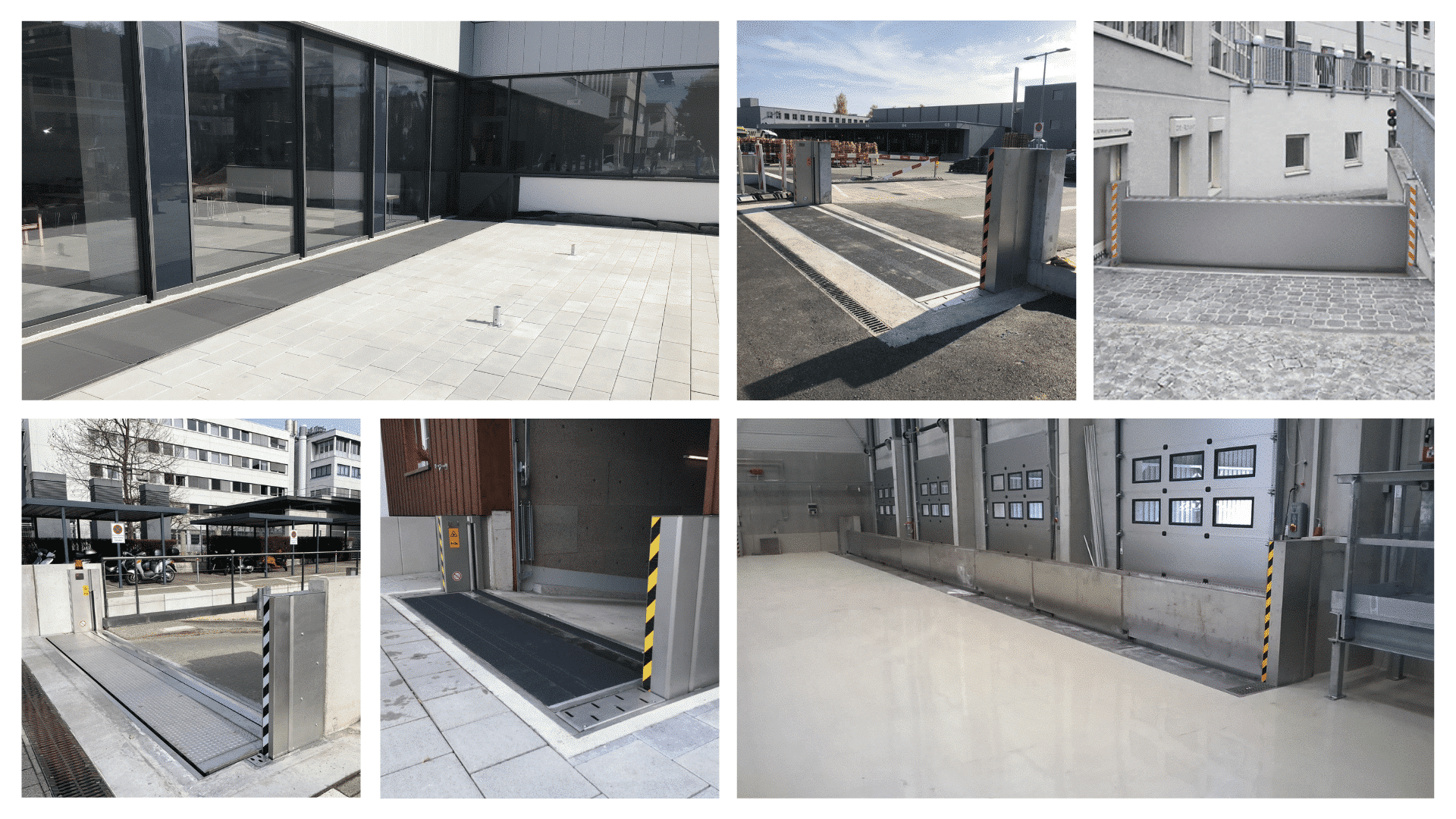
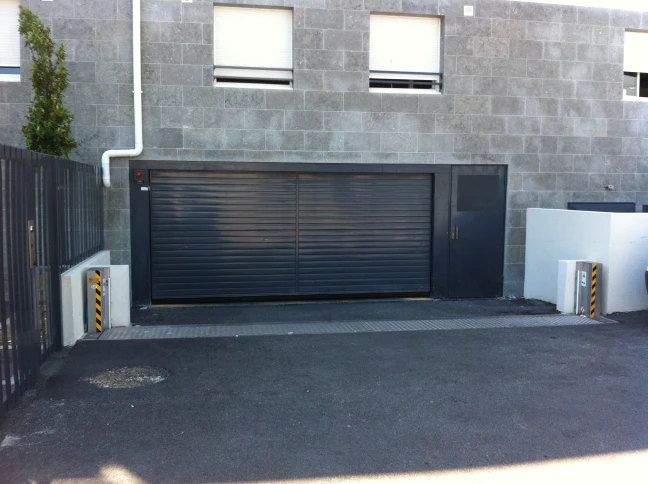
Flood barriers fall into two broad categories. Permanent, automatic barriers like the Spillbarrier stay installed at doors, garages, and other vulnerable openings, activating on contact with rising water without needing anyone home to deploy them. Deployable barriers — sandbags, panel systems, inflatable tubes — cost less upfront but require someone to install them correctly before water arrives, which is a real limitation during flash flooding or if a homeowner is away when a storm hits. Our detailed comparison of flood protection systems for the home walks through which option fits which door, window, or garage configuration.
For new construction, flood protection should be designed in from the start rather than retrofitted — the flood protection for your home and garden guide covers door, window, and outdoor-area solutions specifically for that planning stage.
Sealing basements and walls
Waterproof membranes and sealants applied to basement walls and floors block moisture from penetrating the building envelope, and can be applied from either the interior (typically cheaper) or exterior (typically more effective, since it stops water before it reaches the wall). Water-pressure-rated doors and windows, along with sealed gaps around utility penetrations, close off the remaining entry points — professional installation matters here, since a partial seal can trap moisture rather than exclude it.
Flood insurance: what standard policies don’t cover
Disclaimer: the insurance information in this article is general and subject to change. Consult a licensed insurance agent for advice specific to your policy and state, since flood insurance rules and NFIP terms are updated periodically.
The single most important fact for US homeowners: standard homeowners insurance does not cover flood damage. Coverage requires a separate policy, most commonly through the National Flood Insurance Program (NFIP), administered by FEMA, or through a private flood insurance carrier.
- Properties in FEMA high-risk zones (A or V) with a federally backed mortgage are legally required to carry flood insurance.
- Groundwater seepage and gradual water damage are typically excluded even under flood policies — check your policy’s specific definitions.
- There’s usually a 30-day waiting period before an NFIP policy takes effect, so coverage needs to be in place well before a storm is forecast, not after.
- Homes outside high-risk zones can still buy flood insurance voluntarily, and often at a lower premium — roughly 20–25% of NFIP claims come from moderate- or low-risk zones.
Reviewing your policy’s exact terms and exclusions with a licensed agent before a flood event, not during one, is the only way to know what you’re actually covered for.
Federal and state disaster assistance
When a flood is severe enough to trigger a federal disaster declaration, additional assistance becomes available beyond private insurance:
- FEMA Individual Assistance can provide grants for temporary housing and essential home repairs not covered by insurance.
- SBA disaster loans offer low-interest financing for homeowners and renters to repair or replace damaged real estate and personal property.
- State-level emergency funds vary by state but often supplement federal aid, particularly after events large enough to prompt a governor’s emergency declaration — as happened during the December 2025 Washington floods, when the governor declared a state of emergency and tens of thousands faced evacuation orders.
None of this assistance is guaranteed or immediate, which is why insurance and physical protection measures remain the more reliable first line of defense.
After a flood: immediate steps
- Document everything with photos and video before starting any cleanup, since this record is essential for insurance claims and disaster assistance applications.
- Shut off electrical systems in affected areas before re-entering, to avoid electrocution risk from submerged wiring or outlets.
- Bring in professionals to assess structural damage, HVAC systems, and electrical components rather than inspecting them yourself.
- Begin drying within 24–48 hours to limit mold growth, which creates its own separate health and remediation costs.
Conclusion
Flood risk in the US is well-documented, worsening, and — critically — actionable at the individual property level. Checking your FEMA flood zone, closing the gap between what your insurance actually covers versus what you assume it covers, and layering physical protection like backflow valves, sump pumps, and automatic barriers together address the three main failure points: sewage backup, groundwater, and surface water entry. For a deeper look at how these risks are trending nationally, see our analysis of climate change and flooding for US industrial and residential facilities.
Want a flood barrier that activates without you having to be home?
The Spillbarrier system installs flush with your floor and rises automatically on contact with water — no electricity, sensors, or manual setup required.
Get a free assessmentFAQ
Why should I install a backflow valve?
A backflow valve prevents sewage from backing up into your home when municipal sewer lines surcharge during heavy rain — a common source of basement flooding even in homes outside a FEMA high-risk zone. FEMA’s building protection guidance specifically recommends them for any drain positioned below the base flood elevation.
Does homeowners insurance cover flood damage?
No. Standard homeowners policies exclude flood damage entirely. Coverage requires a separate NFIP policy or a private flood insurance policy, and most policies include a 30-day waiting period before coverage takes effect.
How do I find out my home’s actual flood risk?
Start with FEMA’s Flood Map Service Center to check your official flood zone designation. Then factor in local drainage history and elevation, since flash flooding and sewer backup can affect homes outside high-risk zones too — the flood zone is a starting point, not the complete picture.
What’s the difference between a sump pump and a backflow valve?
A sump pump actively removes groundwater and surface water that collects around your foundation, pumping it away from the house. A backflow valve is a passive one-way valve on your sewer line that blocks sewage from flowing back into your home. They address different water sources and are often used together.
What federal assistance is available after a flood?
If a flood triggers a federal disaster declaration, FEMA Individual Assistance can provide grants for temporary housing and essential repairs, and SBA disaster loans offer low-interest financing for property repair. Neither replaces insurance, and both typically require documentation of the damage.
About the Author
Josef Anhamm is Managing Director of anhamm Liquid Barrier Products GmbH, headquartered in Moers, Germany, with US operations based in Webster, NY. This family-owned company has developed and manufactured mechanical retention systems for firewater, hazardous substances, and floods for over 30 years, deployed in more than 42 countries. The Anhamm team advises both homeowners and industrial facility operators on flood protection and regulatory compliance.
This article was reviewed to reflect current US flood regulations (NFIP, FEMA flood zone designations) and data verified against official sources at the time of publication.
Sources and Further Reading
- National Flood Insurance Program (NFIP) — FEMA
- Know Your Flood Risk — FEMA
- FEMA Flood Map Service Center
- Protecting Building Utility Systems From Flood Damage — FEMA
- Billion-Dollar Weather and Climate Disasters — NOAA NCEI
- Disaster Assistance — FEMA Individual Assistance
Further Reading
- Heavy Rainfall and Flooding: Climate Impact on U.S. Facilities
- Climate Change Flooding: New Challenges for Industrial Facility Safety
- Flood Protection Systems for Your Home: Which One Is Right for You?
- Flood Protection for Your Home and Garden (2026 Guide)
- Ahr Valley Flood 2021: Key Lessons for Flood Protection

