
Table of Contents
Key Takeaways: Fire Prevention in the Chemical Industry
Fires in chemical plants rarely happen without warning — they follow predictable patterns rooted in electrical failure, improper storage, inadequate monitoring, and insufficient training. Understanding these root causes is the first and most important step toward prevention.
The regulatory framework is clear: OSHA PSM (1910.119), NFPA 30, NFPA 400, and the EPA Risk Management Program exist precisely because chemical environments demand a higher standard of hazard control than general manufacturing. Compliance is not the ceiling — it is the floor.
Effective protection combines three layers: technical controls (redundant sensors, classified electrical equipment, automatic suppression), organizational controls (PHA, training, pre-transfer checklists), and physical containment (barriers that activate instantly, without power, the moment a fire or spill occurs). When all three layers are in place, the window between ignition and catastrophic loss stays narrow enough to manage.
Introduction: Fire Causes in the Chemical Industry
Fire causes in the chemical industry differ fundamentally from those in other industrial sectors. The five most common ignition sources are:
- uncontrolled exothermic reactions that release heat
- electrostatic discharge during liquid transfer operations
- spark generation from mechanical processes or electrical faults
- spontaneous combustion of reactive chemicals without any external ignition source
- catalytic processes that accelerate oxidation
Research consistently shows that human error and technical failure are the dominant root causes of chemical plant fires. A peer-reviewed analysis of chemical accidents published in MDPI’s International Journal of Environmental Research and Public Health found that approximately 80% of chemical plant accidents involved human failure as a contributing factor. NFPA data further confirms that intentionally set fires represent only 3–9% of industrial structure fires — meaning the overwhelming majority result from unintentional technical or behavioral causes.
This guide is written for safety officers, plant managers, and chemical industry workers who need to systematically assess fire risks and implement targeted protective measures. Automatic containment solutions like the Spillbarrier Chemical Barrier complement organizational and technical measures by providing energy-free, automatic hazard zone isolation.
The 5 Most Critical Fire Risks in Chemical Plants
- Reaction heat from uncontrolled exothermic processes
- Static charge buildup during liquid transfer and powder transport
- Catalyst-induced spontaneous ignition
- Spark generation during distillation and mechanical operations
- Thermal decomposition of unstable materials
Fundamentals of Fire in Chemical Processes
What is the Fire Triangle — and why does it matter?
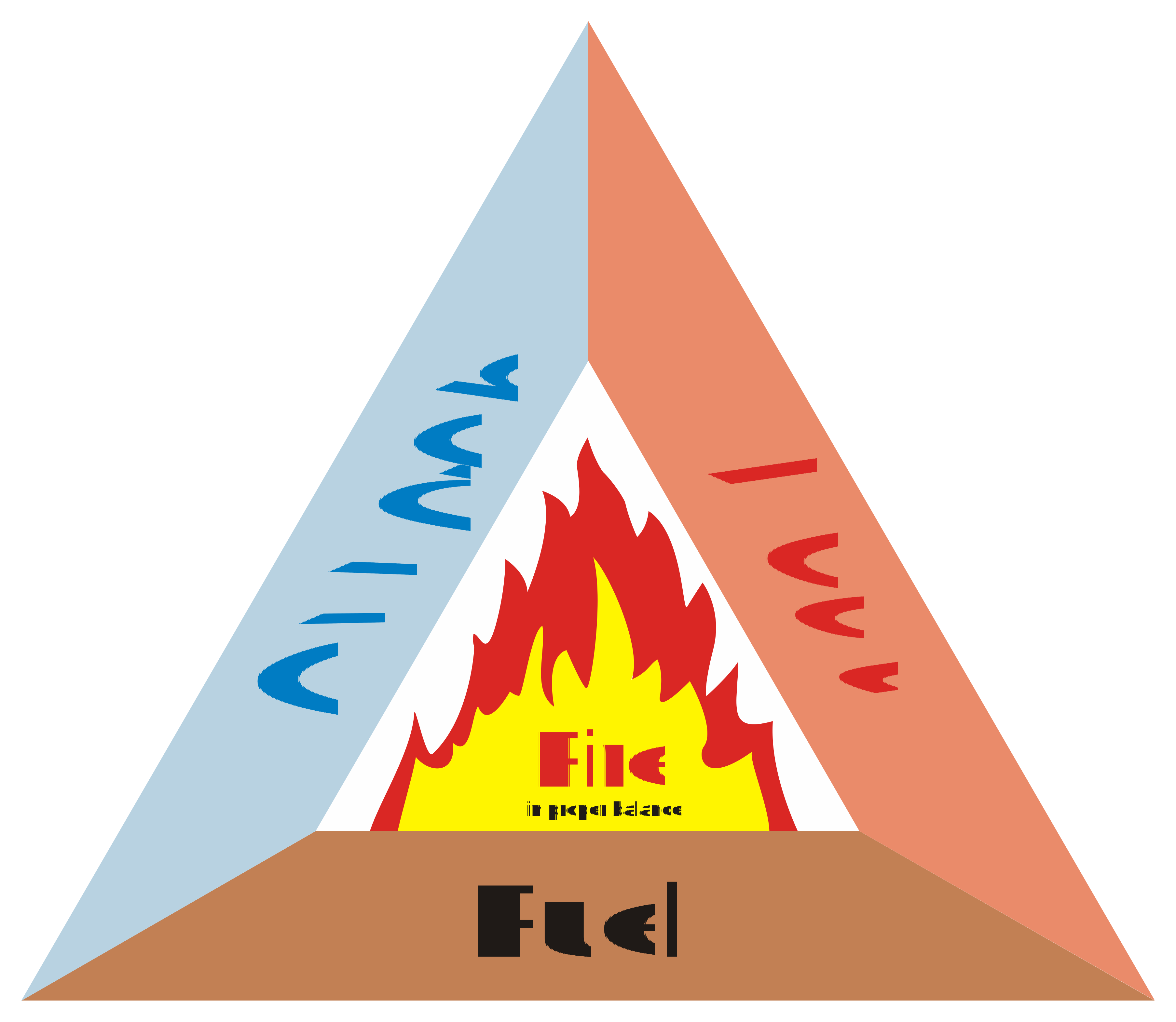
The fire triangle describes the three conditions that must exist simultaneously for a fire to occur:
- a combustible material (e.g., solvents, oils, gases)
- an oxidizer (typically oxygen from the air)
- an ignition source with sufficient energy (e.g., sparks, hot surfaces, open flames).
Remove any one of these three elements and ignition becomes impossible.
In chemical facilities, all three factors are frequently present at critical concentrations simultaneously. Volatile organic compounds (VOCs), gases, and reactive substances readily form explosive mixtures. This is why fire risk in the chemical industry is significantly higher than in mechanical manufacturing. Learn more about fire safety fundamentals in our overview article.
Combustible Material
Solvents, oils, gases, chemicals, dust — any substance that can ignite when exposed to sufficient heat.
Oxidizer
Oxygen from the air or chemical oxidizers — required to sustain combustion.
Ignition Source
Sparks, hot surfaces, open flames, electrostatic discharge, or friction heat.
What makes chemical plants different from other industrial facilities?
In a conventional machine shop, the primary hazard is spark generation from metalworking. In the chemical industry, additional ignition pathways include exothermic reactions (heat-releasing processes), thermal decomposition (material breakdown under heat), and spontaneous oxidation (reaction with oxygen without any external trigger). The root cause of a fire can vary widely — from equipment failure and chemical reactions to human error.
According to the NFPA’s Industrial and Manufacturing Fire report, U.S. fire departments responded to an estimated annual average of 36,784 fires at industrial or manufacturing properties between 2017 and 2021 — with chemical and flammable liquid facilities consistently ranking among the highest-risk categories. This is why industry-specific protective measures under standards such as NFPA 30 (Flammable and Combustible Liquids Code) are mandatory in the United States.
How do exothermic reactions cause fires?
An exothermic reaction is a chemical process that releases heat as a byproduct. In controlled settings, this is desirable — for example, in the production of plastics or fertilizers. The danger arises when the heat generated cannot be removed quickly enough. When cooling fails or a reaction runs too fast, temperature rises continuously and exponentially.
To put it simply: according to the Arrhenius equation, reaction rate roughly doubles for every 10 °C (18 °F) rise in temperature. If cooling capacity is exceeded, a self-reinforcing runaway reaction begins. The temperature eventually reaches the material’s autoignition point — and a fire starts with no external ignition source required.
What ignition temperature terms do I need to know?
Three temperature concepts are essential for risk assessment in chemical environments:
- Flash Point: The lowest temperature at which a substance produces enough vapor to ignite briefly when exposed to an open flame. Example: Gasoline has a flash point of approximately –45 °F (–43 °C).
- Fire Point: Slightly higher than the flash point — the temperature at which a substance continues to burn without a continuous external flame.
- Autoignition Temperature (AIT): The temperature at which a substance spontaneously ignites without any external ignition source. Example: White phosphorus ignites at just 86 °F (30 °C).
Materials with large surface areas — such as metal powders, oil-soaked rags, or fine dust — are particularly susceptible. Their structure promotes heat retention and accelerated oxidation, dramatically increasing the risk of spontaneous ignition. The Spillbarrier automatic chemical containment barrier can effectively seal off hazardous zones the moment a fire or spill occurs.
| Substance | Flash Point | Autoignition Temp. | Minimum Ignition Energy |
|---|---|---|---|
| Gasoline | –45 °F (–43 °C) | 428–572 °F (220–300 °C) | 0.2 mJ |
| Acetone | 0 °F (–18 °C) | 869 °F (465 °C) | 1.0 mJ |
| Ethanol | 55 °F (13 °C) | 752 °F (400 °C) | 0.6 mJ |
| Hydrogen | –423 °F (–253 °C) | 1040 °F (560 °C) | 0.017 mJ |
| White Phosphorus | — | 86 °F (30 °C) | — |
This table illustrates just how low ignition energies can be. Hydrogen requires only 0.017 millijoules — equivalent to a barely perceptible spark. This explains why even minor electrostatic discharges in chemical facilities can trigger catastrophic events.
Spark Generation and Electrical Ignition Sources
Why are sparks so dangerous in chemical environments?
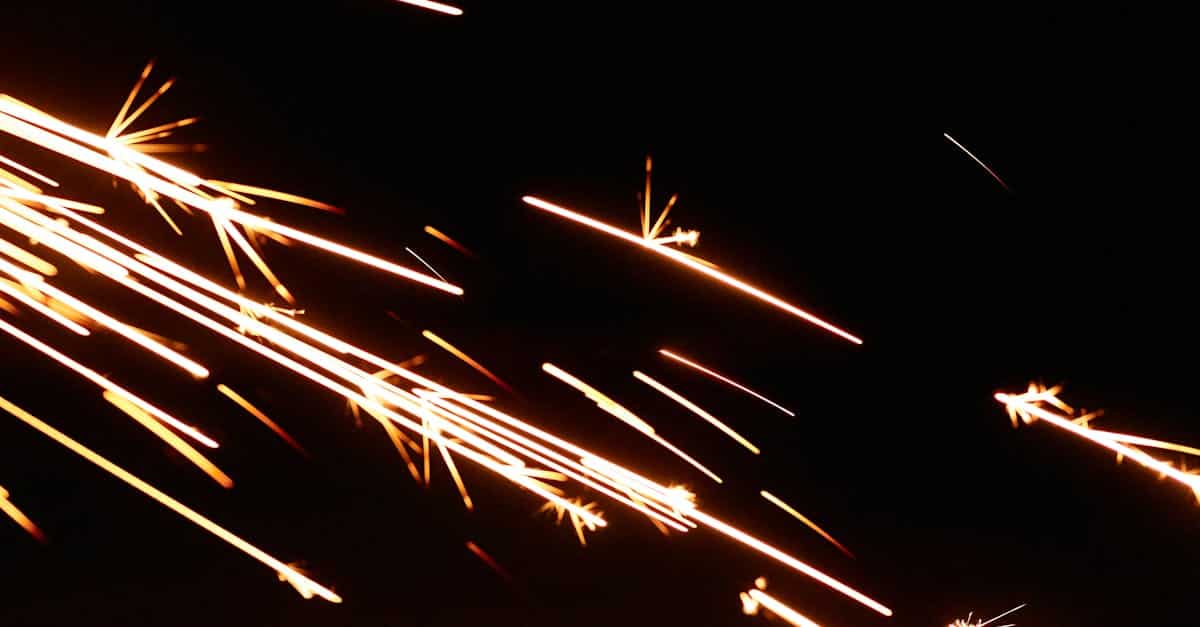
Sparks represent one of the most critical ignition hazards in chemical plants because the surrounding atmosphere frequently contains flammable vapors or fine dust particles. In such environments, a single tiny spark is sufficient to trigger an explosion or fire. Industry data consistently shows that electrical fires are the most common cause of industrial fires — and they often go undetected for extended periods.
According to the NFPA’s report on Fires in Industrial and Manufacturing Properties, electrical equipment was involved in 24% of structure fires at industrial and manufacturing facilities, making it the single largest equipment-related fire cause category. Mechanical failure or malfunction contributed as an ignition factor in an additional 24% of fires at manufacturing and processing facilities.
Short circuits caused by inadequate maintenance, overloading, or moisture can cause electrical cables to arc and ignite surrounding materials. In areas near the lower explosive limit (LEL), minimal energy input is enough to cause an explosion.
How does mechanical spark generation occur?
Mechanical sparks arise from metal-on-metal friction, impact, and material fatigue in pumps, compressors, and agitators. These sparks can reach temperatures of several hundred degrees Fahrenheit — well above the ignition threshold of most flammable vapors.
Hot work activities such as welding, grinding, and cutting are particularly hazardous. They generate sparks that can ignite flammable substances instantly. Maintenance operations in classified (hazardous) areas carry significant risk even when performed by trained personnel.
A real-world example
The 2006 Opole Chemical Plant accident was triggered by a defective fan whose sparks ignited an explosive solvent vapor mixture.
Risk assessments must account for sparks during normal operations — caused by loose fasteners, mechanical imbalances, or foreign objects in conveying systems. Regular equipment inspections in accordance with NFPA 70E (Standard for Electrical Safety in the Workplace) are essential.
What is electrostatic charge buildup — and how do I prevent it?
Electrostatic charge builds up when liquids flow through pipes, powder is transported pneumatically, or liquid transfer operations take place. In liquids with low electrical conductivity — below 50 picosiemens per meter (pS/m) — charge accumulates and discharges suddenly as a spark, similar to a miniature lightning bolt.
Critical conductivity thresholds and bonding and grounding requirements must be documented in compliance with OSHA 1910.106 (Flammable Liquids) and NFPA 77 (Recommended Practice on Static Electricity). Grounding cables on all containers, conductive hoses, and anti-static protective clothing significantly reduce risk. Without these measures, simply transferring a solvent from one container to another can trigger a fire.
What electrical equipment requirements apply in hazardous areas?
All electrical equipment in classified hazardous locations must meet explosion-proof (XP) or intrinsically safe (IS) requirements as defined by the National Electrical Code (NEC / NFPA 70) and classified by Class, Division, and Group. Common protection methods include:
- Explosion-proof enclosures (Class I, Division 1): The device is built to contain any internal explosion and prevent flames from reaching the surrounding atmosphere.
- Intrinsically safe circuits (IS): Electrical energy is limited to levels that cannot ignite a specified hazardous atmosphere, even under fault conditions.
- Purged and pressurized (Type X/Y/Z): Enclosures are filled with clean air or inert gas to prevent explosive atmospheres from forming inside.
The EPA Chemical Safety Alert on Chemical Accidents from Electric Power Outages documents that approximately 240 chemical releases were reported in a single year at U.S. facilities due to electrical power interruptions — including overheating, runaway reactions, and pressure buildup caused by loss of process cooling. Preventive maintenance on electrical and process control systems is explicitly cited as a key mitigation measure.
How Sparks Form — The 4 Most Common Causes
- Mechanical friction — Grinding operations, welding, loose fasteners in rotating equipment.
- Electrostatic discharge — Solvent transfer, pneumatic powder transport without proper grounding.
- Short circuit / overload — Damaged cables, moisture-exposed switchgear, overloaded circuits.
- Hot surfaces — Overheated motors, uncooled process vessels, worn bearings.
Practical tip: Perform and document a bonding and grounding check before every liquid transfer operation. Use conductive hoses rated for the specific liquid and temperature range.
Spontaneous Combustion of Chemical Materials
What is spontaneous combustion — and why is it so dangerous?
Spontaneous combustion occurs when a material or mixture ignites on its own — with no external ignition source such as a spark, flame, or hot surface. This is one of the most insidious fire causes because it happens without warning. According to the NFPA’s Spontaneous Combustion or Chemical Reaction Fact Sheet, spontaneous combustion causes an estimated 14,070 fires per year across U.S. properties — including 3,200 structure fires annually.
In manufacturing facilities, one in four spontaneous combustion fires begins with oily rags, making proper rag disposal one of the most impactful and lowest-cost prevention measures available.
A 2024 review published in MDPI’s Fire journal confirms that spontaneous combustion involves a complex interplay of chemical kinetics, heat transfer, and material properties — and concludes that reliable prediction and prevention require continuous detection and monitoring systems, as the process cannot be adequately assessed through periodic manual inspection alone.
How does spontaneous combustion develop in organic materials?
The process follows four stages:
- Exothermic self-oxidation begins: The material slowly reacts with oxygen in the air and releases heat as a byproduct.
- Heat accumulates: If the generated heat cannot be dissipated — due to poor ventilation or insulating surroundings — temperature rises continuously.
- Reaction accelerates: Higher temperature drives faster oxidation, creating a self-reinforcing cycle.
- Autoignition temperature is reached: Once the material’s self-ignition threshold is crossed, fire breaks out with no apparent external cause.
Materials with large surface areas are particularly at risk — crumpled oil-soaked rags, fine metal powders, and wood dust all promote heat retention. Linseed oil, for example, has a high content of polyunsaturated fatty acids that undergo vigorous exothermic oxidation during drying. A classic real-world scenario: a linseed oil-soaked cleaning rag is tossed into a corner — within hours, a fire starts. The Spillbarrier automatic fire containment system can isolate such areas instantly when a fire is detected.
Which inorganic materials are at risk of spontaneous ignition?
Inorganic substances such as metal powders (aluminum, magnesium, iron) carry elevated risk when they are moist and insufficiently ventilated. The heat generated during drying of oil-bearing materials can create a thermal buildup that triggers spontaneous ignition.
Agricultural environments face this risk too: insufficiently dried hay or straw is a well-known fire hazard. Fermentation processes and residual moisture generate heat that builds up inside a stack over days, eventually leading to internal smoldering and open fire. The same principle applies to industrial composting facilities and silage storage. Chemical plants managing combustible particulate waste streams should implement continuous temperature monitoring per NFPA 654 (Standard for the Prevention of Fire and Dust Explosions from the Manufacturing, Processing, and Handling of Combustible Particulate Solids), and per NFPA 30 (Flammable and Combustible Liquids Code) for liquid waste streams.
What is catalytic spontaneous combustion?
Catalytic spontaneous combustion occurs when certain metals or metal oxides (catalysts) lower the activation energy required for chemical reactions. This means reactions proceed faster and release more heat — even under conditions where the same materials would normally remain stable.
The process unfolds in four steps:
- Contact between reactant and catalyst: Reactive substances such as oils, linseed oil, or organic peroxides come into contact with catalytically active surfaces (e.g., metal dusts, oxides).
- Activation and heat release: The exothermic oxidation reaction begins and releases energy continuously.
- Temperature rises above ignition threshold: Inadequate heat dissipation allows temperature to climb steadily.
- Fire without any external ignition source: The accumulated heat ignites the material itself or adjacent combustibles.
| Mechanism | Typical Materials | Critical Temperature | Time to Ignition |
|---|---|---|---|
| Oxidation | Linseed oil, textiles, wood | 104–176 °F (40–80 °C) | Hours to days |
| Polymerization | Styrene, acrylates | 140–248 °F (60–120 °C) | Minutes to hours |
| Catalysis | Metal dusts, peroxides | 86–212 °F (30–100 °C) | Minutes to hours |
| Decomposition | Organic peroxides, nitrates | 122–302 °F (50–150 °C) | Seconds to minutes |
This table highlights a critical point: ignition timelines vary enormously. Pyrotechnic decomposition can escalate in seconds, while oxidation of oil-soaked textiles develops over days. The practical implication: different materials require different monitoring frequencies. Combustible dust and organic waste streams require continuous temperature tracking, while more stable chemicals may need less frequent checks. Understanding how barriers perform under these conditions is covered in detail in our guide to fire-resistant barriers for flammable liquids.
Safety Notice: Disposal of Oil-Soaked Materials
Oil-soaked rags, cleaning cloths, or absorbents must be stored immediately in closed, non-combustible metal containers. Never leave them crumpled in corners or place them in open waste bins — spontaneous ignition can occur within hours.
Chemical Plant Fire Hazards: Common Vulnerabilities and Practical Solutions
What are the most frequent safety failures in chemical plants?
Chemical plant safety experts consistently identify the same recurring weaknesses. The OSHA Process Safety Management (PSM) standard (1910.119) is the primary U.S. regulatory framework governing fire and explosion prevention in chemical facilities. It mandates process hazard analysis (PHA), management of change procedures, and regular mechanical integrity checks.
Problem 1: Inadequate Temperature Monitoring
The problem: Many facilities rely on manual temperature readings or single-point sensors. If these fail or drift out of calibration, a critical temperature rise goes undetected until it is too late to intervene.
The solution: Install redundant temperature sensors at every critical process point, with automated cooling systems and automatic shutdown triggered at defined thresholds. Safety engineers recommend a minimum of two independent measurement points per reaction vessel. The upfront investment pays for itself many times over in avoided damage costs.
Problem 2: Insufficient Bonding and Grounding
The problem: Grounding cables are not regularly inspected, become damaged over time, or are missing entirely on mobile containers. Static charge accumulates and discharges suddenly — generating a spark at the worst possible moment.
The solution: Make bonding and grounding verification a documented mandatory step before every liquid transfer operation. Use anti-static materials for hoses, containers, and personal protective equipment. Incident data from the EPA Risk Management Program (RMP) consistently identifies missing or damaged grounding cables as a preventable root cause of accidental chemical releases. For facilities handling aggressive liquids, see our overview of chemical spill barriers for aggressive liquids.
Problem 3: Improper Storage of Reactive Materials
The problem: Oxidizers and reducing agents are stored in proximity. A single container leak can trigger a violent reactive fire. Excessive storage temperatures push materials closer to their autoignition threshold.
The solution: Enforce strict segregated storage of incompatible chemicals per NFPA 400 (Hazardous Materials Code). Maintain climate-controlled storage conditions to keep critical substances below their autoignition temperatures. Fire safety plans should specify minimum separation distances and temperature limits for every chemical group. For a broader overview of containment architecture, our guide to chemical protection barrier systems covers system selection and integration. Spillbarrier eliminates the need for power in emergency containment — the automatic fire barrier activates instantly when a fire is detected.
Problem 4: Insufficient Employee Training
The problem: Research consistently shows that human error and technical failure are the dominant root causes of chemical plant fires. A peer-reviewed analysis published in the International Journal of Environmental Research and Public Health found that approximately 80% of chemical plant accidents involved human failure as a contributing factor. Many workers are not adequately familiar with the specific ignition hazards present in chemical environments, particularly spontaneous combustion and electrostatic discharge.
The solution: Conduct regular, chemical-specific fire safety training at least annually. Strictly enforce no-smoking policies in sensitive areas. Implement post-shift safety checklists to address fire risks outside regular working hours.
Preventive Measures and Fire Protection Concepts
Which technical measures provide the best fire protection?
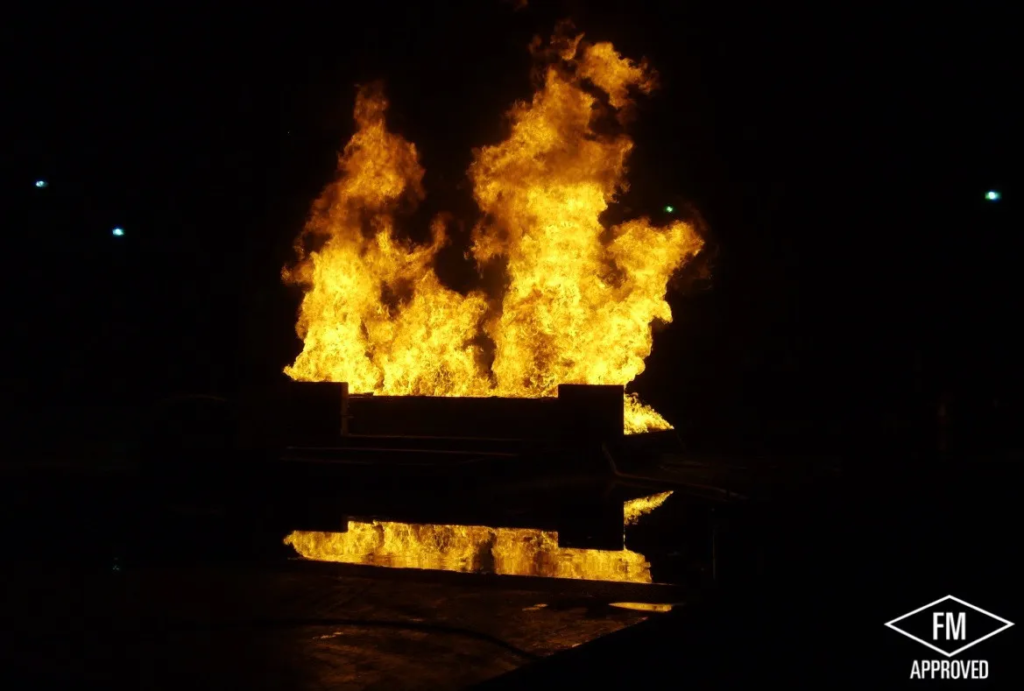
Optimal fire protection in the chemical industry combines technical, organizational, and structural measures. The most effective technical solutions include:
- NEC/NFPA-classified electrical equipment: All devices in classified hazardous locations must meet Class I, Division 1 or Division 2 ratings.
- Automated fire detection systems: Early detection through smoke, gas, UV/IR flame detectors, or linear heat detection cables.
- Automatic suppression systems: Sprinklers, foam systems, or inert gas systems respond immediately upon fire detection.
- Automatic chemical and firewater containment: The Spillbarrier chemical containment barrier prevents uncontrolled release of hazardous substances without requiring any power or manual activation.
All systems must be regularly tested and maintained in accordance with NFPA 25 (Inspection, Testing, and Maintenance of Water-Based Fire Protection Systems).
Redundant Sensors
Minimum 2 independent temperature sensors per reaction vessel — automatic shutdown at defined threshold.
Bonding & Grounding
Documented grounding check before every transfer — conductive hoses and anti-static PPE required.
Segregated Storage
Oxidizers and reducing agents physically separated — climate-controlled conditions maintained per NFPA 400.
Regular Training
Annual chemical-specific fire safety training — with focus on spontaneous combustion and electrostatic hazards.
Automatic Barriers
Spillbarrier systems seal hazard zones instantly — energy-free, no manual intervention required.
How do I conduct an effective Process Hazard Analysis?
A Process Hazard Analysis (PHA) is required under OSHA PSM for facilities handling threshold quantities of highly hazardous chemicals. It forms the foundation of all fire and explosion prevention measures. The core steps are:
- Hazard identification: Which flammable substances are present? Where can ignition sources occur?
- Risk evaluation: How likely is a fire event? What would the consequences be for personnel, environment, and assets?
- Define protective measures: Specify technical controls, administrative controls, and personal protective equipment.
- Document and review: Record all findings and update the PHA at defined intervals or following process changes.
Additional guidance is available from the AIChE Center for Chemical Process Safety (CCPS), which publishes industry-leading process safety guidelines.
FAQ — Frequently Asked Questions
What is the most common fire cause in the chemical industry?
Electrical fires from short circuits, damaged wiring, or overloaded circuits are the single most common cause in industrial and manufacturing properties, accounting for approximately 24% of all structure fires in industrial facilities per NFPA’s Fires in Industrial and Manufacturing Properties report. They frequently go undetected for extended periods. Human error — including improper chemical handling and missing grounding during transfer operations — ranks as the second leading cause.
How can I prevent spontaneous combustion in my facility?
The most effective measures are: store oil-soaked textiles immediately in closed, non-combustible metal containers, maintain reactive materials below their critical temperature, implement regular temperature monitoring in storage areas, and ensure adequate ventilation. Materials with large surface areas (metal powders, sawdust, crumpled rags) pose the highest risk and require the most rigorous controls under NFPA 654.
Which U.S. standards govern fire prevention in chemical plants?
The primary regulatory framework is OSHA 29 CFR 1910.119 (Process Safety Management). Complementary standards include NFPA 30 (Flammable and Combustible Liquids), NFPA 70 (National Electrical Code), NFPA 77 (Static Electricity), NFPA 400 (Hazardous Materials Code), and the EPA Risk Management Program (RMP) under 40 CFR Part 68.
What is the difference between flash point and autoignition temperature?
The flash point is the lowest temperature at which a substance produces enough vapor to ignite when exposed to an external flame. The autoignition temperature (AIT) is significantly higher and represents the temperature at which the substance spontaneously ignites with no external ignition source. Example: Gasoline has a flash point of –45 °F (–43 °C) but an autoignition temperature of approximately 428–572 °F (220–300 °C).
How does electrostatic charge buildup cause fires — and how is it prevented?
Static electricity accumulates when liquids flow through pipes or powder is conveyed pneumatically. In low-conductivity liquids (below 50 pS/m), charge builds up and suddenly discharges as a spark. Prevention requires: bonding and grounding cables on all containers, conductive hoses rated for the application, anti-static PPE, and documented pre-transfer grounding checks per NFPA 77 and OSHA 1910.106.
What role do catalysts play in fire causation?
Catalysts such as metal dusts or metal oxides lower the activation energy for chemical reactions, causing them to proceed faster and release more heat — even under conditions where the same materials would otherwise remain stable. When organic peroxides or oils come into contact with catalytically active surfaces without adequate temperature control, the resulting heat buildup can trigger spontaneous combustion. Strict segregated storage per NFPA 400 is mandatory to prevent unintended catalyst-reactant contact.
What should a chemical plant fire emergency plan include?
A compliant emergency action plan under OSHA 1910.38 must cover: evacuation procedures and designated assembly points, employee roles and responsibilities, alarm and notification systems, procedures for employees who remain to operate critical systems, methods for accounting for all personnel, and coordination with local fire departments. Chemical-specific hazards — including exothermic runaway and spontaneous combustion scenarios — should be explicitly addressed in site-specific emergency response plans.
Upgrade Your Chemical Plant Fire Protection Today
Protect your facility with automatic containment systems that require zero power and zero manual activation. Spillbarrier eliminates the need for power — our barriers seal hazardous zones instantly when it matters most. Talk to our engineering team for a site-specific consultation.
Explore the Chemical Barrier View the Fire BarrierSpillbarrier Engineering Team
The Spillbarrier Engineering Team consists of industrial safety engineers, technical writers, and spill and fire containment specialists with hands-on experience in chemical plant environments. Our focus:
- Developing automatic, energy-free containment systems for fire, chemical spills, and floodwater
- Providing clear, practical guidance on U.S. and international safety standards including OSHA, NFPA, and EPA regulations
- Delivering honest technical information without overstated claims
Disclaimer: This article does not replace professional engineering consulting or a site-specific process hazard analysis. Consult a qualified safety engineer or OSHA-certified process safety specialist for guidance specific to your facility.

