
Table of Contents
Key Takeaways
- Modern fire protection barriers deliver enhanced safety through innovative materials and fully automated activation — no power required.
- Integrated fire protection combines structural, engineered, and organizational measures — including fire alarm systems, smoke control systems, and emergency lighting.
- Sprinkler systems, smoke extraction units, and fire-resistant coatings can be individually tailored to building type and occupancy.
- Current NFPA 101 Life Safety Code and IBC 2024 define the baseline standards for fire barriers and compartmentation in the US.
- Intelligent systems enable predictive monitoring and automatic activation — triggered by smoke detection before a fire spreads.
- Sustainable fire protection focuses on PFAS-free, recyclable materials without compromising safety performance.
- The fire department remains the central actor in active suppression — and seamless integration with preventive systems is critical to minimizing losses.
Modern fire protection barriers encompass all structural, engineered, and organizational measures that prevent the ignition and spread of fire, enable safe evacuation, and support effective suppression. Today’s leading concepts combine AI-driven monitoring, automatic fire barriers like the Spillbarrier Fire Barrier, sustainable materials compliant with ASTM E119 and UL 263, and interconnected IoT into a unified safety ecosystem. This guide is written for architects, facility managers, and EHS professionals who need practical, code-grounded guidance on modern fire protection solutions.
Fundamentals of Modern Fire Protection
What Is Fire Protection — and How Is It Structured?
Fire protection refers to the full set of measures that prevent the origin and spread of fire, ensure the safe rescue of occupants and animals, and enable effective suppression operations. The system divides into two overarching categories: preventive fire protection and active suppression. Preventive measures aim to stop fires before they start or limit their impact; active suppression engages when prevention has been overcome.
Preventive fire protection further breaks down into three categories: structural, engineered systems, and organizational measures.
Learn more in our guide on Modern Fire Protection Solutions for Businesses.
Structural Fire Protection
Fire compartments, fire-rated walls, doors, and building materials per ASTM E119 and UL 263.
Engineered Systems
Fire alarm systems, smoke control (HVAC integration), sprinkler systems, emergency and exit lighting.
Organizational Measures
Emergency action plans, fire drills, fire safety officer designations, digital documentation and training records.
Structural Fire Protection
Structural fire protection is the first pillar of preventive fire safety and must be addressed during the building design phase. It encompasses fire compartments, fire-rated walls and doors, and the deliberate selection of appropriate construction materials. The fire performance of these materials is evaluated and classified under ASTM E119 and UL 263 to ensure optimal fire resistance properties.
Engineered Fire Protection Systems
Engineered systems provide early warning, orderly evacuation, and containment of fire spread through technical means. Core systems include fire alarm systems, smoke control / HVAC exhaust systems, emergency lighting, and exit signage. These systems are non-negotiable for the protection of lives and assets — improper installation or deferred maintenance directly compromises the reliability of the entire safety chain.
Active Suppression & Emergency Response
Active suppression engages when a fire has already started and includes firefighting, rescue of occupants, and salvage of assets. The fire department is the central actor and plays a decisive role in loss minimization. The tight coordination between preventive systems — such as automatically deploying Spillbarrier Fire Barriers — and active suppression defines the modern, integrated safety approach. For flammable liquid environments, see our dedicated guide on Fire Protection in Hazardous Materials Warehouses.
Developing Modern Fire Protection Concepts
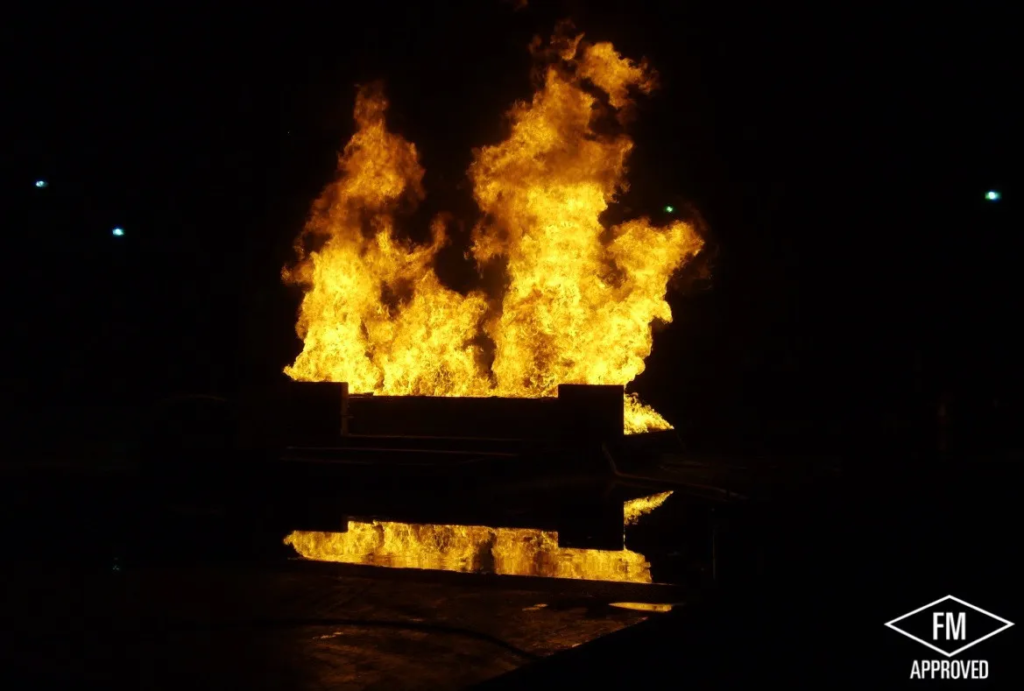
Since 2020, the requirements placed on fire protection have increased substantially. New building classifications and increasingly complex mixed-use occupancies demand individually tailored solutions that go far beyond traditional extinguishers and fixed smoke detectors. Preventive fire protection has evolved into an intelligent, networked system that proactively responds to potential hazards.
For more on current fire protection trends, see our article on Fire Causes in the Chemical Industry.
The distinction between preventive and active measures remains fundamental: while the former prevents fires or minimizes their impact, active suppression focuses on fighting the fire and rescuing occupants. Modern systems integrate both seamlessly — a decisive advance over the isolated, single-function solutions of earlier generations. Only when planned measures are consistently implemented can the defined protection objectives be reliably achieved.
AI-Powered Fire Monitoring & IoT Technologies
How Do Intelligent Fire Sensors Work?
The integration of Artificial Intelligence (AI) and Internet of Things (IoT) technologies is fundamentally transforming modern fire protection. Intelligent sensors detect even the smallest changes in air composition and reliably distinguish between different types of smoke — cooking smoke versus combustion byproducts, for example. This dramatically reduces false alarms and enables far more precise response when a real fire event occurs. Equally important: human operating and maintenance errors must be minimized through clearly defined processes and recurring training.
Networked Systems and Automatic Responses
Networked building systems communicate with each other in real time and automatically adapt their response to the current situation. In a fire event, HVAC systems automatically switch to smoke exhaust mode while fire barriers simultaneously activate to prevent the spread of fire and smoke. Elevators recall to safe floors, escape routes are illuminated — all without manual intervention. This level of integration is increasingly required under NFPA 72 for new commercial construction.
Innovative Fire Protection Barriers
What Is an Automatic Fire Barrier?
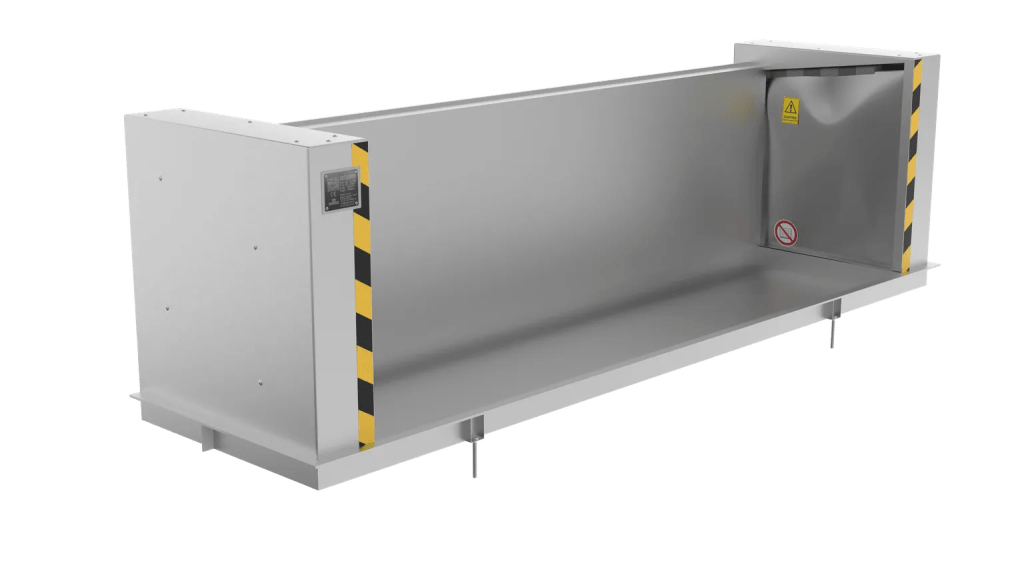
An automatic fire barrier is a self-actuating fire compartment closure that activates upon detection of heat or smoke — without requiring external power or a control signal. It is typically integrated into fire compartment boundaries: the physical separations within a building that prevent the spread of fire and smoke from one zone to another. Modern systems like the Spillbarrier Fire Barrier go far beyond traditional fire walls, offering flexible, fully automated solutions for a wide range of industrial and commercial applications.
How the Automatic Spillbarrier Fire Barrier Works
- Thermal trigger activates — defined actuation temperature is reached (no electricity required).
- Intumescent material expands — self-sealing properties are engaged.
- Barrier closes automatically — the fire compartment is hermetically sealed.
- Fire and smoke are stopped — spread into adjacent areas is prevented.
- No power, no controls needed — full function guaranteed even during a total power outage.
How the Spillbarrier Fire Barrier System Works
Spillbarrier systems use thermally activated fusible-link mechanisms that trigger at a defined temperature — completely power-independent and therefore fully reliable even during a total power failure. The systems are designed to meet the requirements of UL 555 (fire dampers) and are available in fire resistance ratings from 1-hour to 3-hour classifications. Read our foundational guide on Fire-Resistant Barriers for Flammable Liquids for in-depth technical performance data.
Power-Independent
Operates without electricity — fully functional even during a complete power outage.
Low Maintenance
30-year functional warranty; maintenance limited to visual inspections.
Invisible in Operation
Seamless integration into HVAC ductwork — no aesthetic or operational disruption during normal use.
Code-Compliant
Designed to meet UL 555, NFPA 90A, and IBC 2024 fire compartmentation requirements.
Retrofittable
Can be integrated into existing duct systems with minimal construction disruption.
Next-Generation Intumescent Materials
Modern fire barriers use advanced intumescent materials that expand under heat and develop self-sealing properties. These materials provide outstanding protection against fire and the spread of toxic gases and smoke — activating only under genuine fire conditions and remaining passive and maintenance-free during normal operations. Premium systems compliant with UL 555 offer a functional service life of up to 30 years and are suitable for applications ranging from office buildings to complex industrial plants.
Structural Fire Protection with Modern Materials
Fire Resistance Ratings Under ASTM E119 / UL 263
Structural fire protection has made significant advances through innovative materials and construction methods. The fire performance of building materials is classified at the national level under ASTM E119 and at the product level under UL 263. The US classification system uses hourly fire resistance ratings (1-hour, 2-hour, 3-hour, 4-hour) with additional designations for structural integrity, flame passage, and temperature rise on the unexposed face.
| US Rating (IBC / NFPA) | EU Equivalent (EN 13501) | Description | Typical Material |
|---|---|---|---|
| Non-combustible | A1 | Does not combust under fire exposure | Concrete, brick, glass |
| Limited-combustible | A2 | Minimal combustibility under test conditions | Mineral wool, gypsum board |
| 1-Hour Rated | EI 60 | Withstands fire exposure for 60 minutes | Treated wood panels, Type X gypsum |
| 2-Hour Rated | EI 120 | Withstands fire exposure for 120 minutes | Concrete block, double-layer gypsum |
| Combustible / unrated | E–F | Easily ignitable — not permitted in fire-rated assemblies | Untreated softwood, unprotected fabric |
High-Performance Fire Compartments with Thermal Activation
Modern fire compartments use thermally activated closure systems that respond automatically to temperature changes — without external power and therefore fully functional during blackouts. Building compartmentation is today designed using computational fire modeling that accounts for occupancy, egress paths, and specific risk factors. Integration into the building structure occurs during the design phase, ensuring both aesthetic and functional requirements are met simultaneously. Read our guide on Chemical Protection: Barrier Systems for Industry and the Environment for compartmentation in hazardous material contexts.
Next-Generation Engineered Fire Systems
What NFPA Standards Apply to Fire Alarm Systems?
Fire alarm systems in the US must meet the requirements of NFPA 72 — National Fire Alarm and Signaling Code, which governs design, installation, testing, and maintenance. The 2022 edition of NFPA 72 expands requirements to include AI-assisted detection integration and interconnection with building management systems. Modern fire alarm systems are fully networked, cloud-connected, and monitor facilities in real time — from conventional smoke detectors through AI-powered video analytics.
Fire Alarm Response Sequence
Automated Fire Alarm Response Sequence
- Sensors detect smoke or fire — AI-assisted filtering eliminates false alarms.
- Alarm is triggered — notification to the central panel, fire department (911 / monitoring center), and mass notification system.
- Fire barriers close automatically — fire compartment is sealed off.
- Elevators recall to safe floors — elevator shaft fire spread is prevented.
- Egress routes are illuminated and signed — evacuation is supported.
- Smoke exhaust systems (HVAC smoke control) activate — weather-adaptive exhaust clears escape routes.
Water-Saving Mist Systems as Sprinkler Alternatives
High-pressure water mist systems represent an innovative advancement over conventional sprinkler systems. By distributing water in far finer droplets — using up to 80% less water — water damage is dramatically reduced while firefighting effectiveness actually increases through greater droplet surface area. NFPA 750 — Standard on Water Mist Fire Protection Systems governs design and installation requirements for these systems in the US market.
Intelligent Smoke Extraction with Weather-Adaptive Controls
Next-generation smoke control systems factor in wind direction, temperature, and barometric pressure in their control logic, dynamically adjusting smoke exhaust to current conditions. They can be activated preventively — before a formal fire alarm is triggered — once threshold indicators are detected. US requirements for smoke control systems are governed by IBC Section 909 and NFPA 92 — Standard for Smoke Control Systems.
Organizational Fire Safety in the Digital Age
What Must a Fire Safety Plan Include?
A fire safety plan establishes clear behavioral rules and response procedures in the event of a fire — forming the organizational backbone of facility fire safety. Under OSHA 29 CFR 1910.38 (Emergency Action Plans) and NFPA 101 Life Safety Code, the plan must address:
- Evacuation procedures and assembly point designations
- Employee roles and responsibilities during a fire emergency
- Alarm notification and fire department contact procedures
- Procedures for employees who remain to perform critical operations (shutdown duties)
- Personnel accountability and headcount methods
Digital fire safety plans offer significant advantages over paper-based documents:
- Real-time updates pushed to all devices
- Multi-language versions for diverse workforces
- QR-code access for contractors and visitors
- Electronic acknowledgment tracking for employee sign-offs
VR-based fire safety training supplements these digital tools — realistic fire simulations build correct emergency behavior without exposing participants to actual danger or incurring high operational costs.
Industrial and Commercial Fire Protection
Special Requirements for Production Facilities
Industrial and commercial facilities present elevated fire protection demands due to high fuel loads, complex process operations, and specific hazards not present in general occupancies. Production facilities handling flammable liquids and gases require integrated concepts that seamlessly combine preventive and active measures. The Spillbarrier automatic fire barrier is specifically suited for these applications — it operates reliably under extreme temperatures and effectively separates individual production zones from each other, containing a fire at its origin point.
Explosion protection must be seamlessly integrated with fire protection measures — in line with OSHA 29 CFR 1910.119 (Process Safety Management) and NFPA 652 — Fundamentals of Combustible Dust. See our comprehensive guide on Warehouse Fire Protection: The Complete Safety Guide for specific facility requirements.
Logistics Centers and Automated High-Bay Warehouses
Logistics centers and automated high-bay warehouses present unique challenges due to their enormous footprints and high concentrations of fuel load. Modern fire protection systems use AI-assisted early detection and can automatically isolate specific zones before a fire spreads laterally. Integration of firewater retention and containment systems into automated warehouse management platforms now occurs through standardized APIs, enabling seamless real-time communication. For chemical storage environments, check out our Chemical Protection Barrier Systems in detail.
Special Occupancies: Hospitals, Tunnels & Parking Structures
Hospitals, nursing homes, and other healthcare occupancies require extended fire compartmentation and longer fire resistance durations to provide sufficient time for the evacuation of mobility-impaired residents. Tunnels and parking structures use computerized smoke control systems that factor in wind direction and velocity to keep egress paths continuously clear. Requirements for these special occupancies are governed by NFPA 101, NFPA 130 (fixed guideway transit systems), and NFPA 88A (parking structures), along with applicable state and local amendments.
Current Fire Protection Standards and Regulations 2026
Which Standards Apply to US Fire Protection in 2026?
The US standards landscape continues to evolve. The primary regulatory framework consists of the International Building Code (IBC 2024), which establishes baseline fire protection requirements by occupancy and construction type, and the suite of NFPA codes that govern specific systems and applications. The Authority Having Jurisdiction (AHJ) — typically the local fire marshal or building department — determines which edition is locally adopted and enforced.
| Standard / Code | Area | Key Content |
|---|---|---|
| NFPA 101 | Life Safety | Means of egress, occupancy classifications, fire protection features |
| NFPA 13 | Sprinkler Systems | Installation of sprinkler systems in commercial and industrial buildings |
| NFPA 72 | Fire Alarm Systems | Design, installation, testing, and maintenance of fire alarm and signaling systems |
| NFPA 90A | HVAC / Duct Systems | Installation of air conditioning and ventilating systems; fire damper requirements |
| UL 555 | Fire Dampers / Barriers | Testing and listing of fire dampers installed in HVAC duct systems |
| IBC 2024 | Building Code | Baseline fire protection requirements by occupancy group and construction type |
| NFPA 92 | Smoke Control | Design and installation of smoke control systems in commercial buildings |
IBC 2024 & NFPA Updates
The IBC 2024 cycle tightens testing requirements for fire protection products and expands requirements for high-rise and mixed-use occupancies. Manufacturers must provide more comprehensive performance documentation, which ultimately drives higher safety and reliability across the supply chain. Existing installations generally maintain grandfather status — but must be brought into compliance upon substantial alteration or change of occupancy. The UL (Underwriters Laboratories) issues product listings that serve as the primary compliance pathway for fire protection equipment in the US market.
Sustainability and Environmental Aspects
Why Modern Fire Protection Materials Are Going PFAS-Free
Modern fire protection materials are increasingly eliminating PFAS (per- and polyfluoroalkyl substances), as these persistent chemicals cause long-term environmental contamination and are classified as health hazards. The US EPA has significantly expanded PFAS restrictions — including on AFFF (aqueous film-forming foam) historically used in industrial fire suppression — with comprehensive PFAS drinking water regulations finalized in 2024. Recyclable, PFAS-free alternatives now deliver equivalent or superior protection without environmental or occupant health trade-offs.
Lifecycle Analysis: When Do Premium Systems Pay Off?
Lifecycle analysis of fire protection barriers over a 50-year service life consistently shows that premium systems, despite higher upfront costs, are substantially more economical overall. Maintenance-free systems like the Spillbarrier Fire Barrier achieve payback through reduced operating costs, minimal maintenance burden, and higher operational reliability — far sooner than a purchase-price-only comparison would suggest. Energy-efficient ancillary components — LED exit signs, variable-speed smoke exhaust fans, optimized sensor arrays — further reduce operating costs year over year.
Future Trends in Fire Protection
Predictive Analytics, Drones & 5G
Predictive analytics uses continuously collected sensor data to forecast maintenance needs before defects occur. Wear in fire protection systems is detected early and can be addressed on a planned schedule — long before a critical failure. Drone inspections enable examination of hard-to-reach areas such as rooftop equipment, ductwork shafts, or high-bay warehouse racking without placing workers at risk.
5G connectivity enables real-time monitoring of large building complexes with minimal latency — critical for applications where milliseconds determine whether an automatic fire barrier activates in time. Combined with AI-powered video analytics, systems emerge that can detect visible fire indicators and respond before conventional smoke detectors register a threshold event.
Key Planning Note
Modern fire protection solutions are more than safety measures — they are intelligent systems that proactively protect people, assets, and business continuity. The path to an optimal fire protection concept begins with a comprehensive analysis of your facility’s specific requirements. Professional consultation and the selection of listed, certified systems are non-negotiable for long-term effectiveness.
Frequently Asked Questions (FAQ)
How often do modern fire protection barriers need to be inspected?
Automatic fire barriers require semi-annual visual inspections and annual operational tests per NFPA 80 (fire doors and other opening protectives) and NFPA 90A (HVAC duct systems). Premium systems using thermally activated fusible-link technology are largely maintenance-free and require full replacement of the fusible element only when triggered. Inspection and testing records must be maintained per NFPA 25 requirements.
What fire resistance rating is required for commercial buildings?
Under IBC 2024, required fire resistance ratings for commercial buildings range from 1-hour to 4-hour depending on occupancy group, construction type, and building height. High-hazard occupancies (Group H) handling flammable liquids or combustible dusts typically require 2-hour or greater fire-rated separation. Exact requirements are determined by the locally adopted building code edition and AHJ interpretation.
How do new IBC and NFPA updates affect existing fire protection systems?
Existing installations generally maintain grandfather status under the IBC and applicable NFPA codes — but must be brought into compliance with current standards upon substantial alteration, change of occupancy, or addition. The NFPA 101 Life Safety Code contains specific provisions for existing buildings (Chapter 43) that may require upgrades even without a formal renovation trigger. When in doubt, consult a licensed fire protection engineer or your local AHJ.
Are smart fire protection systems with cloud connectivity HIPAA / data-compliant?
Reputable providers of modern fire protection systems implement end-to-end encryption and store data in US-based data centers compliant with applicable federal and state regulations. Personally identifiable information is processed exclusively for emergency response purposes. Organizations in healthcare settings should verify that cloud-connected fire safety platforms meet HIPAA requirements and follow CISA cybersecurity guidance for critical facility systems.
What is the difference between ASTM E119 and UL 263?
ASTM E119 is the standard test method for fire tests of building construction and materials, published by ASTM International. UL 263 is the Underwriters Laboratories standard for the same test scope and produces equivalent results — it is the listing pathway most commonly referenced by US code officials and AHJs for product compliance. Both use the same standard time-temperature fire exposure curve and produce hourly fire resistance ratings.
What special fire protection requirements apply to hospitals and healthcare facilities?
Hospitals and healthcare occupancies fall under NFPA 101 Chapter 18 / 19 (new and existing health care occupancies), which imposes the most stringent requirements of any occupancy class — reflecting the inability of patients to self-evacuate. Requirements include mandatory automatic sprinkler protection, corridor fire resistance, smoke compartmentation, a defend-in-place strategy, and specific door hardware and hardware maintenance obligations. CMS (Centers for Medicare & Medicaid Services) additionally requires compliance with the current edition of NFPA 101 as a Conditions of Participation.
Can existing HVAC duct systems be retrofitted with fire barriers?
Yes — modern fire barriers are specifically engineered for retrofit installation. They can be integrated into existing duct systems with minimal construction disruption and bring the duct penetration into compliance with current UL 555 and NFPA 90A requirements. Critical: retrofit installation must be performed by a licensed fire protection contractor, and the installation must be documented for the AHJ. The Spillbarrier Fire Barrier is designed from the ground up for retrofit applications in industrial and commercial facilities.
Modernize Your Fire Protection Today
Discover the Spillbarrier Fire Barrier — automatic, low-maintenance, and engineered for industrial and commercial facilities. Our engineering team advises you individually on modern fire protection solutions for your building.
Spillbarrier Engineering Team
This article was produced by the Spillbarrier Engineering Team, specialists in automatic containment and fire barrier systems for high-risk industrial environments. Our focus:
- Engineering low-maintenance, code-compliant fire barriers for industrial and commercial facilities
- Providing clear, practical guidance on fire protection standards — NFPA, IBC, UL, and OSHA
- Honest technical information without overpromising on product performance
Disclaimer: This article does not substitute for professional design review by a licensed fire protection engineer. For facility-specific requirements, consult a qualified fire protection contractor or your local Authority Having Jurisdiction (AHJ).

